World · India Bureau
165-million-year-old Chinese fossil sheds light on mammal evolution
Scientists have discovered a Jurassic-era creature that possessed both aquatic and mammalian feeding characteristics, offering fresh insights into how early mammals developed their specialized abilities. The 165-million-year-old fossil, identified in China, displays features that bridge the gap between ancient predecessors and modern mammals.
LSN India ·
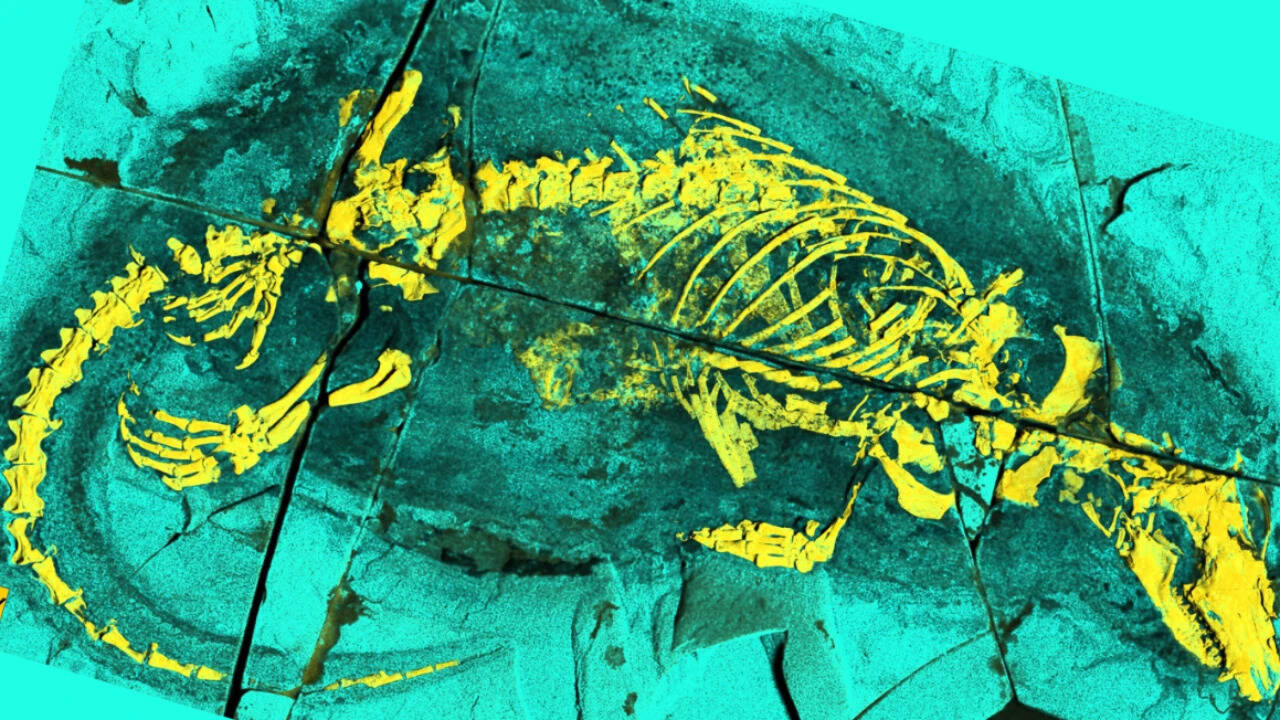
Researchers have identified a previously unknown mammal ancestor from China's Jurassic period that exhibited remarkable adaptations for both swimming and specialized feeding. Named Megacauda sungei, the creature possessed a broad, flattened tail designed for aquatic locomotion, suggesting it was equally comfortable in water and on land.
The fossil reveals that Megacauda sungei possessed throat bones structurally similar to those found in modern mammals, indicating an advanced capacity for chewing and swallowing. These specialized anatomical features enabled the animal to process food with greater efficiency than many of its contemporaries, representing a crucial developmental step in mammalian evolution.
The discovery, published in the journal Nature, provides paleontologists with valuable evidence about how early mammalian lineages diversified their feeding mechanisms over millions of years. The combination of swimming capabilities and sophisticated throat structures suggests that Megacauda sungei exploited ecological niches unavailable to less specialized creatures.
The findings contribute to the growing body of evidence demonstrating that mammalian traits evolved gradually across multiple animal lineages during the Mesozoic Era, rather than emerging suddenly in a single species. Such fossils remain rare, making each discovery significant for understanding how modern mammals inherited their distinctive biological characteristics.