World · India Bureau
5,300-year-old skeleton reveals Bronze Age man's battle with kidney stone
Archaeological analysis of a burial from a Bronze Age kurgan has uncovered evidence of chronic kidney disease in a man who lived over five millennia ago. The discovery provides rare insight into the health challenges faced by early humans without access to modern medical treatment.
LSN India ·
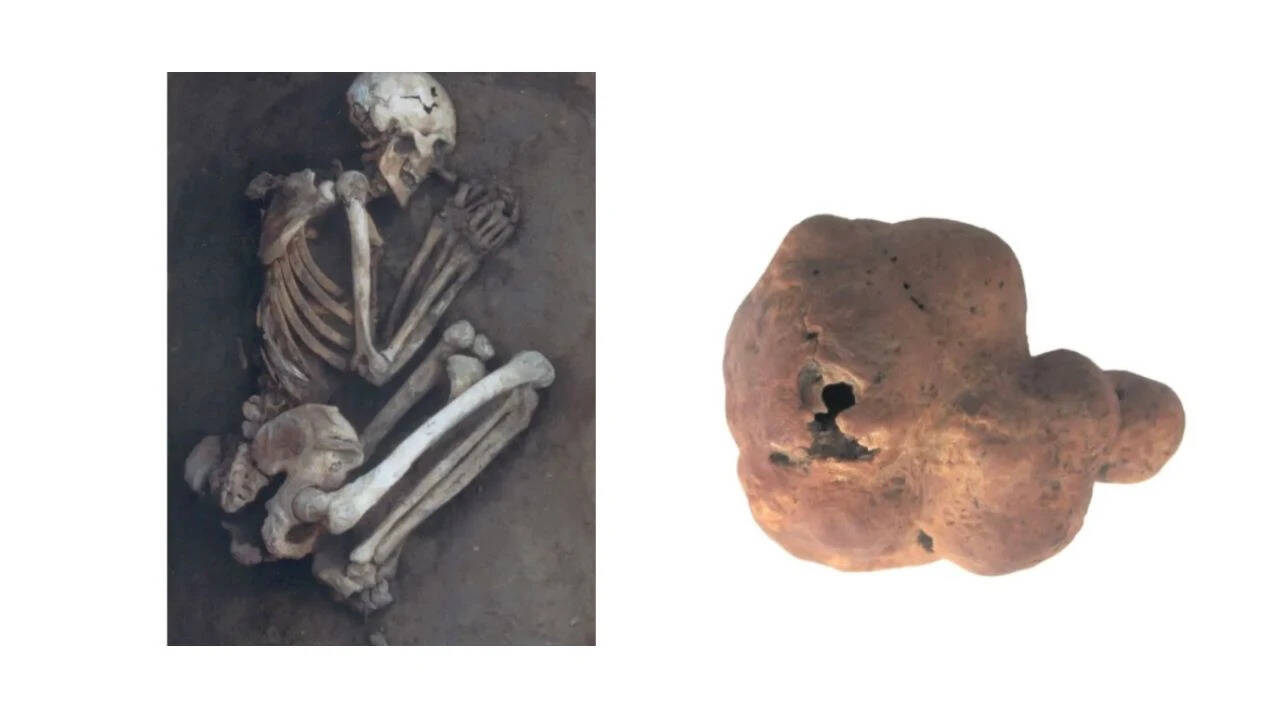
A skeleton excavated from a kurgan—a prehistoric burial mound—in South or Southeast Asia has yielded an unusual medical finding: a grape-sized kidney stone that suggests the individual suffered from chronic urinary tract complications some 5,300 years ago.
The calcified deposit indicates the man likely endured recurrent infections and severe pain during his later years, with no possibility of relief through contemporary medical intervention. Experts believe the condition would have caused considerable discomfort and potentially contributed to complications affecting his overall health and quality of life.
Beyond the kidney stone, examination of the skeletal remains has revealed additional markers of a physically demanding existence. The bones bear evidence of multiple healed fractures and signs of substantial physical stress, indicating the individual engaged in rigorous activities throughout his life—likely labour-intensive work essential to Bronze Age survival.
The discovery adds to growing archaeological evidence documenting the health burdens borne by early human populations. Without access to antibiotics, pain management, or surgical intervention, such conditions would have posed serious threats to survival, underscoring the resilience required to endure life in the Bronze Age.