World · India Bureau
AAC Blocks Emerge as Cost-Effective Alternative to Traditional Red Bricks
Autoclaved Aerated Concrete blocks are gaining traction in India's construction sector as builders seek more economical and durable alternatives to conventional red bricks. Industry experts suggest AAC blocks offer significant advantages in strength, cost-efficiency, and construction speed.
LSN India ·
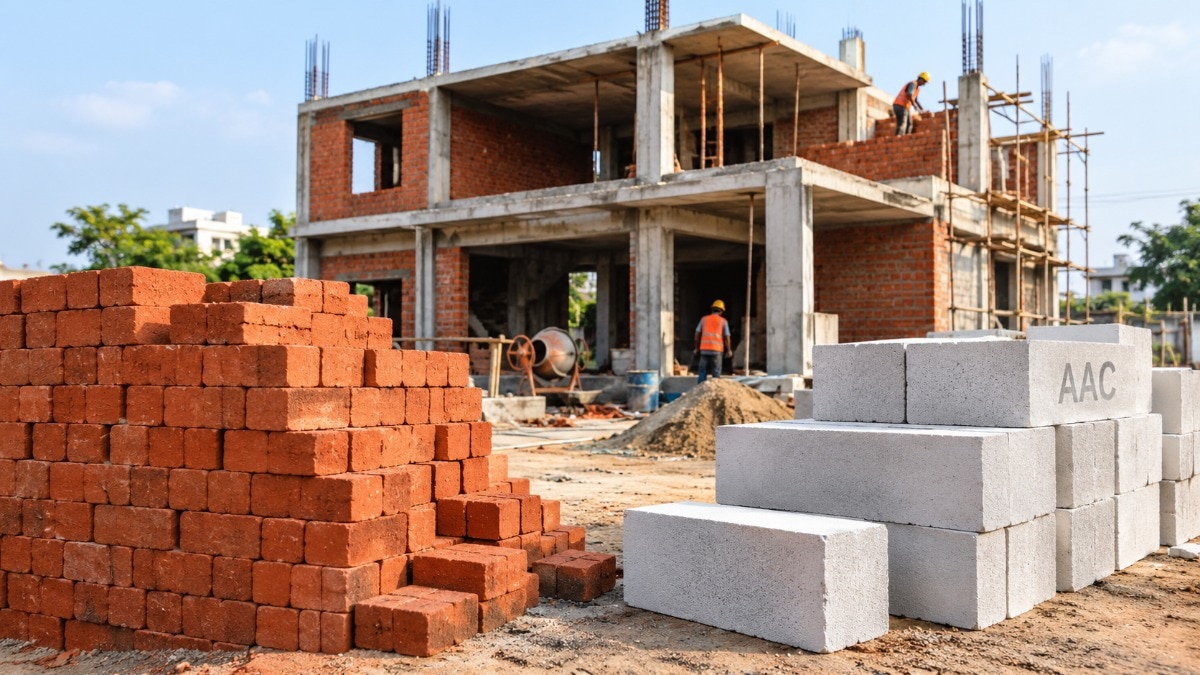
Red bricks have dominated India's residential construction landscape for decades, serving as the primary building material for homeowners and developers alike. However, the market is witnessing a gradual shift toward modern alternatives, with Autoclaved Aerated Concrete (AAC) blocks emerging as a compelling option for contemporary construction projects.
AAC blocks are lightweight, pre-fabricated building units manufactured through a controlled industrial process. The material is created by mixing cement, lime, silica sand, aluminum powder, and water, which are then cured under high pressure and temperature in autoclaves. This production method results in blocks that are significantly lighter than traditional red bricks while maintaining superior structural integrity.
Cost considerations represent a key advantage of AAC blocks over red bricks. The material requires fewer blocks per square meter due to their larger size, reducing overall material expenses and labor costs. Additionally, the lightweight nature of AAC blocks simplifies handling and transportation, further reducing construction expenses. The blocks also offer better thermal and acoustic insulation properties, potentially lowering long-term energy costs for homeowners.
From a durability perspective, AAC blocks demonstrate enhanced resistance to moisture, fire, and pest damage compared to conventional red bricks. The uniform quality achieved through industrial manufacturing ensures consistency across all units, reducing structural defects commonly associated with traditionally fired bricks.
While AAC blocks require specialized finishing and waterproofing techniques distinct from red brick construction, their growing adoption reflects changing preferences among Indian builders and homeowners seeking efficient, sustainable, and cost-effective building solutions.