World · India Bureau
African Union pushes campaign to redraw world maps and correct distortions
The African Union has endorsed a 'Correct the Map' campaign seeking to replace the widely-used Mercator projection with alternative map designs that provide more accurate representations of continent sizes and shapes. The initiative highlights how traditional mapping has perpetuated geographical misconceptions for centuries.
LSN India ·
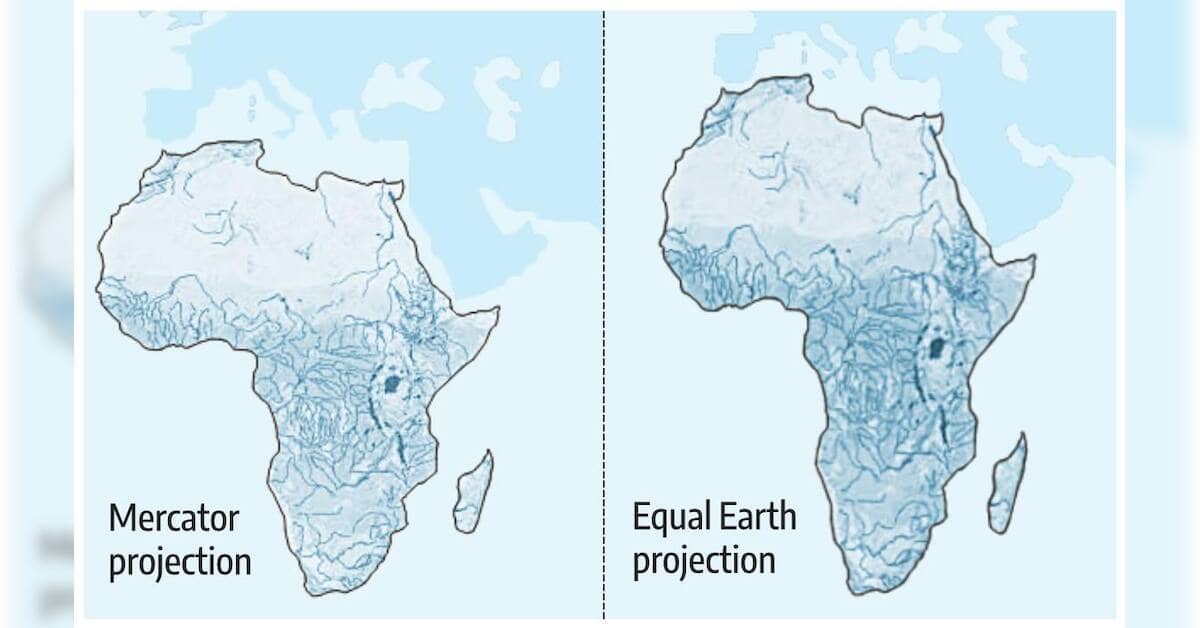
The African Union has thrown its support behind a growing movement to overhaul how the world is depicted on maps, arguing that commonly used projections distort the true size and significance of continents, particularly Africa. The 'Correct the Map' campaign advocates for replacing the Mercator projection—a 16th-century design that has dominated classrooms and atlases worldwide—with alternatives such as the Equal Earth map that offer more geographically accurate representations.
The Mercator projection, created by Flemish cartographer Gerardus Mercator in 1569, was originally designed for navigation purposes but has long been criticized for exaggerating the size of landmasses closer to the poles while significantly reducing the apparent size of equatorial regions. Under this projection, Africa—which covers approximately 30.4 million square kilometres—appears considerably smaller than it actually is, while countries in the Northern Hemisphere appear proportionally enlarged.
Proponents of the campaign argue that these historical distortions have contributed to skewed perceptions of Africa's economic and political importance on the global stage. By adopting more accurate map projections, they contend that educational institutions, media outlets, and governments can help correct long-standing misconceptions about the continent's true geographic scale and relevance.
The Equal Earth map and similar alternative projections maintain accurate size relationships between landmasses while presenting the world in different orientations. Several educational institutions and organizations have begun transitioning to these alternatives, though the Mercator projection remains the standard in many contexts due to its historical prevalence and practical applications in certain fields.