World · India Bureau
Amateur astronomer's Saturn discovery reveals rare 10-sided atmospheric phenomenon
An Australian amateur astronomer has co-authored research confirming the existence of a remarkable ten-sided atmospheric wave structure at Saturn's south pole. The discovery, supported by two years of Hubble Space Telescope data, offers new insights into the gas giant's atmospheric dynamics.
LSN India ·
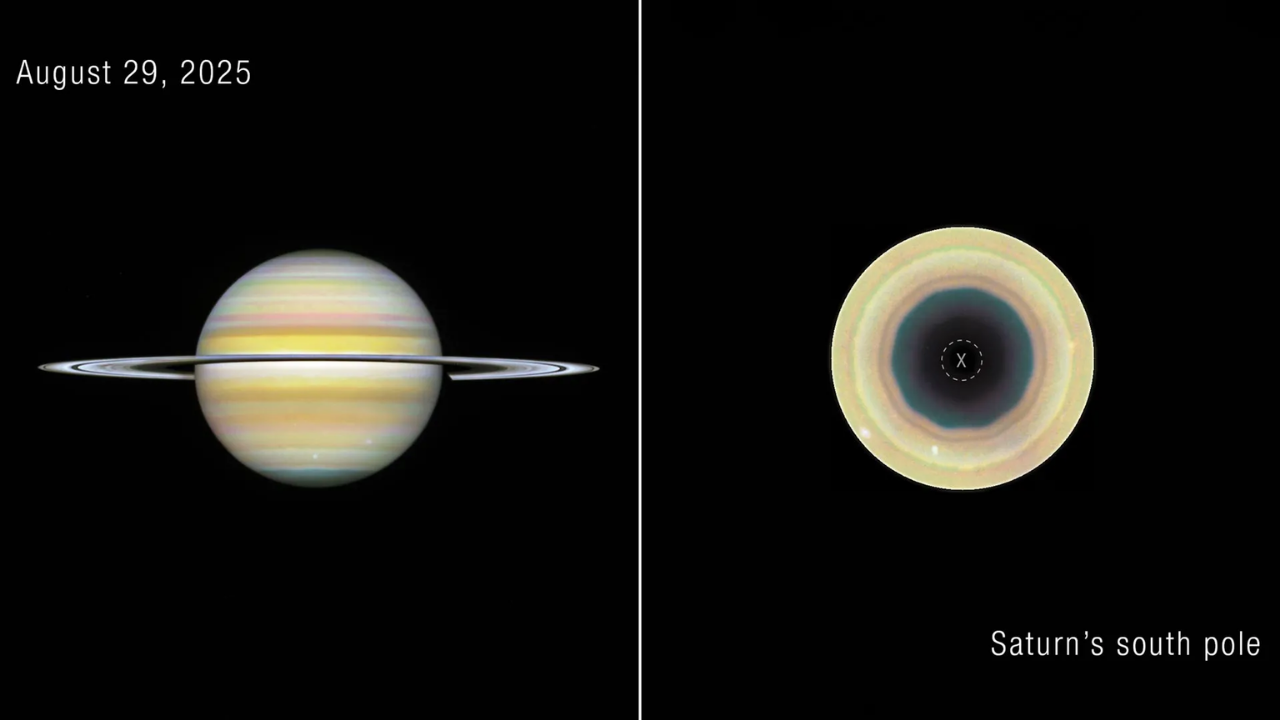
A backyard observation by an Australian amateur astronomer has contributed to a significant astronomical finding that reveals an unusual ten-sided wave pattern in Saturn's atmosphere. The discovery centres on a decagonal formation circulating around the planet's south pole, a phenomenon that had eluded detailed confirmation until now.
The ten-sided atmospheric structure, known as a decagon, represents a rare geometric pattern in planetary atmospheres. Researchers analysing years of observational data from NASA's Hubble Space Telescope have now corroborated its existence, lending credibility to the initial backyard sighting. The decagon's presence adds to the growing understanding of how complex atmospheric systems function in gas giants.
The decagonal wave interacts with Saturn's powerful jet streams and extends across multiple atmospheric layers, creating a dynamic system that circulates the planet. This multi-layered structure provides researchers with crucial data about the circulation mechanisms within gas giant atmospheres and how such enormous weather systems maintain their unusual geometric forms.
The collaborative research, combining amateur observation with professional telescope data, underscores the valuable contributions that dedicated amateur astronomers continue to make to scientific discovery. The findings enhance our knowledge of planetary atmospheres and the forces that shape them across our solar system.