World · India Bureau
Amazon rainforest loses a third of biomass when rains blocked in experiment
A groundbreaking experiment in Brazil's Caxiuana National Forest has revealed the vulnerability of the Amazon to prolonged drought, with biomass plummeting by approximately one-third when rainfall was artificially prevented. The findings suggest the world's largest tropical forest may be less resilient to climate change than previously believed.
LSN India ·
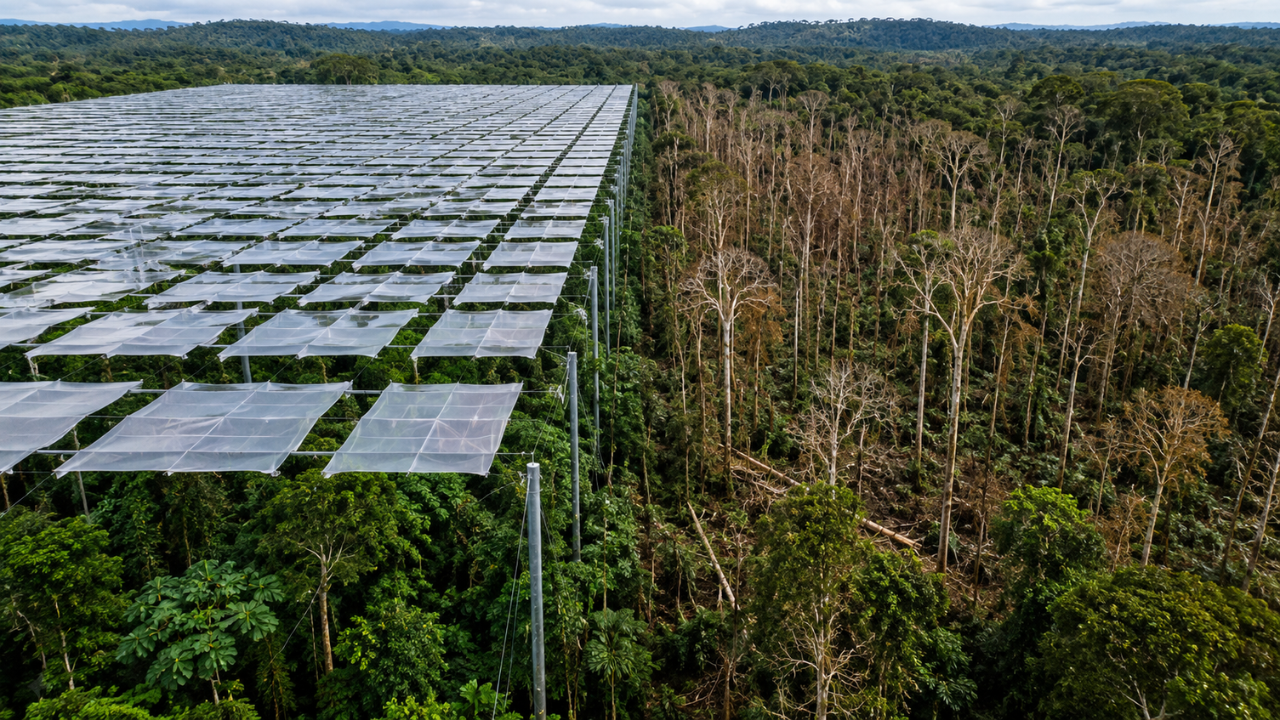
Scientists conducting a large-scale experiment in Brazil's Caxiuana National Forest installed approximately 6,000 panels designed to intercept and prevent rainfall from reaching a designated forest plot. The research, carried out during an extended drought period, was intended to simulate the impacts of sustained water deprivation on the rainforest ecosystem.
Initially, the forest appeared to weather the artificial dry conditions with unexpected resilience, as mature trees demonstrated adaptive strategies to cope with water scarcity. However, this initial stability proved temporary. Over time, large established trees began to fail at increasing rates, triggering a cascade of biomass loss throughout the affected area.
The consequences were severe. The forest plot experienced a decline of approximately one-third in total biomass, fundamentally altering its ecological character. More alarmingly, the degraded forest transitioned from functioning as a carbon storage reservoir to becoming a net carbon emitter, releasing stored carbon into the atmosphere.
The surviving vegetation underwent significant structural changes, with remaining plants adapting to extreme water stress through modified growth patterns and root systems. The resulting forest bore little resemblance to its original state—smaller in stature, reduced in carbon storage capacity, and ecologically transformed. The research underscores growing concerns about the Amazon's vulnerability to climate-driven drought, with implications for global carbon cycles and regional climate patterns across South and Southeast Asia.