World · India Bureau
Ambedkar's Religious Conversion: Understanding His Final Journey
Dr. B.R. Ambedkar, India's constitutional architect, embraced Buddhism in the final weeks of his life, marking a significant spiritual departure from Hinduism. His conversion reflected decades of philosophical struggle against caste-based discrimination within the Hindu faith.
LSN India ·
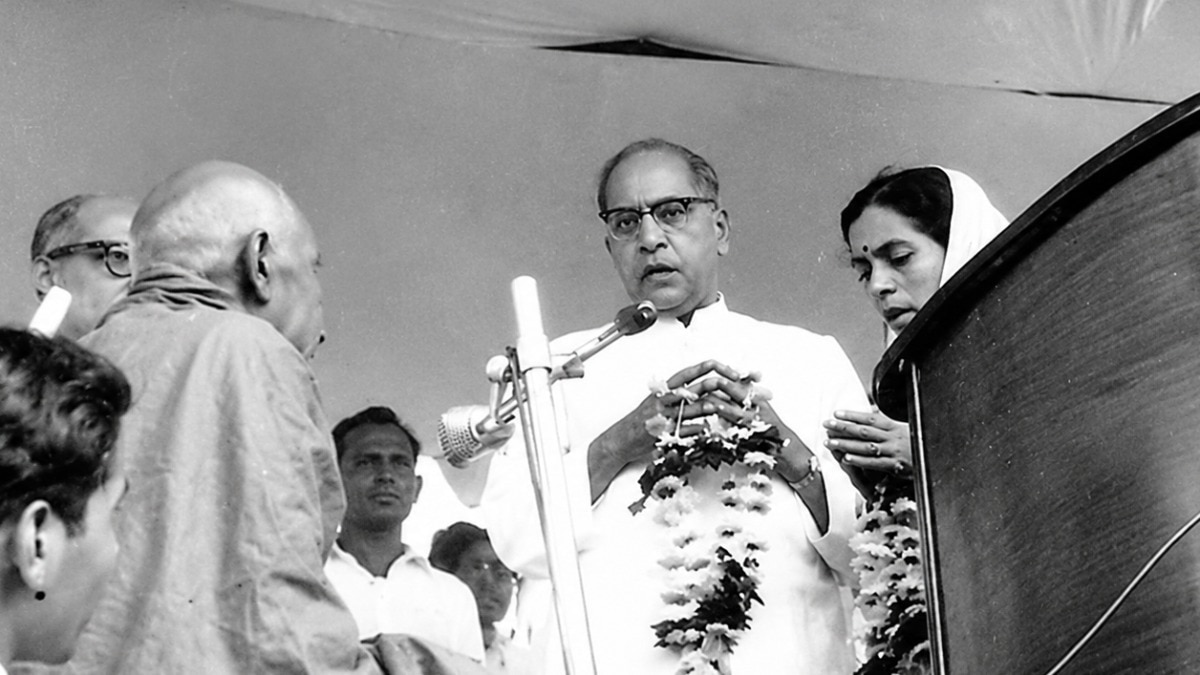
Dr. Bhimrao Ramji Ambedkar's decision to convert to Buddhism came on October 14, 1956, just 53 days before his death on December 6 that year. The conversion ceremony, held in Nagpur, was attended by thousands of Dalits who followed their leader into the Buddhist faith. This pivotal moment represented the culmination of Ambedkar's long-standing critique of Hindu social structures, particularly the caste system that had marginalized millions throughout Indian history.
Ambedkar's intellectual journey towards Buddhism was rooted in his personal experiences with caste-based discrimination and his scholarly examination of religious philosophies. Throughout his life, he had articulated that Hinduism's foundational doctrines perpetuated social hierarchy and inequality. His search for an alternative spiritual path led him to study various religions before concluding that Buddhism offered a framework aligned with egalitarian principles and human dignity.
In his final years, Ambedkar authored "The Buddha and His Dhamma," a comprehensive work interpreting Buddhist philosophy through a modern, rationalist lens. The book articulated his vision of Buddhism not as a mystical religion but as a rational philosophy emphasizing equality and social justice. He envisioned the conversion as a mass movement to uplift Dalits and provide them with a distinct religious identity separate from the caste-hierarchical Hindu system.
Ambedkar's conversion inspired a significant religious movement in India. His decision resonated with millions of Dalits seeking spiritual autonomy and social emancipation. The Nagpur conversion event established Buddhism as a modern vehicle for social reform, with Ambedkar's legacy continuing to influence the Neo-Buddhist movement across India. His final act represented both a personal spiritual choice and a political statement against systemic oppression.