Culture & Entertainment · India Bureau
Ancient amber yields insect with mouthpart twice its body length
Scientists have identified a previously unknown insect species preserved in 99-million-year-old amber from Myanmar, featuring an extraordinarily elongated feeding apparatus. The discovery provides rare insights into the feeding strategies and ecological roles of insects during the Cretaceous period.
LSN India ·
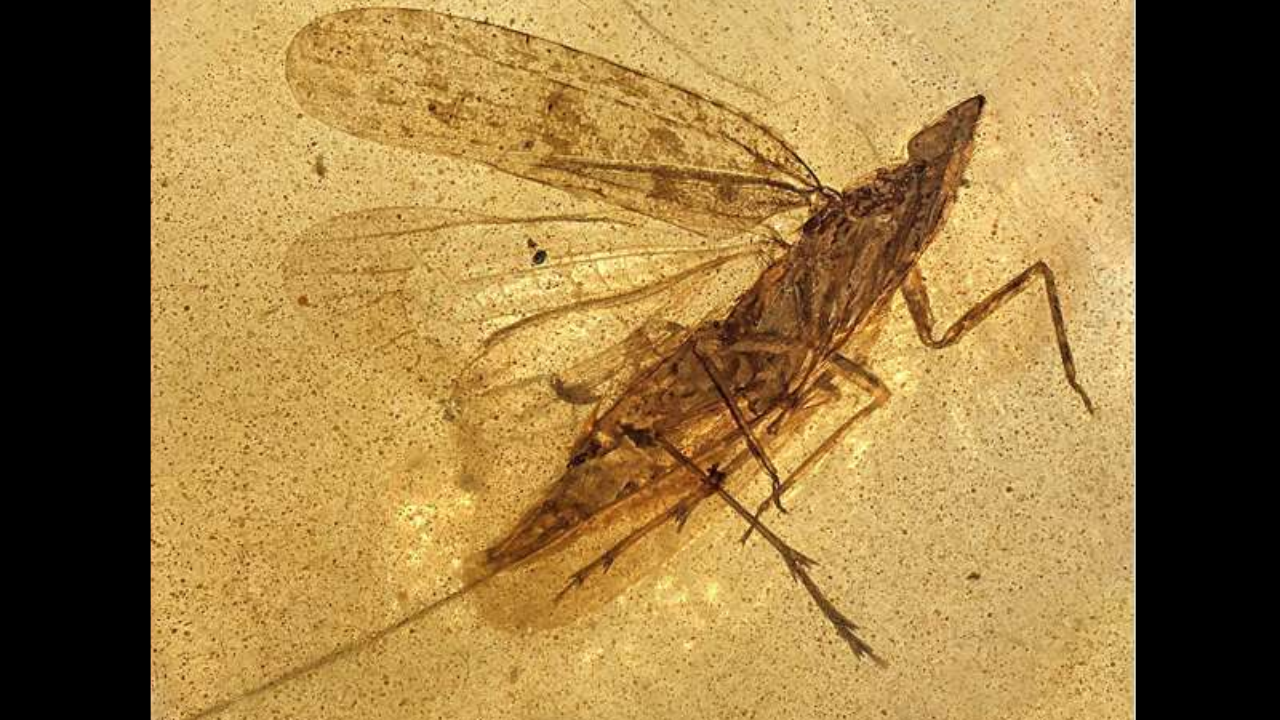
Researchers examining 13 insects trapped in amber from Myanmar have identified a remarkable new species, Cretodorus noonoo, distinguished by mouthparts nearly twice the length of its body. The specimen belongs to the Neazoniidae family, a group recognized across fossil and modern records for possessing unusually elongated feeding structures adapted for specialized ecological niches.
The insect's distinctive morphology suggests highly specialized feeding behavior focused on tree sap extraction. Such adaptations would have allowed the species to exploit food sources unavailable to insects with conventional mouthparts, providing a competitive advantage within ancient forest ecosystems.
The discovery of these 13 insects preserved together in amber dating back approximately 99 million years offers paleontologists a window into Cretaceous biodiversity and evolutionary innovation. The specimens reveal the diverse feeding strategies that insects evolved to survive and thrive in ancient environments.
The amber deposit from Myanmar continues to yield significant paleontological material, with preserved insects providing unprecedented detail about Cretaceous forest ecology. The discovery of Cretodorus noonoo underscores how specialized anatomical features developed in response to specific environmental pressures during this period, contributing to the complex web of life that characterized dinosaur-era ecosystems.