World · India Bureau
Ancient aurora records help scientists map solar cycles with 90% accuracy
Researchers have developed a novel statistical method to analyse centuries-old observations of auroras, successfully identifying eight distinct solar activity cycles between 1560 and 1640. The breakthrough offers unprecedented insights into the Sun's behaviour during the pre-instrumental era.
LSN India ·
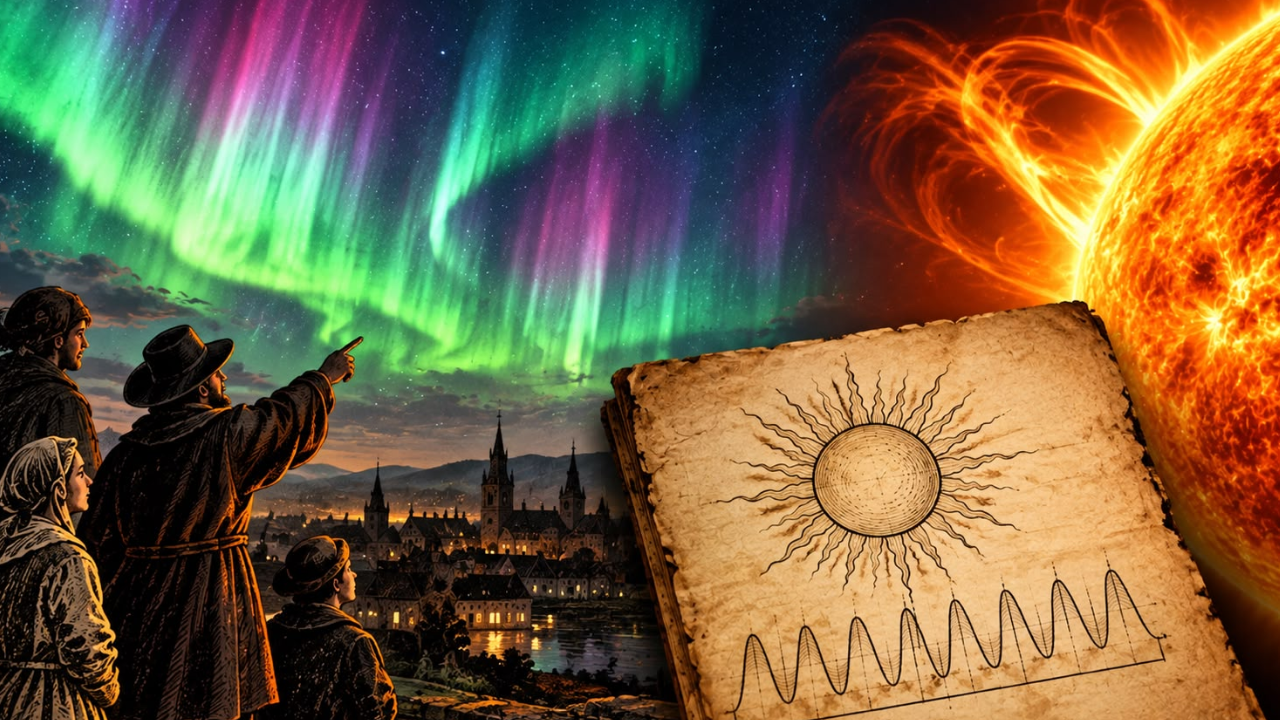
Scientists have unlocked new understanding of solar dynamics by turning to historical records of auroral displays, demonstrating that ancient sky observations can reliably reveal patterns of solar activity long before modern measurement techniques existed.
Using a new statistical methodology, researchers analysed documented aurora sightings spanning the period 1560 to 1640 and identified eight distinct cycles of solar activity with more than 90% reliability in placing solar minima within a two-year window. The approach transforms centuries-old celestial observations into quantifiable data about the Sun's behaviour, filling crucial gaps in our understanding of solar variability.
The findings correlate well with various independent solar records, including data derived from other historical sources, which validates the reliability of the new analytical framework. This cross-verification strengthens confidence in the method's ability to reconstruct solar cycles from historical documents.
The study opens new possibilities for extending knowledge of solar dynamics beyond the instrumental record period. By harnessing archival observations of natural phenomena, scientists can now probe deeper into the Sun's historical activity patterns, potentially improving long-term solar forecasting models and understanding of space weather impacts on Earth.