Culture & Entertainment · Vietnam Bureau
Ancient Cham towers of Po Klong Garai preserve centuries of architectural heritage
The Po Klong Garai complex in Vietnam stands as a remarkable testament to Cham civilization, featuring three intricately designed brick structures that showcase the artistic and engineering prowess of Southeast Asia's historic kingdoms.
LSN Vietnam ·
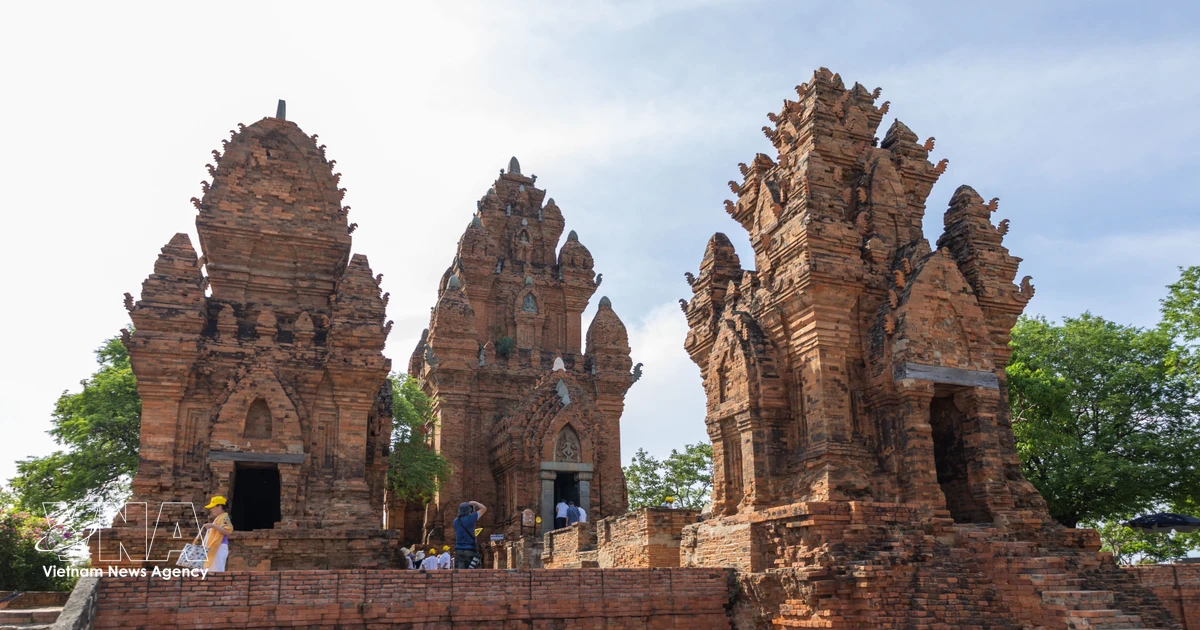
The Po Klong Garai tower complex comprises three primary structures that collectively represent one of the region's most significant examples of Cham architectural achievement. The Chinh, or Main Tower, rises approximately 20.5 metres, distinguished by its square foundation and progressively narrowing tiered roofs that exemplify classical Cham design principles. The ensemble is completed by the Cong, or Gate Tower, and the Lua, or Fire Tower, which features a distinctive boat-shaped curved roof that provides striking visual contrast to the overall composition.
The construction details reveal sophisticated craftsmanship evident throughout the brick structures. Decorative columns, sculptural niches, and recurring lotus motifs adorn the walls, while intricate patterning demonstrates the advanced artistic capabilities of medieval Cham builders. These architectural elements serve both aesthetic and symbolic functions within the sacred complex.
Po Klong Garai represents a crucial heritage site for understanding Cham civilization, which flourished across present-day central Vietnam for over a millennium. The towers have withstood centuries of environmental and historical pressures, remaining standing as physical evidence of the kingdom's cultural and technological achievements. The site continues to attract scholarly attention and visitors interested in Southeast Asian history.
Preservation efforts undertaken on the complex have aimed to maintain structural integrity while respecting the historical authenticity of the original construction. These restoration initiatives underscore the broader regional commitment to safeguarding significant cultural monuments for future generations and ongoing historical study.