Culture & Entertainment · India Bureau
Ancient Etruscan ritual well yields bronze treasures and human remains
Archaeologists have uncovered a remarkable 2,500-year-old ceremonial well at the ancient Etruscan city of Kainua in Italy, revealing bronze votive offerings and two human skeletons that shed light on early religious practices.
LSN India ·
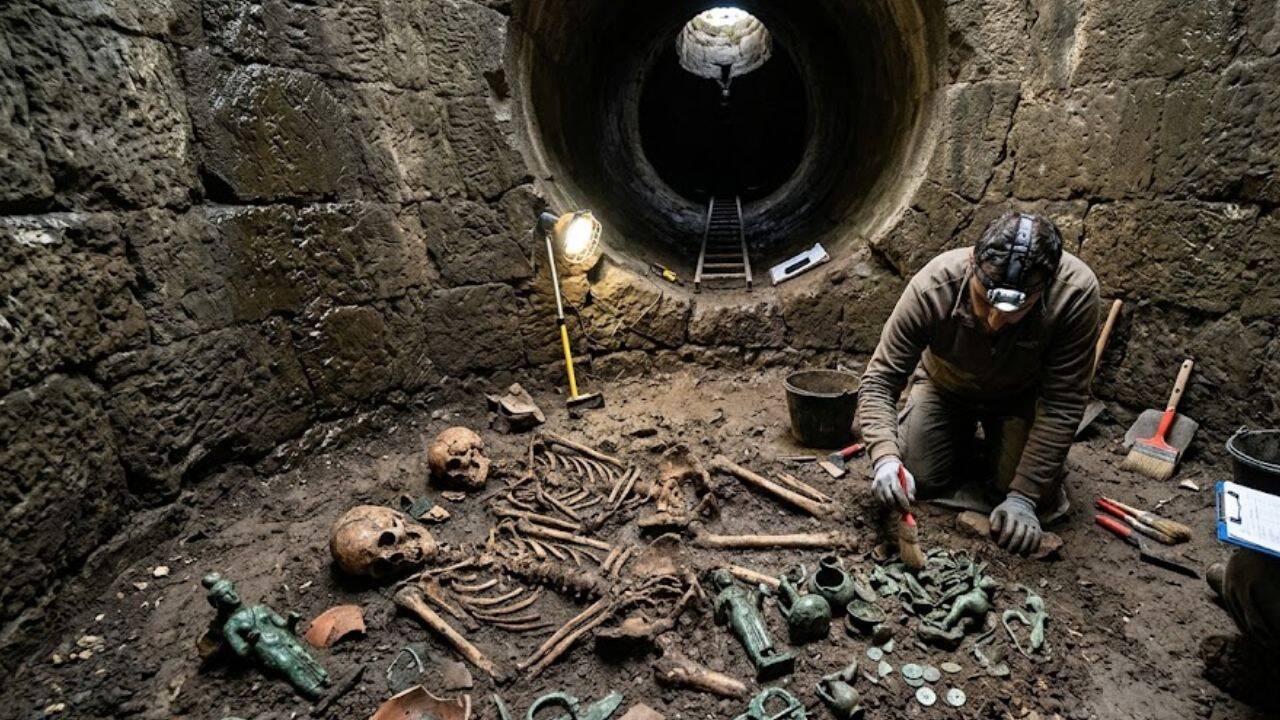
Excavations at the site have brought to light an unusual ritual well that served as a repository for sacred offerings during the founding of the Etruscan settlement. The discovery includes two finely crafted bronze statuettes and a rare bronze plate, all deposited at the bottom of the well as votive offerings—gifts presented to the gods during important ceremonial occasions.
The bronze objects are believed to have been placed as part of a foundation ritual conducted centuries ago, reflecting the religious significance attached to establishing new settlements in Etruscan culture. Such votive offerings were common practice among ancient civilizations, serving as material expressions of devotion and supplication to divine forces.
Among the most significant findings are two adult human skeletons recovered from the well, which researchers interpret as evidence of a ritual closing ceremony. The presence of human remains suggests that the well held deep ceremonial importance and may have been deliberately sealed through a formal ritual process marking the end of its religious function.
The discovery provides valuable insights into Etruscan city planning, settlement practices, and religious traditions during the ancient period. Scholars believe such findings contribute to a broader understanding of how early Mediterranean civilizations integrated spiritual beliefs into the practical aspects of urban development and community life.