Business · India Bureau
Ancient feather in dinosaur fossil offers clues to bird survival
A 66-million-year-old feather preserved within fossilised dinosaur droppings may provide fresh insights into how certain bird species endured the catastrophic asteroid impact that wiped out most dinosaurs. The discovery suggests that feather structure and moulting patterns may have been critical factors in avian survival.
LSN India ·
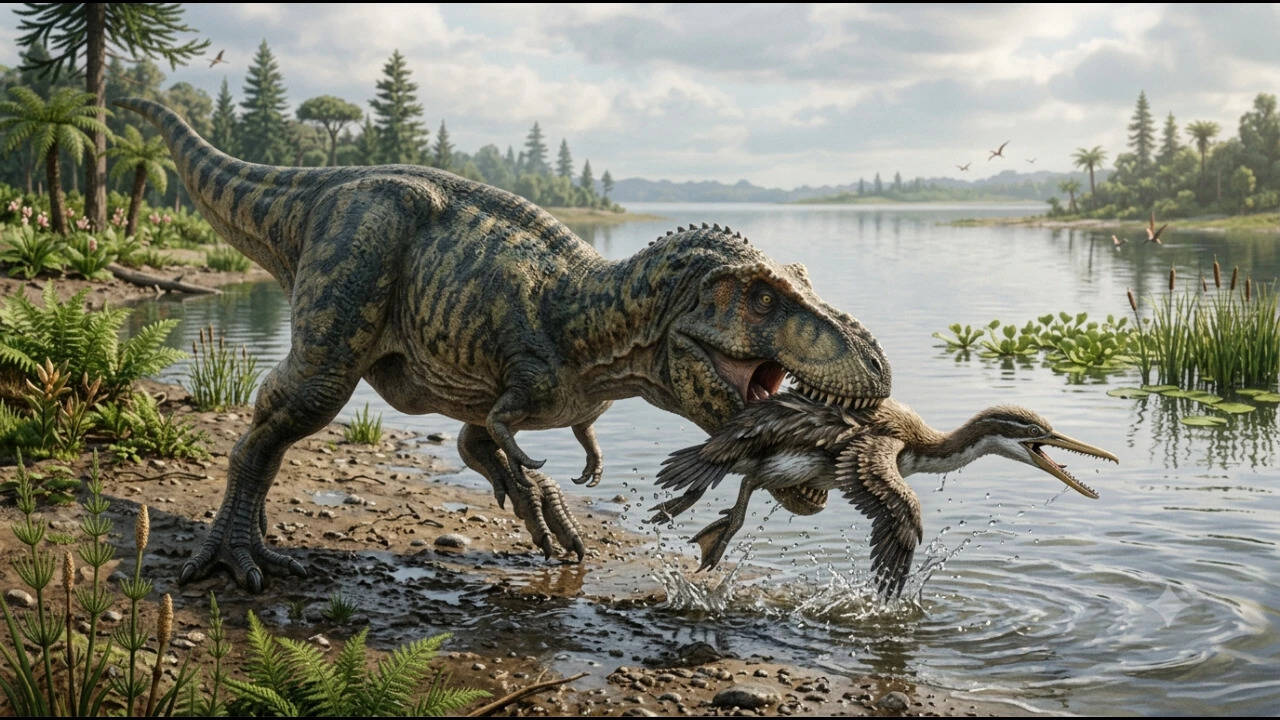
Scientists examining a fossilised coprolite—preserved faeces from the Cretaceous period—have uncovered a remarkably intact feather alongside fish scales and bird bones, offering a rare window into the final days before the extinction event that reshaped Earth's fauna.
The feather's primitive structure indicates that insulation properties and the ability to shed and regrow feathers may have played a crucial role in determining which bird lineages survived the asteroid impact 66 million years ago. Researchers believe these characteristics would have been essential for maintaining body temperature and overall health during the environmental chaos that followed the collision.
The discovery represents a significant breakthrough in understanding avian evolution during one of Earth's most turbulent periods. By analysing the physical characteristics preserved in the coprolite, scientists are gaining new perspectives on the physiological adaptations that allowed certain bird species to persevere while their dinosaur relatives perished.
This fossilised evidence underscores how seemingly small biological features—such as feather quality and moulting cycles—may have had outsized importance in determining survival during mass extinction events. The findings contribute to a growing body of research suggesting that birds' success as a species was built on specialized adaptations developed long before the catastrophic impact.