Technology · India Bureau
Ancient Greek Computing Device Reveals Sophistication of Classical Engineering
The Antikythera Mechanism, a 2,100-year-old artifact discovered off Greece's coast, stands as testament to the advanced astronomical and engineering knowledge of ancient civilizations. The intricate device, featuring sophisticated gear systems, continues to fascinate modern scholars studying the technological achievements of the classical world.
LSN India ·
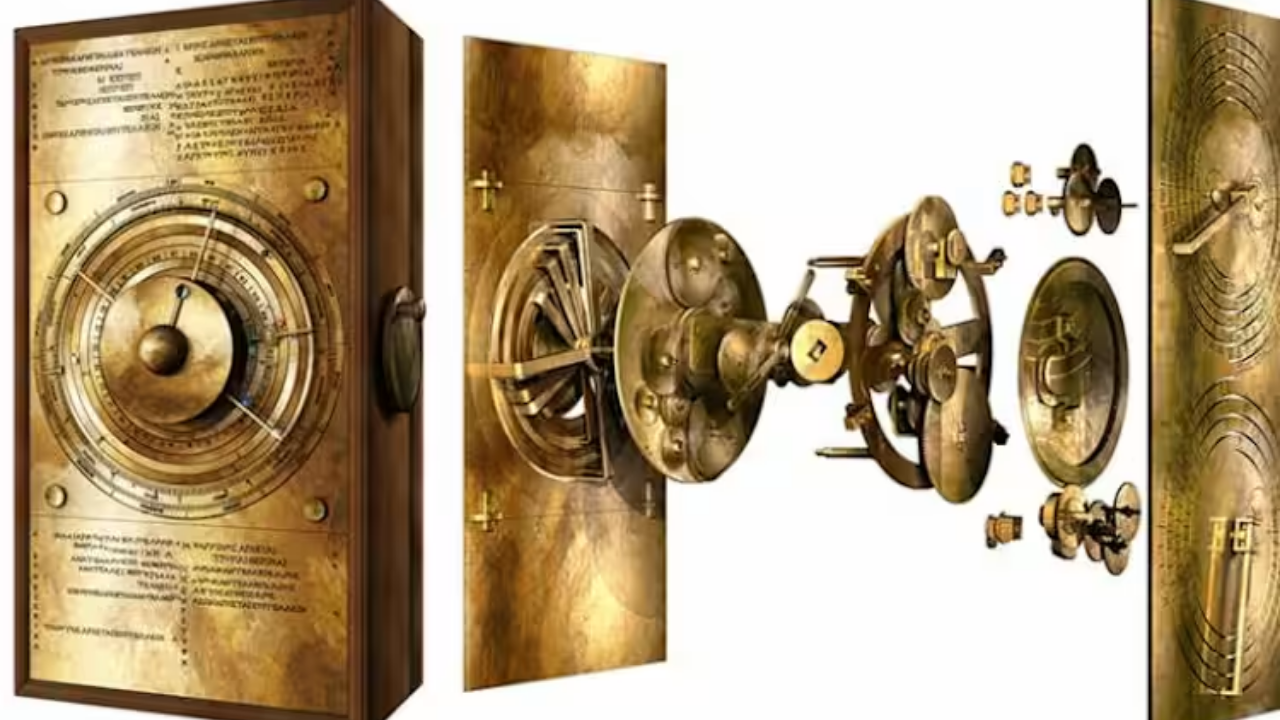
The Antikythera Mechanism represents one of antiquity's most remarkable technological achievements, offering compelling evidence of the scientific capabilities possessed by ancient Greek engineers. The device, constructed approximately two millennia ago, was designed to track celestial movements and predict astronomical events with impressive precision, employing an elaborate system of interlocking gears that demonstrate sophisticated mechanical understanding.
The artifact was recovered in 1900 by sponge divers working off the island of Antikythera in the Aegean Sea. The discovery emerged from a shipwreck site, with the mechanism preserved among other artifacts from what scholars believe was a Roman-era vessel. The device's bronze components, though corroded by centuries of submersion, retain enough detail to allow researchers to reconstruct its original function and design.
Study of the mechanism has revealed a level of technological sophistication that challenged prevailing assumptions about ancient engineering capabilities. The device functioned as an early analog computer, utilizing gear ratios to model the complex motions of celestial bodies. Such mechanical precision would not be commonly seen again in Europe until the emergence of mechanical clocks in the medieval period, underscoring the advanced knowledge possessed by Hellenistic scientists.
Continued analysis of the Antikythera Mechanism using modern imaging techniques has unveiled additional complexity within its construction, prompting ongoing scholarly investigation. Researchers continue to examine how ancient engineers achieved such mechanical sophistication and what this reveals about the broader state of Greco-Roman scientific knowledge. The artifact remains among the most significant discoveries illuminating the technological achievements of classical antiquity.