World · India Bureau
Ancient impact crater's age revised to 370 million years
New radioisotopic dating suggests the Ames impact structure formed during the Late Devonian period, significantly younger than previously thought. The finding reshapes understanding of a major geological event and its potential link to mass extinctions.
LSN India ·
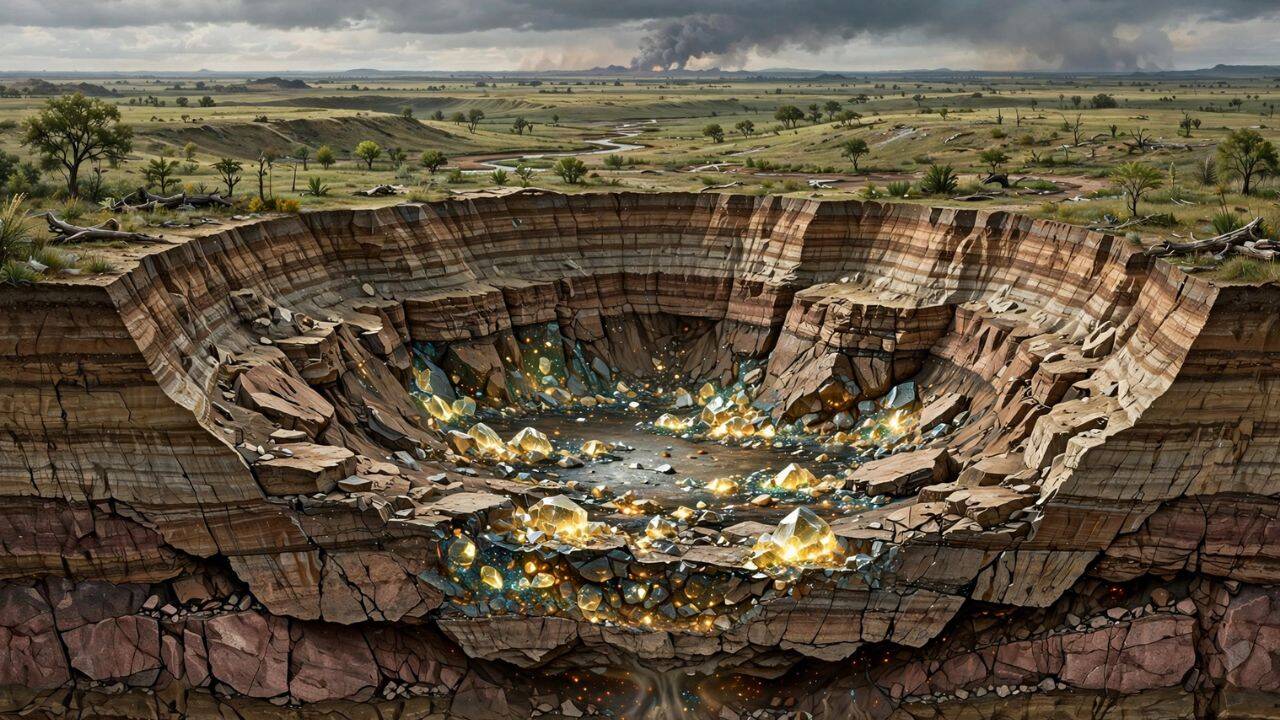
Scientists have revised the age of the Ames impact crater, determining it likely formed approximately 370 million years ago rather than during the Ordovician Meteor Event 470 million years ago. The discovery challenges decades of earlier research and provides fresh insights into one of Earth's significant geological events.
Researchers employed advanced radioisotopic dating techniques on zircon and plagioclase minerals extracted from granite samples at the impact site. Analysis of the zircon revealed a maximum age of nearly 370 million years, pointing to formation during the Late Devonian period.
The revised timeline suggests the Ames impact coincided with major extinction events of the Late Devonian era, a period marked by significant biodiversity loss. This temporal alignment may help scientists better understand the relationship between cosmic impacts and mass extinction episodes in Earth's history.
The study represents a significant refinement in impact crater chronology and demonstrates the value of precise radioisotopic methods in resolving longstanding questions about Earth's geological past. Further research may clarify the broader implications of the event for understanding ancient climate and life on the planet.