World · India Bureau
Ancient insect fossil reveals aquatic-to-land evolutionary transition
Scientists have discovered a 324-million-year-old fossil in Texas that provides rare insight into how insects evolved from water-dwelling creatures to terrestrial beings. The specimen's paddle-like limbs and abdominal appendages suggest a semi-aquatic existence in shallow coastal environments.
LSN India ·
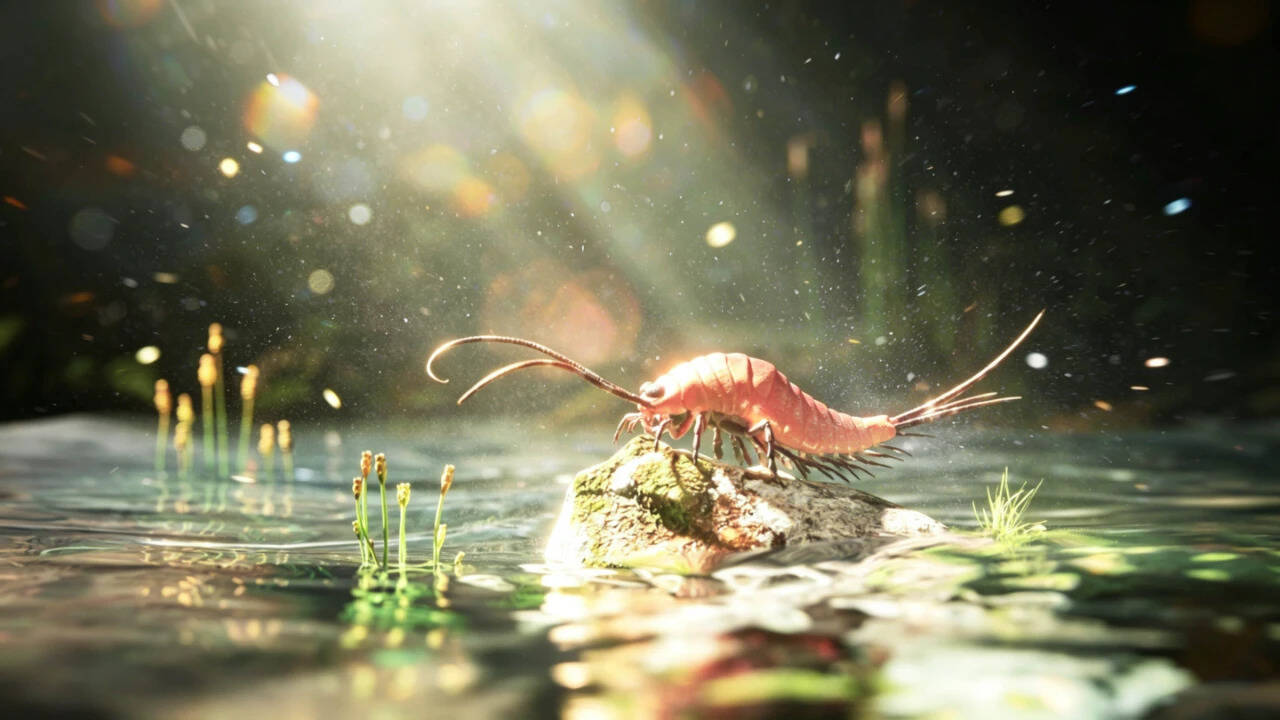
A remarkable fossil unearthed in Texas is shedding new light on one of evolution's most significant transitions: the movement of insects from aquatic to terrestrial environments. The specimen, dating back approximately 324 million years, displays distinctive features that illuminate how ancient insects adapted to life on land over vast stretches of time.
The fossilized insect exhibits specialized paddle-like limbs that would have been effective for swimming, alongside additional legs on its abdomen. These anatomical features suggest the creature inhabited shallow coastal waters and wetland regions, occupying a middle ground between fully aquatic and completely land-based lifestyles. Such morphological characteristics provide tangible evidence of the semi-aquatic existence this ancient species maintained.
The discovery contributes significantly to scientific understanding of insect evolution, demonstrating how natural selection operated gradually across millions of years. Rather than a sudden transformation, insects appear to have slowly accumulated physical modifications that eventually permitted them to colonize dry land successfully. Each preserved detail in the fossil record offers paleontologists crucial data about the incremental nature of this evolutionary process.
Findings such as this continue to enrich comprehension of how modern insect diversity emerged from primitive aquatic ancestors. The fossil serves as a biological snapshot of a pivotal moment in Earth's natural history, when countless species began experimenting with life beyond the water's edge.