World · India Bureau
Ancient Japanese ceramic pot with flame-like rim showcased in New York
A 5,000-year-old Japanese earthenware vessel featuring a distinctive flame-shaped rim and intricate cord markings has become a prized addition to The Metropolitan Museum of Art's collection. The Kaen doki pot represents the sophisticated artistic achievements of Jomon potters from Japan's prehistoric era.
LSN India ·
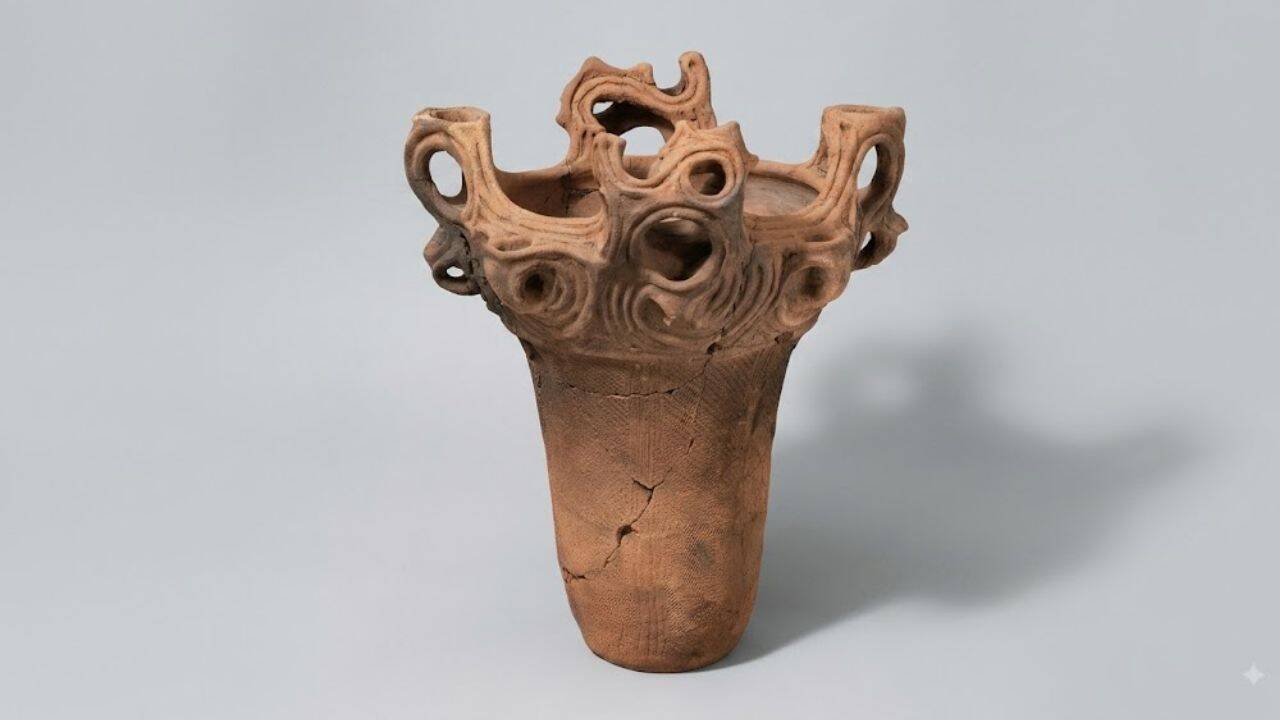
The Kaen doki, whose name translates to 'flame pot,' stands as a remarkable example of ancient Japanese pottery craftsmanship. Dating back approximately 5,000 years, the vessel showcases the advanced techniques employed by Jomon potters, who inhabited the Japanese archipelago during the prehistoric period.
The pot's most striking feature is its flame-like rim, which rises dramatically from the vessel's mouth in pointed, undulating forms. This distinctive design element is complemented by cord-marked patterns that cover much of the earthenware's surface, creating a textured appearance that speaks to the potters' meticulous attention to detail.
Construction of the Kaen doki involved carefully shaping clay coils and incorporating deliberately pierced openings throughout the vessel's structure. These perforations suggest the pot may have served ceremonial or specialized purposes rather than purely utilitarian functions, though scholars continue to debate its exact original use.
The artifact's acquisition by The Metropolitan Museum of Art underscores its significance as a window into the artistic and cultural sophistication of ancient Japan. The Jomon period, which lasted roughly 14,000 years, is renowned for producing some of the world's oldest known pottery, and pieces like the Kaen doki demonstrate why this era remains central to understanding early human artistic expression.