World · India Bureau
Ancient Viking Age grave in Latvia reveals violence, family bonds
Archaeological findings from a ninth-century burial site in Latvia have unveiled new insights into Viking Age society, with genetic analysis revealing familial connections and evidence of a violent incident among the six individuals interred together.
LSN India ·
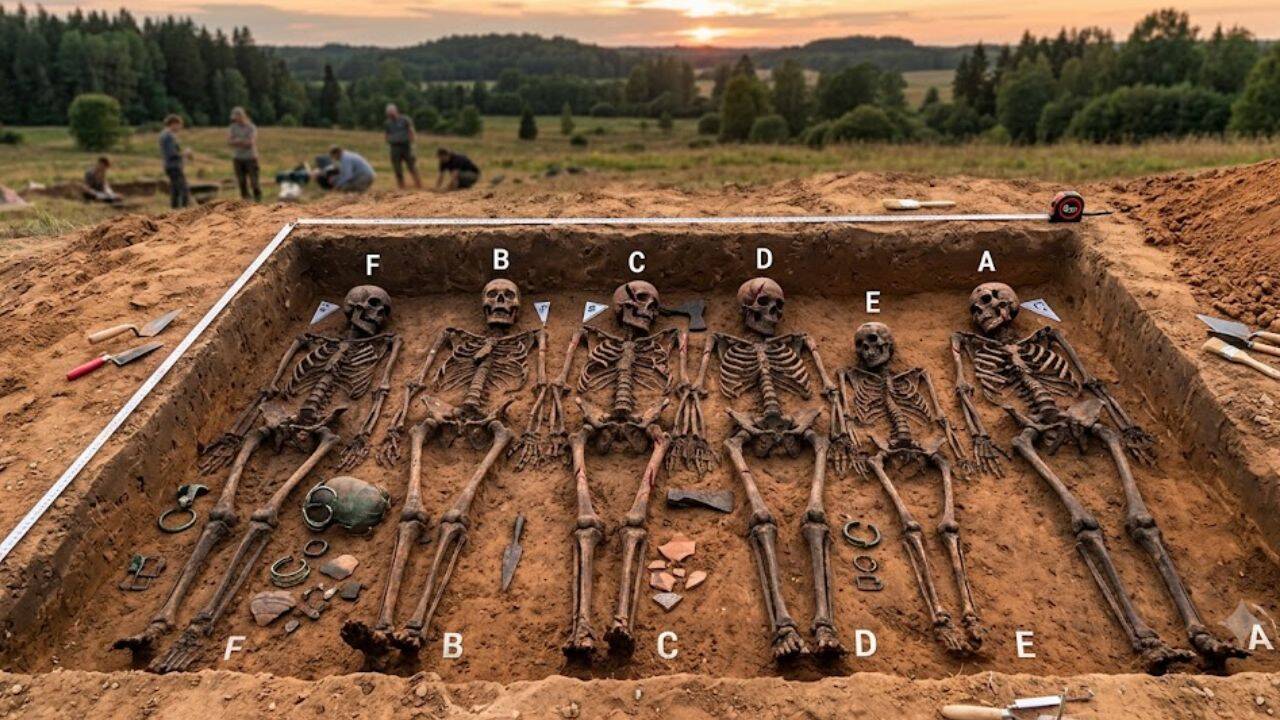
Researchers examining a rare communal grave from ninth-century Latvia have uncovered compelling evidence of family ties and violent conflict among six individuals buried together during the Viking Age. Ancient DNA analysis revealed that at least two of the deceased shared a father-son relationship, suggesting the grave held members of the same kinship group rather than unrelated individuals.
Three of the six skeletons bore sharp-force injuries consistent with a violent incident, indicating that the group may have perished in conflict or were victims of a single traumatic event. The nature and distribution of these injuries provide rare archaeological evidence of violence during the Viking Age in the region.
Genetic profiling placed the burial group closer to local Baltic populations than to Norse Viking populations, offering insights into the ethnic composition of Semigallian communities during this period. The findings suggest complex settlement patterns and genetic admixture in the region during the ninth century.
The discovery represents an unusual archaeological find, as communal burials of this type are rare in the Baltic region. The combination of DNA evidence, skeletal analysis, and burial context provides researchers with an exceptional window into family structures, social bonds, and the lived experiences of people during the Viking Age in Latvia.