World · India Bureau
Antarctic flood surge transforms lake ecosystem, disrupts carbon cycle
A major flooding event in Antarctica raised water levels in a glacial lake by two metres, triggering significant changes in microbial communities and altering how carbon moves through the ecosystem. Scientists say the dramatic shift offers insights into how polar environments respond to rapid hydrological changes.
LSN India ·
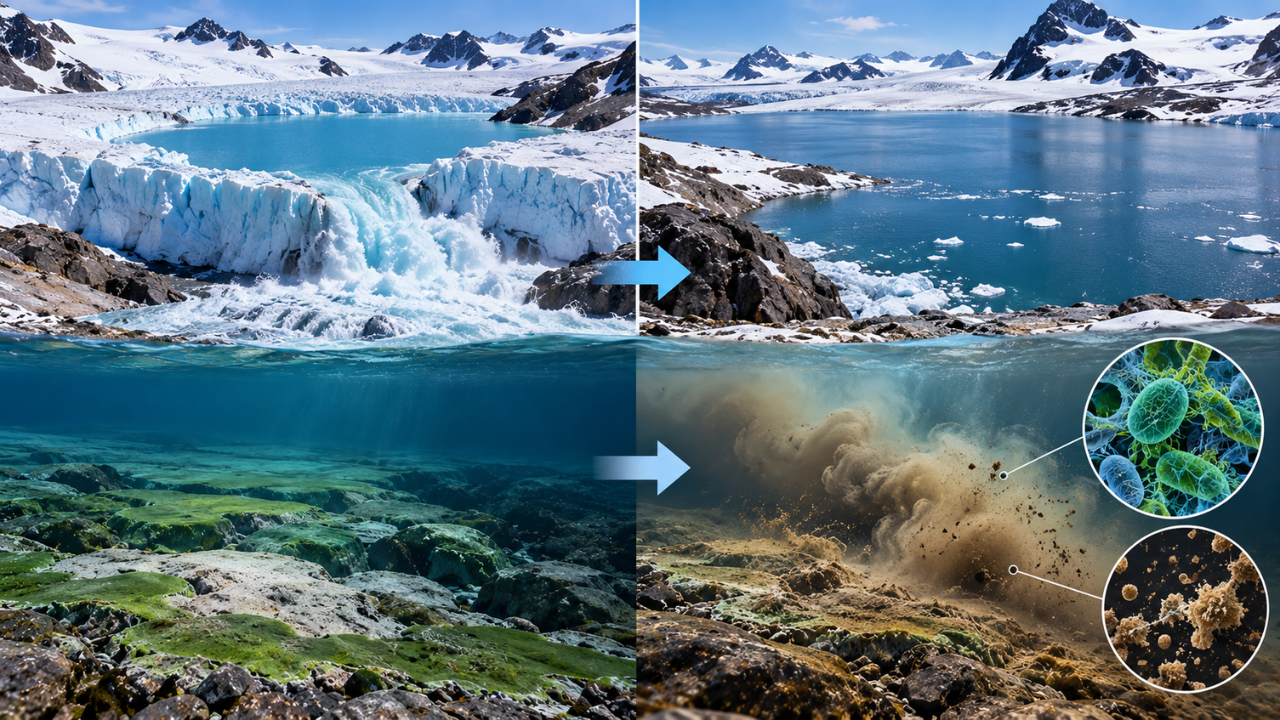
Researchers studying Antarctica's remote lake systems have documented how a sudden surge in meltwater raised lake levels by approximately two metres during a flooding event, setting off a cascade of ecological changes in the region's delicate microbial networks.
The flooding event fundamentally altered conditions within the lake, reshaping the composition and activity of microorganism populations that form the foundation of the Antarctic food web. These microscopic communities play a critical role in processing organic matter and cycling nutrients through the aquatic system.
The water level increase also disrupted carbon cycling patterns within the ecosystem. Scientists observed that the influx of fresh meltwater changed oxygen levels, temperature gradients, and nutrient availability—factors that directly influence how carbon is stored, released, or transformed by microbial life in the water column and lake sediments.
The findings underscore the sensitivity of Antarctic aquatic ecosystems to sudden environmental shifts. As climate change accelerates ice melt across the continent, understanding how these systems adapt to rapid hydrological changes becomes increasingly important for predicting broader impacts on polar biology and global biogeochemical cycles.
The research adds to growing evidence that even remote Antarctic environments are experiencing measurable ecological transformations in response to changing climate conditions affecting melt rates and water dynamics.