World · India Bureau
Antarctic plants show divergent responses to seven-year warming trend
A comprehensive study of two native flowering plants on King George Island reveals contrasting adaptive strategies to prolonged environmental warming. The findings underscore the complex ways species respond differently to climate change impacts.
LSN India ·
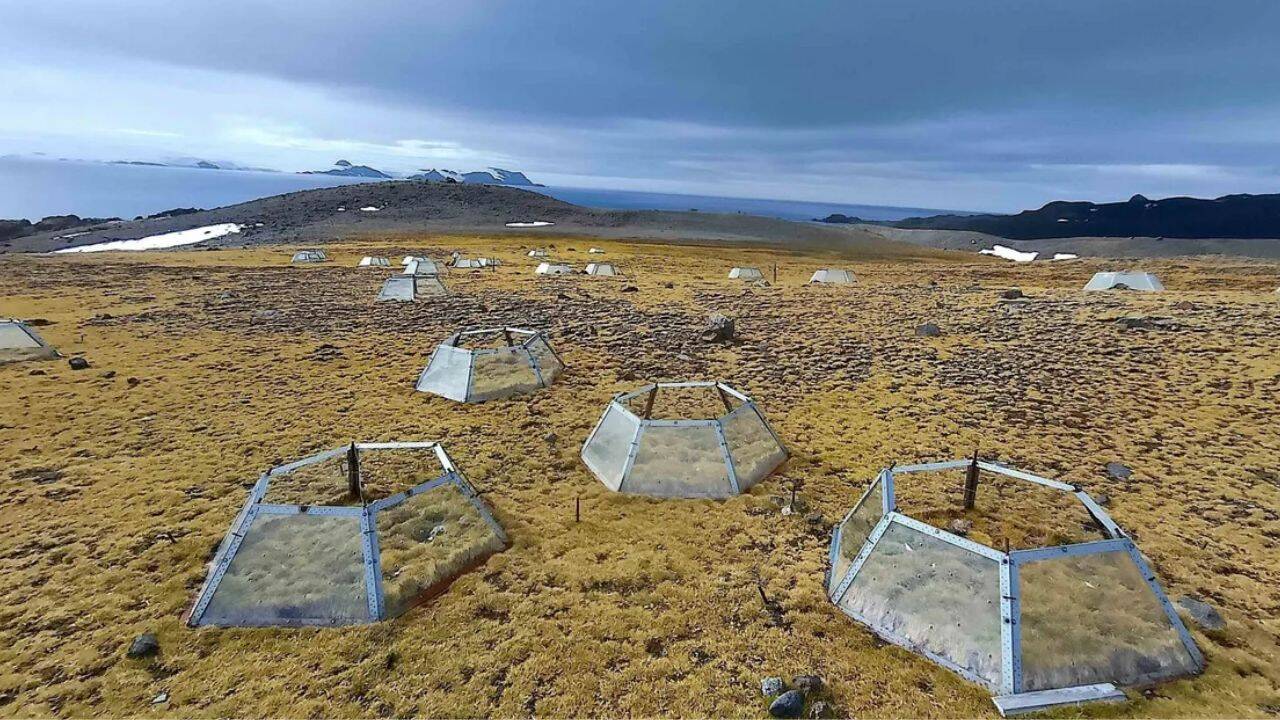
Research conducted on King George Island has documented how two of Antarctica's only native flowering plants have adapted—or failed to adapt—to seven years of sustained warming conditions. Scientists examined Antarctic hairgrass and Antarctic pearlwort, monitoring physiological changes in both species under warmer environmental conditions compared to their natural habitat baseline.
The two species displayed markedly different responses to the warming scenario. Antarctic hairgrass exhibited significant declines in hydraulic conductivity—the plant's ability to transport water through its tissues—as well as reduced photosynthetic capacity. These diminished functions suggest the species faces considerable stress under warmer conditions and may struggle to maintain vital biological processes as temperatures continue to rise.
In striking contrast, Antarctic pearlwort demonstrated enhanced adaptation to the same warming environment. The species increased both its hydraulic conductivity and photosynthetic capacity, suggesting a more resilient physiological response to elevated temperatures. This divergent outcome indicates that even closely related plant species in extreme environments employ fundamentally different survival strategies when confronted with climate stress.
The research provides critical insights into species-specific responses to climate change, highlighting that understanding Antarctic biodiversity requires examining how individual species will fare under future warming scenarios. Scientists emphasize that predicting ecosystem-wide impacts of climate change in polar regions demands detailed knowledge of each species' adaptive capacity and limitations, rather than assuming uniform responses across flora.