Politics · India Bureau
Antarctica gains 695 billion tons of ice in rare two-year surge
Antarctica experienced an unusual accumulation of 695 billion tons of ice between 2021 and 2023, driven by exceptional snowfall in East Antarctica. Scientists attribute the phenomenon to warmer tropical ocean temperatures that disrupted atmospheric patterns and transported moisture to the continent.
LSN India ·
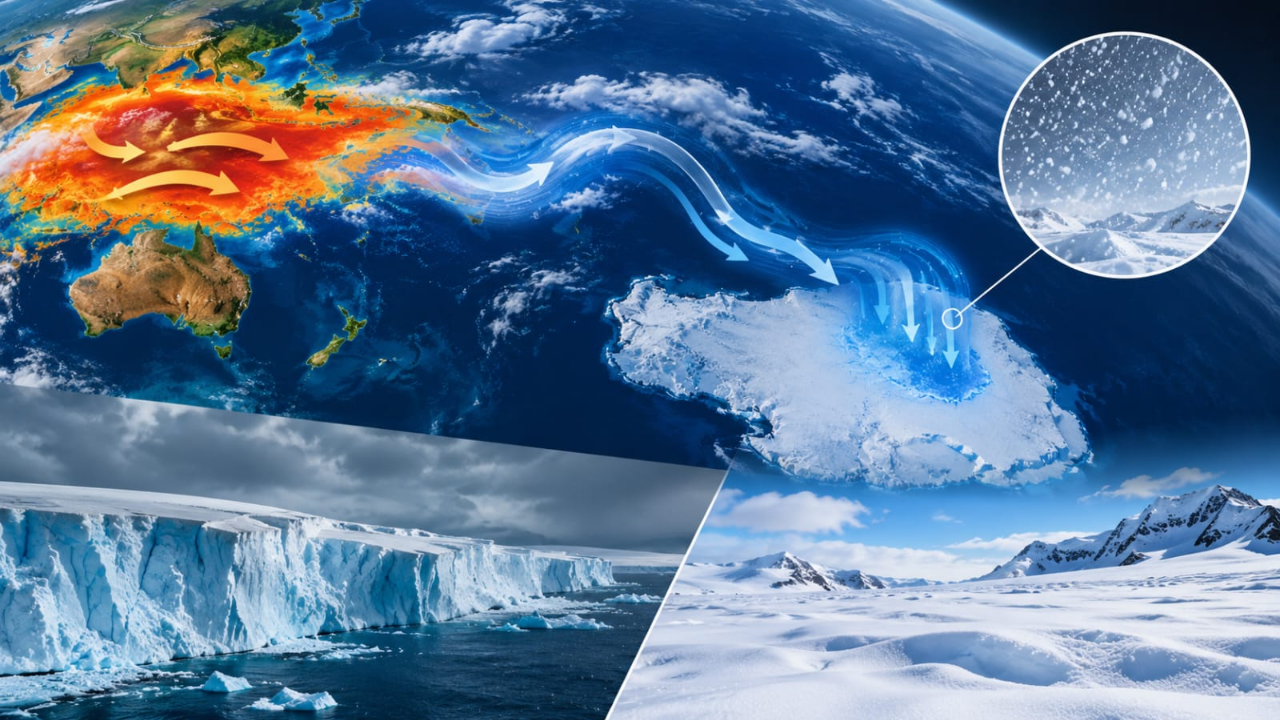
Antarctica recorded a significant gain in ice mass over a two-year period ending in 2023, marking a rare reversal in the continent's long-term pattern of ice loss. The 695-billion-ton increase was primarily concentrated in East Antarctica, where unusually heavy snowfall occurred during this interval.
Researchers have linked the snowfall surge to elevated temperatures in tropical ocean regions. These warmer waters disrupted normal atmospheric circulation patterns, channeling additional moisture toward Antarctica's interior regions and triggering above-average precipitation. The phenomenon represents a temporary interruption in the continent's broader trajectory of declining ice mass.
While the recent ice gain is notable, scientists caution against interpreting it as a reversal of long-term trends. Antarctica continues to experience net ice loss in several regions, and the two-year surge does not alter the overall assessment of climate impacts on the continent. The event underscores the complex interplay between tropical climate patterns and polar ice dynamics, demonstrating how distant ocean temperatures can influence conditions at the world's coldest continent.