Politics · India Bureau
Apollo 15's Genesis Rock unlocks secrets of ancient lunar crust
A sample recovered by Apollo 15 astronauts in 1971 has provided scientists with crucial insights into the Moon's primordial geology. The so-called Genesis Rock, found near Spur Crater, is believed to represent a piece of the lunar crust dating back approximately four billion years.
LSN India ·
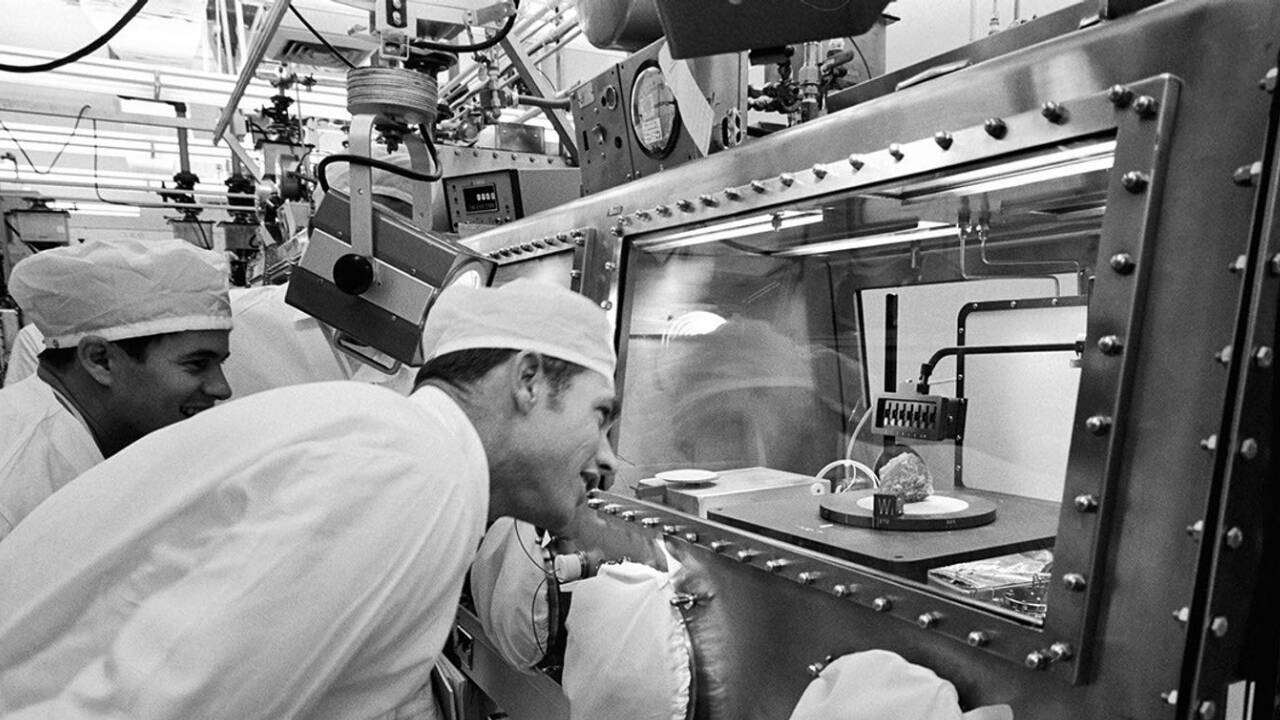
The Genesis Rock, an anorthosite sample discovered during the Apollo 15 mission, stands as one of the most significant geological specimens retrieved from the lunar surface. Astronauts located the unusually bright rock near Spur Crater during their 1971 expedition, recognizing its distinctive appearance and scientific potential.
Analysis of the sample has revealed its age to be approximately four billion years old, making it one of the oldest known pieces of the Moon's crust. Scientists have determined that the anorthosite composition provides valuable evidence of the Moon's earliest geological period, offering a window into processes that shaped the lunar surface during its formation.
The mineral composition of the Genesis Rock has proven instrumental in understanding the Moon's evolutionary history. Researchers studying the sample have been able to trace the chemical and structural characteristics that define the primordial lunar crust, providing context for how the Moon developed in its initial phases.
Decades after its collection, the Genesis Rock continues to yield insights for lunar geologists and planetary scientists. The specimen remains a cornerstone of lunar research, helping scientists piece together the complex history of Earth's closest celestial neighbor and offering broader understanding of planetary formation processes.