Technology · India Bureau
Asus Vivobook S14 Flip: Premium OLED display undermined by memory constraints
Asus's latest convertible laptop impresses with its vibrant OLED touchscreen and flexible design, yet the base model's 8GB RAM specification limits its practical performance and AI capabilities for demanding users.
LSN India ·
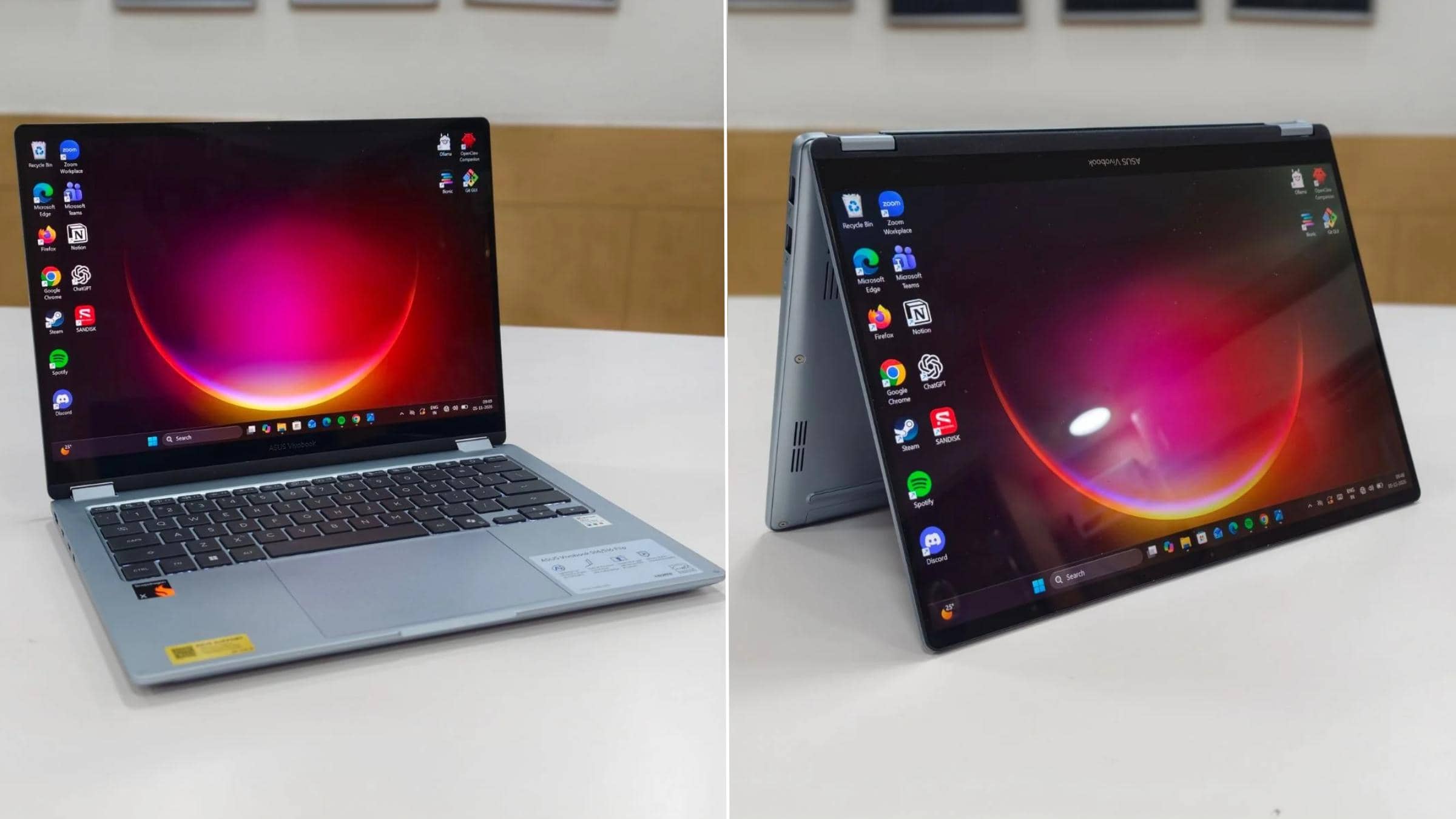
The Asus Vivobook S14 Flip delivers notable strengths in display technology and form factor, positioning itself as an attractive option in the convertible laptop segment. The device features a vivid OLED touchscreen that brings colour reproduction and contrast to professional standards, complemented by a versatile 360-degree hinge that enables multiple usage modes for productivity and media consumption.
Battery endurance represents another highlight of the Vivobook S14 Flip's design, offering users extended runtime suitable for all-day work and travel scenarios. The combination of the rotating display mechanism and sustained power delivery addresses key requirements for mobile professionals and content creators seeking flexibility without frequent charging.
However, the specification sheet reveals a critical limitation that constrains the device's broader appeal. The base configuration's 8GB of RAM creates a performance bottleneck, particularly affecting multitasking capability and the execution of modern AI-driven applications. This memory ceiling prevents the device from fully leveraging contemporary software features that increasingly define competitive positioning in the premium convertible category.
The RAM constraint becomes particularly relevant given the industry's rapid shift toward AI-integrated productivity tools. Users seeking to deploy machine learning features natively on their devices may find the base configuration insufficient, potentially necessitating upgrades to higher-specification variants that command additional investment.
The Vivobook S14 Flip ultimately represents a mixed proposition: compelling display and design elements are offset by memory specifications that fail to meet emerging performance demands of contemporary computing workflows.