Culture & Entertainment · India Bureau
Balapur's Sacred Laddu Reflects Rural Economy's Dramatic Transformation
The iconic Balapur Ganesh laddu has evolved from a humble ₹450 village tradition into a ₹39-lakh symbol of faith, mirroring the region's shift from agrarian economy to commercial prosperity. The sacred prasadam now attracts businessmen and real-estate developers alongside its traditional farming community devotees.
LSN India ·
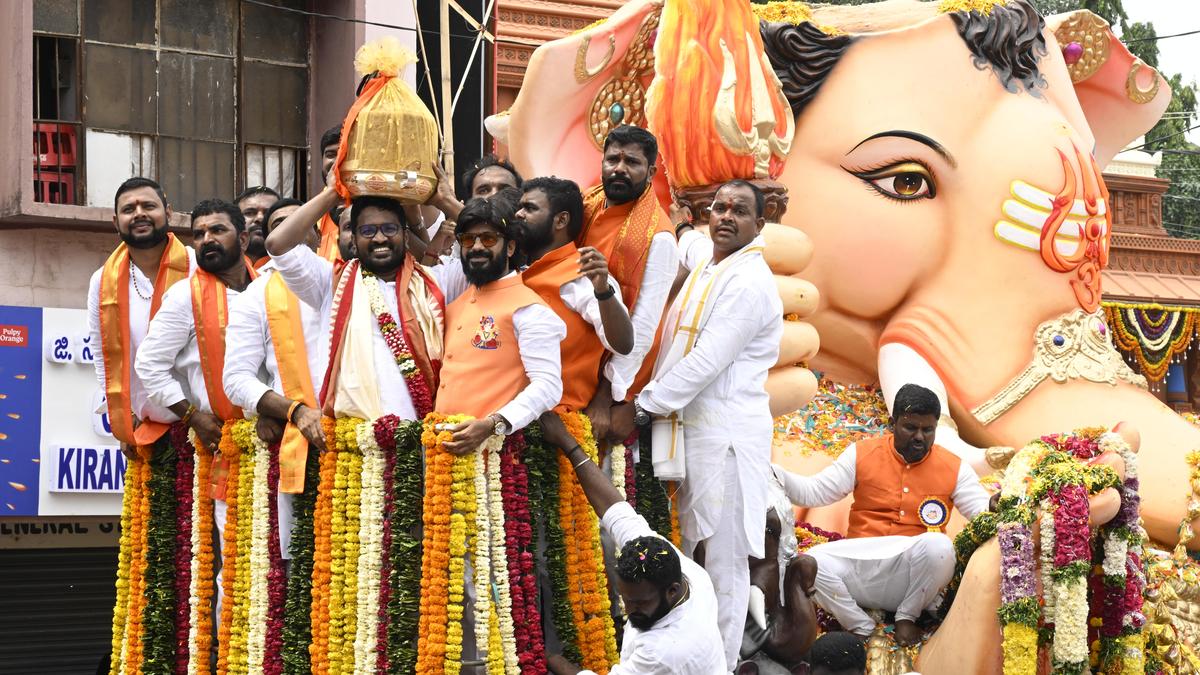
For three decades, the Balapur Ganesh laddu has undergone a remarkable economic evolution, growing nearly 8,600 times in value from its modest beginnings. What started as a ₹450 prasadam prepared for the village's annual Ganesh festivities has blossomed into a ₹39-lakh offering, becoming a bellwether of the region's changing fortunes.
Originally, the laddu served as a humble ritual shared among farmers and villagers during the monsoon season's Ganesh celebrations. The tradition reflected an agrarian economy where agricultural workers pooled resources to honor the deity believed to protect their crops and livelihoods. The prasadam's size and cost scaled modestly with the community's means, reinforcing bonds of faith and shared prosperity among the farming population.
Today's lavish Balapur laddu tells a starkly different story. Real-estate entrepreneurs, business magnates, and commercial interests now drive demand for the increasingly expensive offering. The transformation underscores how rapid urbanization and economic development have reshaped once-rural landscapes into bustling commercial hubs, fundamentally altering both the composition of communities and the nature of their religious observances.
The laddu's evolution encapsulates broader economic shifts across South India, where traditional agrarian societies have given way to real-estate booms and commercial expansion. Yet the sacred tradition endures, now serving as a symbol of both prosperity and the nostalgia for simpler times, attracting devotees across socioeconomic strata seeking blessings for their ventures.