Business · Bangladesh Bureau
Bangladesh gas and power sectors grapple with structural challenges amid import reliance
Bangladesh's energy infrastructure faces mounting pressures from supply constraints and operational difficulties, forcing authorities to increasingly rely on costly imports as a temporary measure. Industry analysts warn that short-term solutions mask deeper systemic issues requiring urgent long-term intervention.
LSN Bangladesh ·
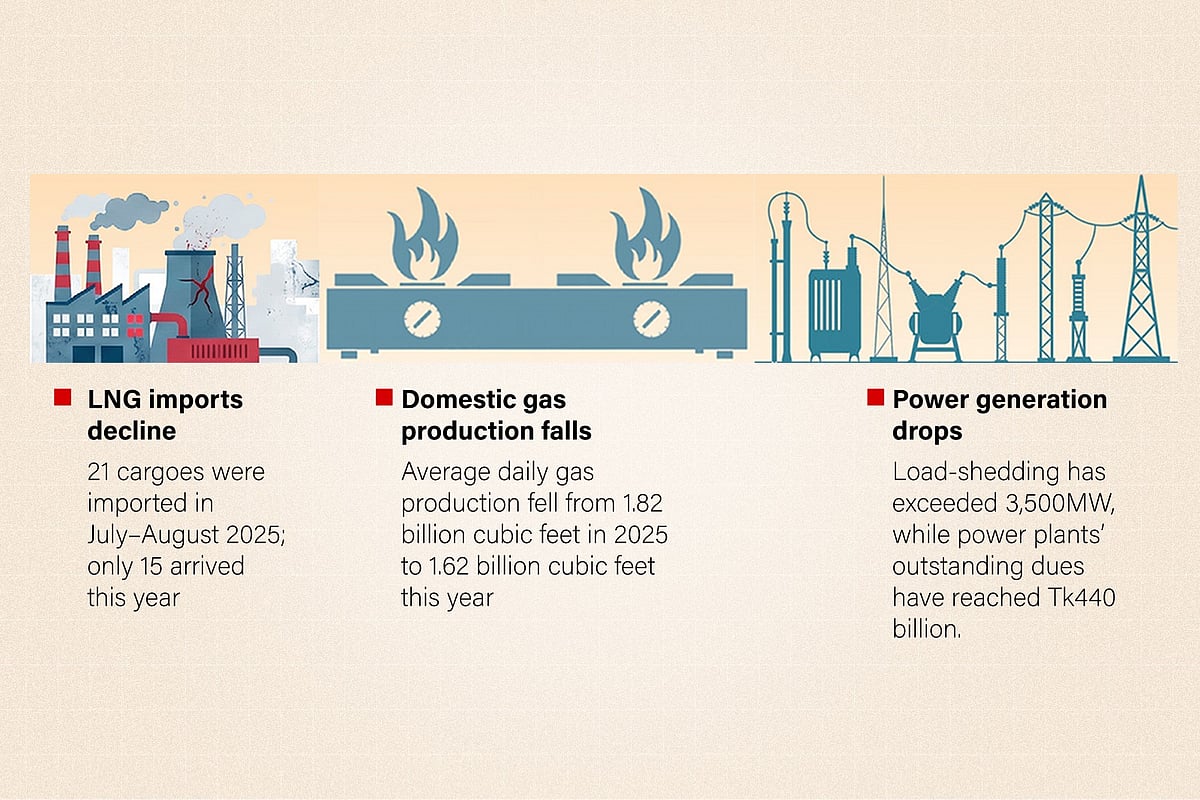
Bangladesh's gas and power sectors are confronting a complex array of problems ranging from production shortfalls to distribution inefficiencies, prompting policymakers to turn to imports as an immediate relief measure. The South Asian nation's domestic gas reserves continue to decline while demand from industrial and residential consumers remains robust, widening the supply-demand gap.
The power generation sector faces parallel challenges, with aging infrastructure, maintenance backlogs, and fuel supply disruptions affecting overall capacity utilization. Several power plants operate below optimal levels due to insufficient fuel availability and technical constraints, limiting the country's ability to meet growing electricity demand during peak hours.
Imports of liquefied natural gas and power from neighboring countries offer breathing room in the near term, but energy experts caution against over-reliance on external sources. Such arrangements increase operational costs and expose Bangladesh to international price volatility, eroding the competitiveness of domestic industries dependent on affordable energy.
Energy officials acknowledge the urgency of developing sustainable solutions, including investments in renewable energy, exploration of new gas fields, and rehabilitation of existing infrastructure. However, implementation of comprehensive energy strategies requires substantial capital expenditure and coordinated policy reforms across multiple government agencies.
Meanwhile, consumers and businesses face the prospect of continued energy uncertainties and potential rate adjustments as the authorities balance supply management with fiscal constraints.