World · Bangladesh Bureau
Bangladesh universities operate without permanent campuses amid infrastructure crisis
At least 25 universities across Bangladesh are functioning without dedicated campuses, relying instead on makeshift arrangements in rented buildings. The situation has raised concerns about educational quality and institutional stability in the country's higher education sector.
LSN Bangladesh ·
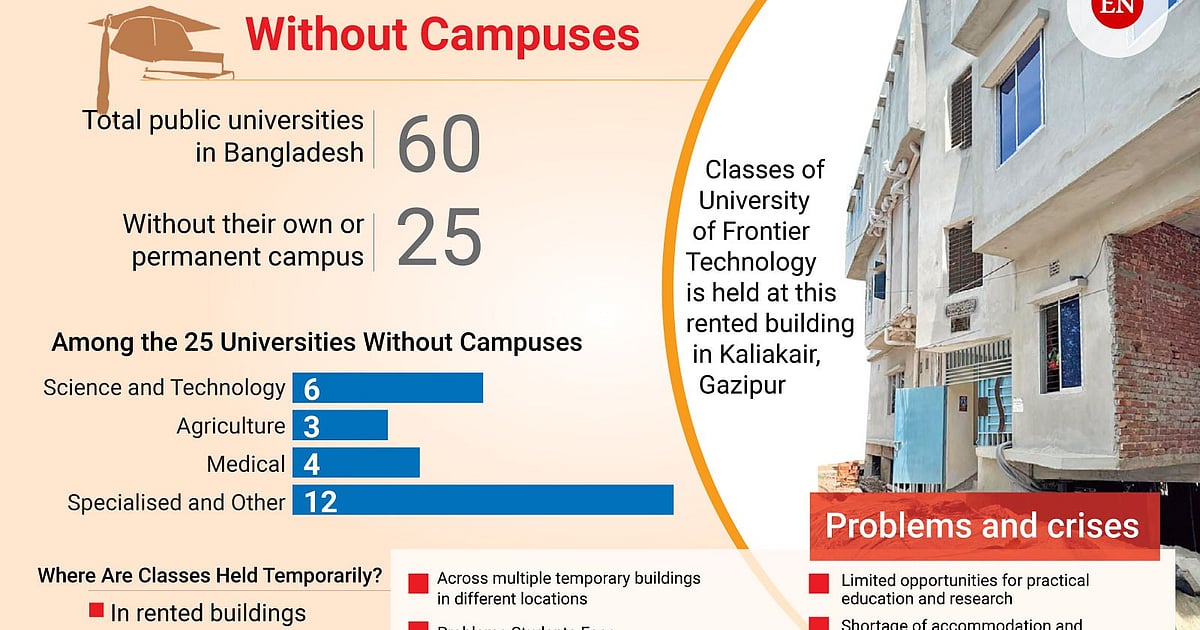
Twenty-five universities in Bangladesh continue to operate without permanent campus facilities, instead conducting classes and administrative functions in rented premises, according to education sector assessments. The institutions range from public to private universities, with many having operated in this precarious manner for years despite their establishment and growth in student enrollment.
The reliance on temporary, rented spaces has created significant challenges for academic delivery and institutional development. Universities are forced to juggle classes across multiple leased buildings, limiting their ability to establish comprehensive facilities such as laboratories, libraries, and student accommodation. Faculty members and administrators report constraints in implementing long-term academic planning and research initiatives that typically require dedicated institutional infrastructure.
Education officials have attributed the situation to a combination of factors, including delayed government land allocations for public universities and financial constraints limiting private institutions' capacity to secure permanent premises. The absence of dedicated campuses has also hampered efforts to meet regulatory standards and achieve institutional accreditation benchmarks that depend on adequate physical infrastructure.
The government and university authorities have acknowledged the issue, with some institutions working toward land acquisition or construction of permanent facilities. However, the process remains slow, leaving thousands of students enrolled in universities that operate from temporary arrangements. Education stakeholders have called for accelerated policy interventions and funding mechanisms to address the infrastructure deficit affecting these institutions.