World · World News Bureau
Belgian physicist wins Nobel Prize for detecting cosmic neutrinos
Francis Halzen has been awarded the Nobel Prize in Physics for his pioneering work detecting neutrinos from deep space using a revolutionary Antarctic observatory. The breakthrough research opens new windows for understanding the universe's most violent cosmic events.
LSN World News ·
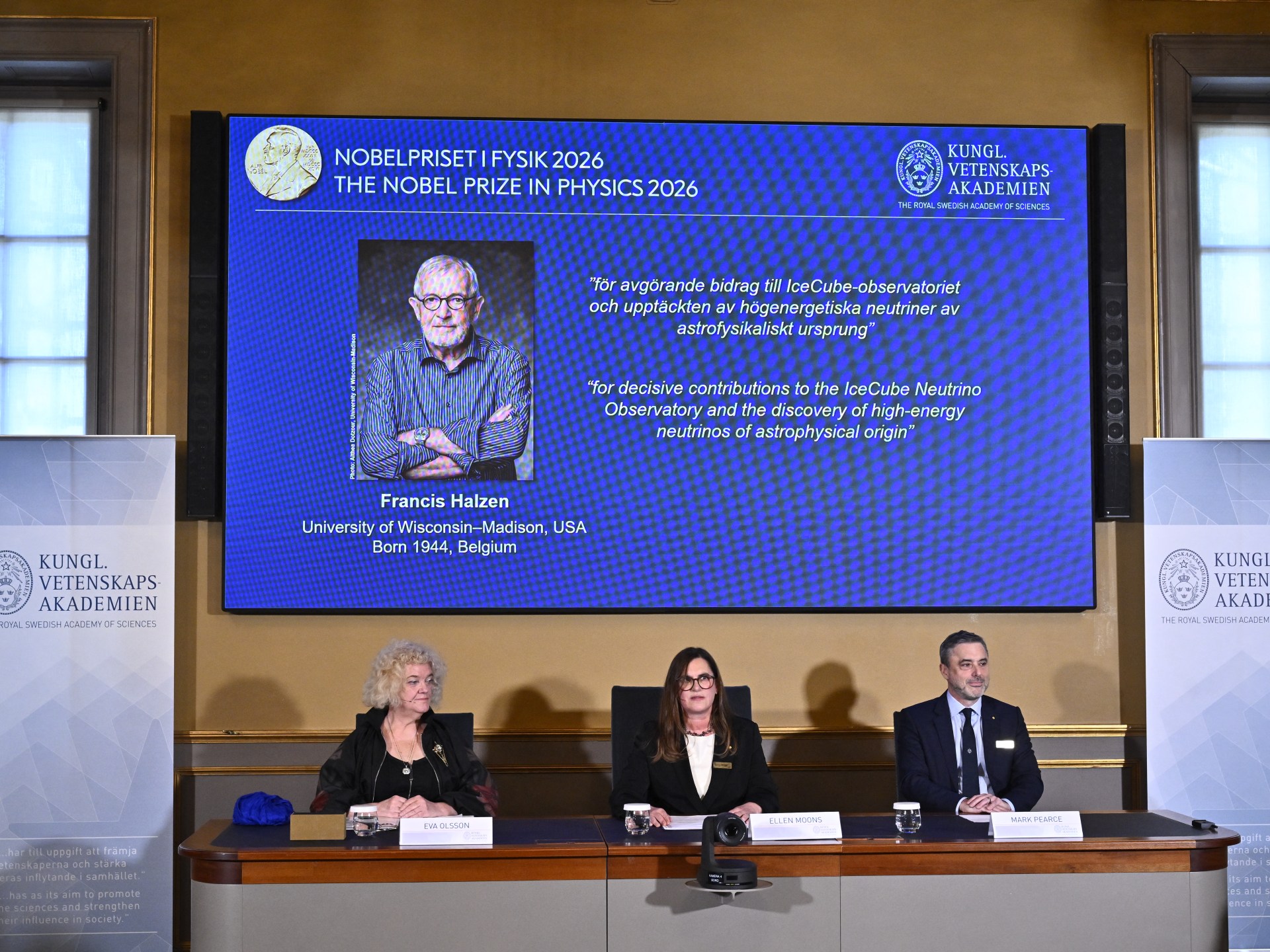
The Nobel Committee recognized Halzen's contributions to fundamental physics through his development of detection methods for neutrinos, the elusive particles that stream through the cosmos largely undetected. These so-called 'ghost particles' originate from supernovae, black holes, and other extreme astrophysical phenomena, making them valuable messengers from the distant universe.
Halzen's most significant achievement was conceptualizing and realizing the IceCube Neutrino Observatory at the South Pole, an ambitious facility that leverages the Antarctic ice sheet itself as a massive particle detector. When neutrinos collide with atomic nuclei in the ice, they produce faint light signals that sensitive photomultiplier tubes capture, allowing scientists to trace the particles' origins across billions of light-years.
The observatory has fundamentally transformed our understanding of high-energy astrophysics since beginning operations in 2010. IceCube detections have confirmed theoretical predictions about neutrino sources and revealed unexpected phenomena, establishing neutrino astronomy as a critical complement to traditional telescope observations and gravitational wave detection.
Halzen's achievement represents decades of collaborative effort involving hundreds of scientists and engineers across multiple continents. The recognition underscores how innovative experimental approaches can unlock profound insights into the cosmos's most energetic and enigmatic processes.