World · World News Bureau
Belgian scientist wins Nobel Physics Prize for neutrino detection work
Prof. Francis Halzen of Belgium has been awarded the Nobel Prize in Physics for his groundbreaking contributions to the development of a space observatory that detects ghostly particles streaming through the cosmos. The recognition honors his pivotal role in advancing neutrino astronomy, opening a new window for observing the universe.
LSN World News ·
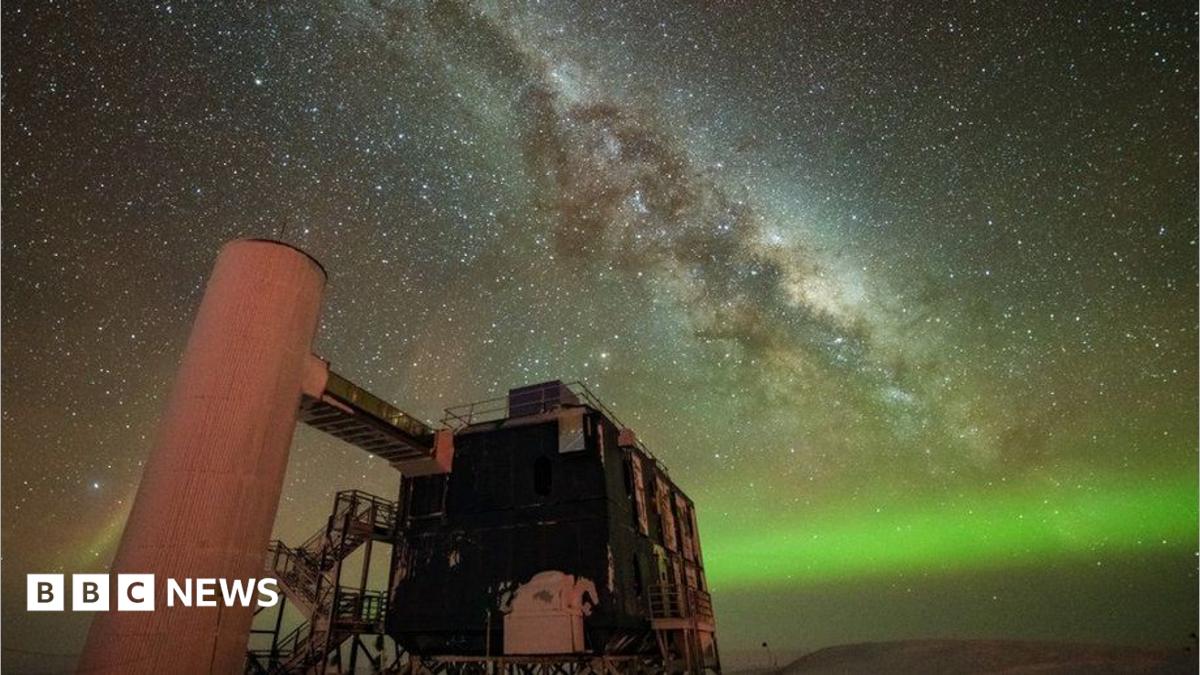
The Nobel Committee announced that Halzen received the prestigious award for his instrumental work on an observatory designed to capture neutrinos—subatomic particles that travel vast distances through space with minimal interaction with matter. Often referred to as 'ghost particles' due to their elusive nature, neutrinos offer scientists a unique means of studying extreme cosmic phenomena invisible through conventional telescopes.
Halzen's contributions have fundamentally shaped modern astroparticle physics, enabling researchers to detect and study these enigmatic particles from sources including supernovae, gamma-ray bursts, and other high-energy cosmic events. His work has established neutrino detection as a legitimate and productive field of astronomical observation, complementing traditional electromagnetic and gravitational wave observations.
The recognition underscores the growing importance of multi-messenger astronomy in understanding the universe's most violent and energetic processes. Neutrino observatories have emerged as critical tools for the global scientific community seeking to unravel the mysteries of stellar explosions, black holes, and other cosmic phenomena that shape our understanding of physics at the most fundamental level.
This award reflects decades of dedication to experimental physics and the collaborative international effort required to construct and operate sophisticated detection instruments capable of identifying these rare cosmic visitors.