World · India Bureau
Beyond Death: Understanding Garuda Purana's Broader Spiritual Message
The Garuda Purana is widely perceived as a text focused solely on death and the afterlife, but scholars argue this narrow interpretation obscures its comprehensive spiritual and ethical teachings. The ancient scripture encompasses guidance on 16 life rituals and emphasizes karma awareness rather than fear.
LSN India ·
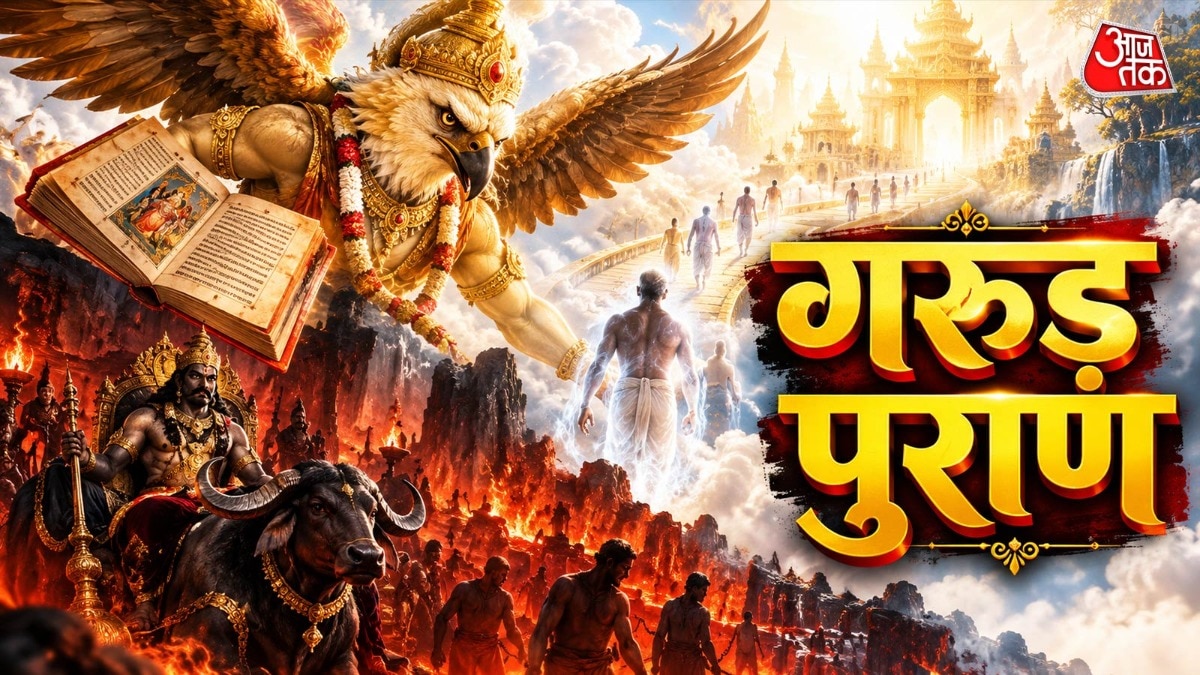
The Garuda Purana, a foundational text in Hindu philosophy, has acquired a reputation primarily as a guide to death and post-mortem existence, yet this characterization significantly limits understanding of its actual scope and purpose, according to scholars of classical Indian texts.
While descriptions of death and the journey thereafter constitute an important section of the Purana, reducing the entire work to this single dimension overlooks its broader spiritual and practical dimensions. The text contains extensive teachings on 16 significant life rituals—known as the Samskaras—that guide individuals through various stages of human existence from birth to death.
The Garuda Purana's treatment of mortality and karmic consequences is designed not primarily to generate fear among readers, but rather to cultivate awareness and responsibility regarding one's actions and their inevitable results. This pedagogical approach encourages individuals to lead ethical and purposeful lives by understanding the causal relationship between deeds and outcomes.
By acknowledging the text's multifaceted nature—encompassing life rituals, ethical conduct, and spiritual development alongside its eschatological teachings—readers gain a more complete understanding of its intended role as a comprehensive guide to righteous living rather than merely a treatise on death.