Culture & Entertainment · India Bureau
Brazilian fossil reveals new pre-dinosaur reptile species from 240 million years ago
Scientists have identified a previously unknown reptile species from the Triassic period that sheds light on the evolutionary origins of dinosaurs and crocodiles. The fossil discovery in Brazil provides crucial evidence about early archosauriform reptiles that existed just before dinosaurs dominated the planet.
LSN India ·
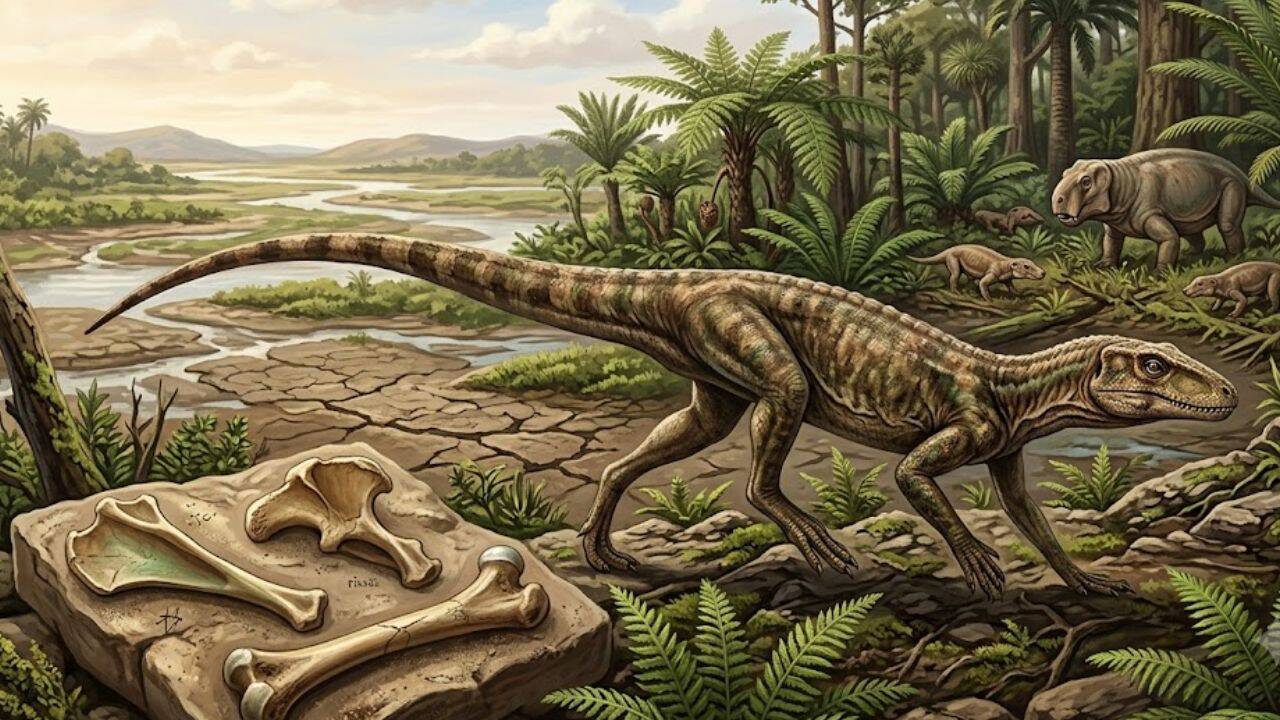
Paleontologists have identified Silescelida acristata, a new reptile species whose fossilised remains were discovered in Brazil, offering fresh insights into the ancient lineage connecting modern crocodiles and dinosaurs. Dating back approximately 240 million years, the specimen comes from a critical period in Earth's evolutionary history when early archosauriform reptiles were diversifying before the emergence of dinosaurs.
Although only partial skeletal remains were recovered, the fossil exhibits distinctive bone structures that differentiate it from other reptile species that inhabited the Triassic period. These unique anatomical features have enabled researchers to establish its place within the reptilian evolutionary tree.
Phylogenetic analysis has classified Silescelida acristata as an early form of eucrocopodan archosaur, a group that ultimately gave rise to modern crocodilians. The discovery contributes to scientists' understanding of how these remarkable reptile lineages diverged and evolved during the Triassic era.
The findings underscore Brazil's significance as a repository of Triassic-period fossils and its role in revealing the complex evolutionary pathways that shaped modern reptile diversity. Such discoveries continue to refine paleontologists' knowledge of how Earth's major reptile groups originated and developed.