Budget benefits will flow directly to the people, Minister Nalinda Jayatissa tells Harsha de Silva in Parliament
Replying to MP Dr Harsha de Silva, Health and Mass Media Minister Dr Nalinda Jayatissa told Parliament the economy had been stabilised through fiscal discipline and sound management, and that the 2027 budget is designed to pass its benefits straight to the public.
LSN Sri Lanka ·
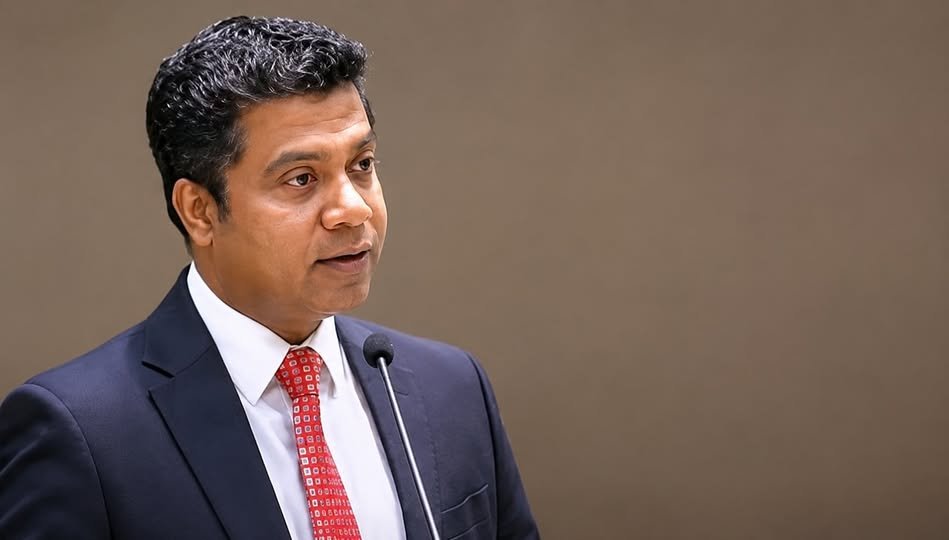
<p>The government has stabilised the country's economy within a short period of about two years on the back of strict fiscal discipline and sound financial management, and the 2027 budget has been framed so that all of its benefits reach the people directly, Health and Mass Media Minister Dr Nalinda Jayatissa told Parliament today (16 November).</p>
<p>Responding to statements made in Parliament by MP Dr Harsha de Silva, the minister said that although previous governments had local and foreign economic experts, they had been unable to achieve the economic transformation that the political leadership of the cabinet headed by the current President has now made a reality through fiscal discipline.</p>
<p>He stressed that, without raising taxes or cutting ministry spending, the government had moved to deliver a wide range of welfare benefits to the public, including Aswesuma payments, allowances for the elderly and people with disabilities, assistance for schoolchildren and fuel subsidies, drawing on the strength gained from economic stability.</p>
<p>Recalling that, after the economic, social and political crisis of 2021-22, the people gave a strong two-thirds mandate at the September 2024 presidential election and the November general election, the minister said the country had been fully stabilised politically, socially and economically over the past two years. The 2027 budget debate, he said, marks the start of a move towards an era of transformative development built on that stability.</p>
<p>Dr Jayatissa said the economic stability the country has achieved has been recognised by the international community and international financial institutions, noting that the economy grew by 5% in 2025 and by 5.1% in the first quarter of 2026. While economic growth fell sharply even in G20 countries such as South Korea and Germany because of the war situation that has gripped the Middle East since 27 February 2026, Sri Lanka, as a country dependent on imported oil, still managed to sustain growth of 4.2% in the second quarter of 2026, he said.</p>
<p>The minister said that although the International Monetary Fund had forecast a primary balance of 2.3% of GDP for 2025, the government achieved a primary balance of 5.4%, the highest on record. He also said that against the primary balance target of Rs 360 billion set in the 2026 budget, a primary balance of Rs 1,844 billion had been recorded by the end of September 2026, 5.1 times the expected target.</p>
<p>The budget deficit in 2025 was 2.3% of GDP, the lowest in 68 years, the minister said, while government revenue rose from 8.2% of GDP in 2022 to 16.6% in 2025, crossing the 16% mark for the first time in 23 years. He said that whereas 79.1% of government revenue went on interest payments in 2022, this had been brought down to 39.6% by September 2026, and that foreign reserves had grown to more than US$7 billion by October 2026.</p>
<p>Although inflation rose somewhat to 8.3% by October 2026 amid the war situation in the Middle East, the government ensured an uninterrupted supply of fuel and electricity without shutting the country down as happened during COVID, the minister said. Without passing the pressure of rising world fuel prices on to the public, the Treasury provided a total of Rs 147 billion, a Rs 100 billion relief package in April 2026 and a further Rs 47 billion package in October 2026, including Rs 99 billion in fuel subsidies, without any tax increase, he said. He added that Rs 500 billion had been allocated to pay housing and land compensation of between Rs 5 million and Rs 10 million to the 2.3 million people affected by Cyclone Ditwah on 28 November last year.</p>
<p>Setting out the welfare benefits the budget will deliver, Dr Jayatissa presented the following details:</p>
<p>Aswesuma and social protection: Rs 230 billion has been allocated for social protection allowances. The allowance for the poor category has been raised from Rs 8,500 to Rs 10,000, and for the extremely poor category from Rs 15,000 to Rs 17,500. In addition, Rs 6 billion has been allocated for November and December to give these beneficiaries extra payments of Rs 4,000 and Rs 6,500 respectively.</p>
<p>Elderly and disability allowances: The elderly allowance and the monthly assistance for people with disabilities, previously Rs 7,500, have now been raised to Rs 12,500. Rs 1,000 million has been allocated to improve access to state institutions for people with disabilities, Rs 150 million for technical and medical equipment, and Rs 200 million for transport for children with disabilities.</p>
<p>Child and elder care: Rs 500 million has been allocated to improve facilities at children's homes, Rs 182 million for the welfare of at-risk children, Rs 102 million for alternative care arrangements, Rs 100 million for the Pannala Welcome Village elders' home and Rs 75 million for the Ridigama detention home.</p>
<p>Relief for school and pirivena students: Besides Rs 6,000 each for stationery for 1.5 million schoolchildren and Rs 3,000 each for footwear for 850,000 students, the removal of VAT on exercise books will cut their price by 18% from 1 December. The daily allowance for ordained pirivena students has been raised from Rs 15 to Rs 50, and for lay students from Rs 5 to Rs 25, while Rs 100 million has been set aside to provide spectacles for visually impaired schoolchildren.</p>
<p>The minister further said that the reality on the ground is different, and that the public has an understanding of the transformative change the government is bringing about which the opposition lacks.</p>
<p>Translated from the LSN Sinhala edition.</p>