Culture & Entertainment · Singapore Bureau
Carbon credits driving farmland conversion across New Zealand
New Zealand's rural heartland is undergoing rapid transformation as farmers cash in on carbon-credit schemes, converting productive farmland into forest plantations. The shift is reshaping communities and raising concerns about food production and agricultural heritage.
LSN Singapore ·
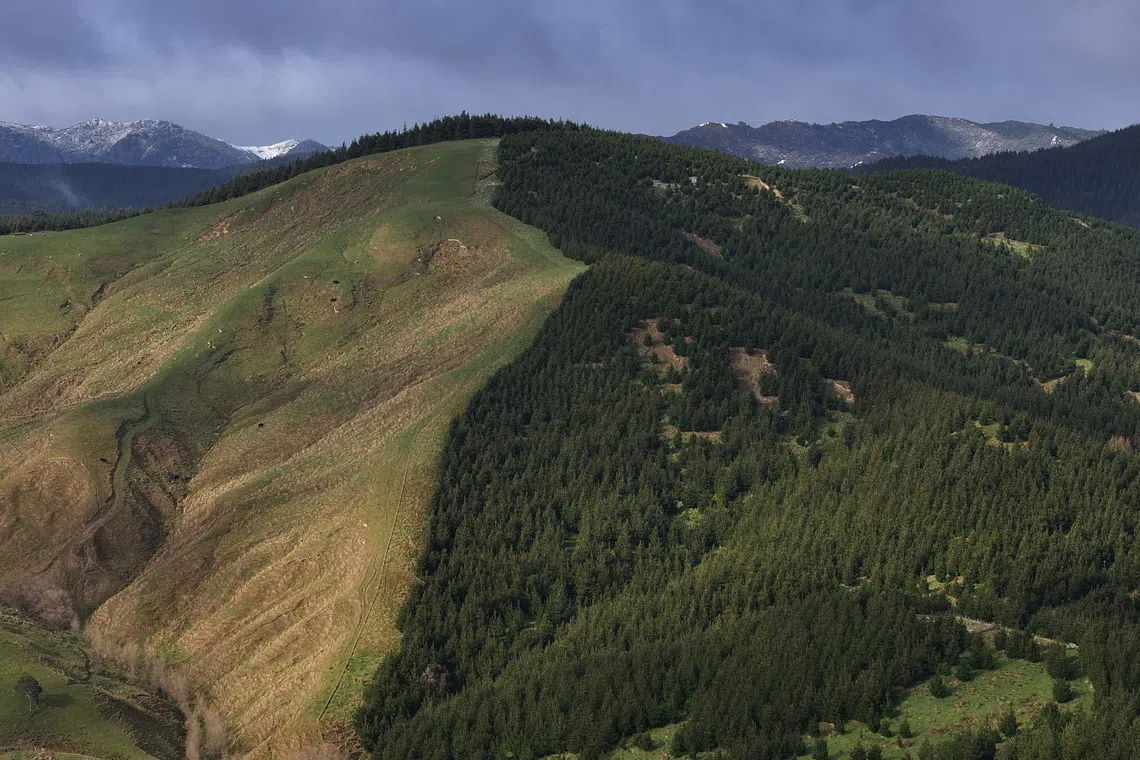
Pongaroa, a small village in the Wairarapa region, exemplifies the sweeping changes rippling through New Zealand's farm country. What were once thriving sheep and cattle stations are increasingly being converted to tree plantations, as landowners capitalize on the country's emissions trading scheme and international carbon markets.
Fiona Ramsden's farm near Pongaroa, with its heritage homestead and rolling pastures dotted with native vegetation, represents the kind of productive agricultural land now at the centre of the transformation. During lambing season, such farms have traditionally bustled with activity, but many are being abandoned for forestry ventures that promise more immediate financial returns through carbon credits.
The carbon-credit surge reflects global efforts to combat climate change, with investors purchasing New Zealand farmland specifically to plant forests and generate tradeable credits. While the scheme has environmental benefits, it is triggering concern among rural communities about the erosion of farming culture, diminished food self-sufficiency, and the long-term viability of regional economies dependent on agriculture.
The trend underscores a broader tension in New Zealand between climate commitments and rural sustainability. Policymakers face mounting pressure to balance carbon-reduction targets with the need to preserve productive farmland and protect the livelihoods of agricultural communities that have defined New Zealand's identity for generations.