Business · Sri Lanka Bureau
Central Bank of Sri Lanka raises overnight policy rate to 9.00%
The 25 basis point hike is aimed at containing inflation, which rose to 8.3% in October, and bringing it back to the 5% target by the second half of 2027. The Central Bank also raised the statutory reserve ratio to 3.00%.
LSN Sri Lanka ·
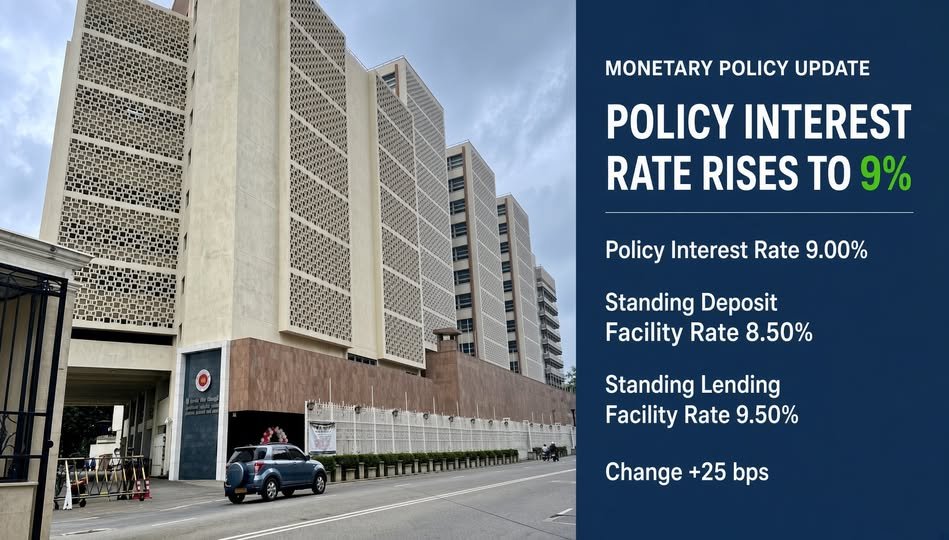
<p>The Monetary Policy Board of the Central Bank of Sri Lanka decided at its meeting on 19 November 2026 to raise the Overnight Policy Rate (OPR) by 25 basis points to 9.00%, the Central Bank has announced. Accordingly, the Standing Deposit Facility Rate (SDFR) has been raised to 8.50% and the Standing Lending Facility Rate (SLFR) to 9.50%.</p>
<p>The Central Bank said the Board took the decision after a careful review of domestic and global economic conditions. Its statement also said the following.</p>
<p>The Middle East conflict lasting longer than expected has pushed up global energy and food prices, driving inflation higher. Headline inflation (year-on-year) rose to 8.3% in October 2026, and core inflation also increased. Although global energy prices have eased somewhat recently, second-round effects of the earlier price increases are expected to be seen in the near term as well.</p>
<p>According to the latest projections, inflation will remain higher than previously expected over the next few months. However, it is expected to return to the 5% target by the second half of 2027. Inflation expectations for the year ahead have risen recently, but medium-term expectations remain anchored around the target.</p>
<p>Credit growth to the private sector has slowed somewhat following the monetary tightening in May 2026, but remains high. Meanwhile, the external sector remains strong. Despite government debt service payments, gross official reserves rose to about US$7.1 billion by the end of October 2026 as the Central Bank continued to purchase foreign exchange. The Sri Lankan rupee also remained broadly stable.</p>
<p>Taking into account the risk of rising inflation, the Board decided that further policy tightening was needed to reduce the risk of inflation expectations becoming unanchored. This reflects the Board's commitment to maintaining domestic price stability.</p>
<p>In addition, the Central Bank's foreign exchange purchases have significantly increased rupee liquidity in the money market, which could slow the moderation of credit growth. The Board therefore also decided to raise the Statutory Reserve Ratio (SRR) by 1 percentage point to 3.00%, effective from the reserve maintenance period beginning on 9 December 2026.</p>
<p>The Central Bank remains closely watchful of incoming data and risks, and stands ready to take further measures if necessary to bring inflation back to target while supporting the economy over the medium term. The first monetary policy review statement for 2027 will be released as scheduled.</p>
<p>What is the OPR, and how does raising it affect the economy?</p>
<p>The Overnight Policy Rate (OPR) is the Central Bank's main policy interest rate. It guides overnight lending between banks. When the Central Bank changes it, it directly affects other interest rates in the economy, including lending and deposit rates for businesses and individuals.</p>
<p>Main effects of raising the policy rate:</p>
<p>Borrowing becomes more expensive: As banks' cost of funds rises, they usually raise lending rates. Housing, vehicle, business and personal loans therefore carry higher interest. This reduces borrowing and spending, which helps contain inflation.</p>
<p>Saving becomes more attractive: Bank deposit rates tend to rise, encouraging people to spend less and save more, which also helps contain inflation.</p>
<p>Inflation expectations are better managed: Raising interest rates signals that the Central Bank is acting firmly to control inflation. This helps keep the public's and businesses' expectations of future price increases in check.</p>
<p>Short-term economic growth may slow: Higher interest rates may reduce consumption and investment in the near term, temporarily slowing economic activity. Over the medium term, however, stable prices pave the way for stronger and more sustainable growth.</p>
<p>Excess money in the market is absorbed: Raising the SRR requires commercial banks to keep a larger share of their deposits as reserves with the Central Bank. This removes excess liquidity from the banking system and gives additional support to the rate hike in curbing credit growth.</p>
<p>In short, the rate hike is a planned step to contain inflation and protect the value of money. Although loans may become more expensive in the short term, deposits will earn better returns. The Central Bank's aim is to bring inflation back to the 5% target by the second half of 2027 while keeping the economy on a stable path.</p>
<p>Translated from the LSN Sinhala edition.</p>