Business · India Bureau
Century of discoveries reshapes global biodiversity hotspot maps
A comprehensive study reveals that taxonomic advances over 100 years have fundamentally altered our understanding of where Earth's biodiversity is concentrated. While some animal groups show dramatic shifts, others have remained relatively stable in their distribution patterns.
LSN India ·
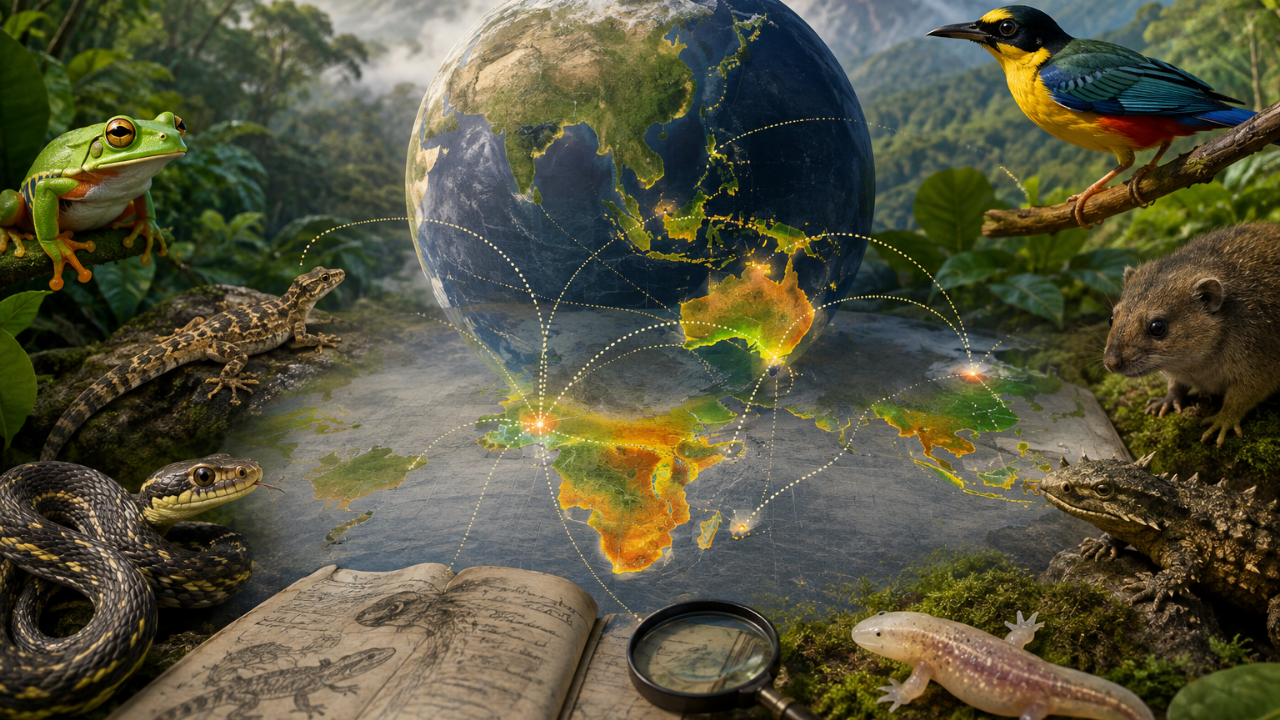
Scientific research spanning a century has substantially reshaped global biodiversity maps, with new species discoveries and taxonomic classifications revealing unexpected patterns in where animal diversity is concentrated across the planet.
The study demonstrates that reptile and amphibian diversity patterns have undergone marked changes as scientific knowledge has expanded, while distributions of birds and mammals have remained comparatively stable across regions. These findings suggest that different animal groups respond differently to scientific discovery and classification efforts.
Australia and Southeast Asia have emerged as critical biodiversity hotspots for reptiles, amphibians, birds, and mammals, underscoring the ecological significance of these regions. The identification of these zones has important implications for conservation priorities and resource allocation across Asia-Pacific nations.
Beyond geographic shifts, the research reveals that the factors driving species richness are themselves changing in importance. Precipitation has become increasingly significant as a determinant of biodiversity distribution, superseding other environmental variables previously considered dominant influences on species concentration patterns.
These findings highlight how scientific understanding of biodiversity is dynamic, with ongoing taxonomic work continuously refining our knowledge of where and how life on Earth is distributed.