World · World News Bureau
Chemistry Nobel recognizes breakthrough in asymmetric molecular synthesis
Three scientists have been awarded the Nobel Prize in Chemistry for their discoveries in asymmetric catalysis, a technique that has revolutionized pharmaceutical manufacturing by enabling the precise creation of mirror-image molecules.
LSN World News ·
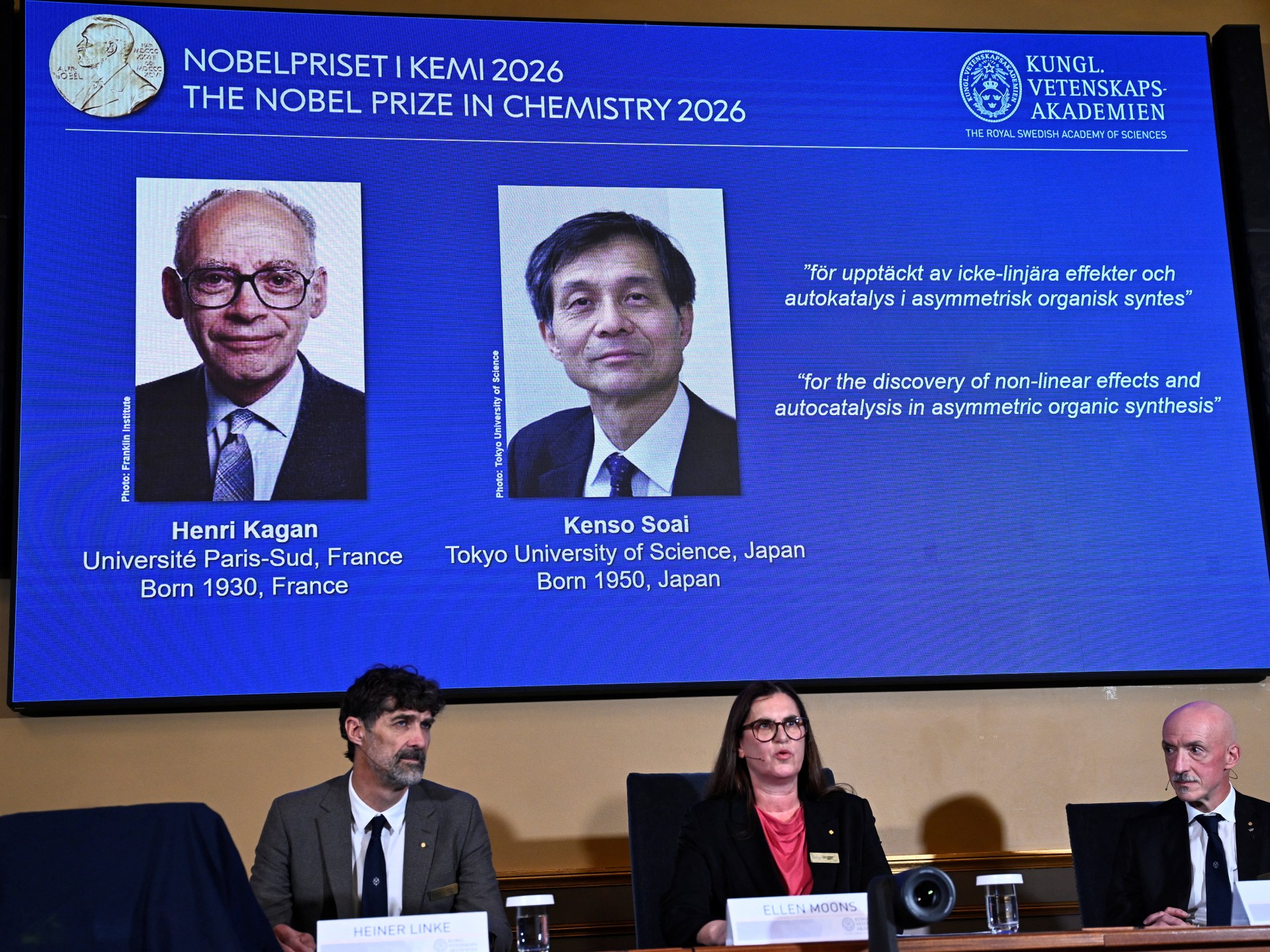
The Nobel Prize in Chemistry has been awarded to researchers whose work solved a fundamental challenge in molecular science: the controlled production of asymmetric molecules with specific three-dimensional structures. This breakthrough has proven transformative for the pharmaceutical industry, where the precise orientation of molecular components often determines whether a drug is effective or harmful.
Asymmetric molecules exist in mirror-image forms, much like left and right hands, and only one version typically possesses the desired therapeutic properties. Before these advances, chemists struggled to selectively produce the correct form without generating unwanted byproducts. The laureates' discoveries in catalysis—using specially designed catalysts to guide chemical reactions—provided an elegant solution to this long-standing problem.
The technique has enabled manufacturers to produce medications more efficiently and with greater purity, significantly reducing waste and production costs. From pain relievers to complex pharmaceutical compounds, the applications span numerous drug categories essential to modern medicine. The impact extends beyond pharmaceuticals, influencing chemical synthesis across multiple industries.
The recognition underscores the profound importance of fundamental chemical research in advancing human health and industrial capability. By understanding and controlling the spatial arrangement of atoms within molecules, scientists have unlocked new possibilities for developing treatments that were previously difficult or impossible to manufacture at scale.