Technology · India Bureau
Chinese humanoid robots eclipse Olympic records in speed and jumping
Humanoid robots developed in China have demonstrated athletic capabilities that surpass world records in sprinting and high jump, marking a significant advance in robotics technology. The achievements, showcased at Beijing's recent robot games, underscore China's progress in the field even as experts note practical deployment remains years away.
LSN India ·
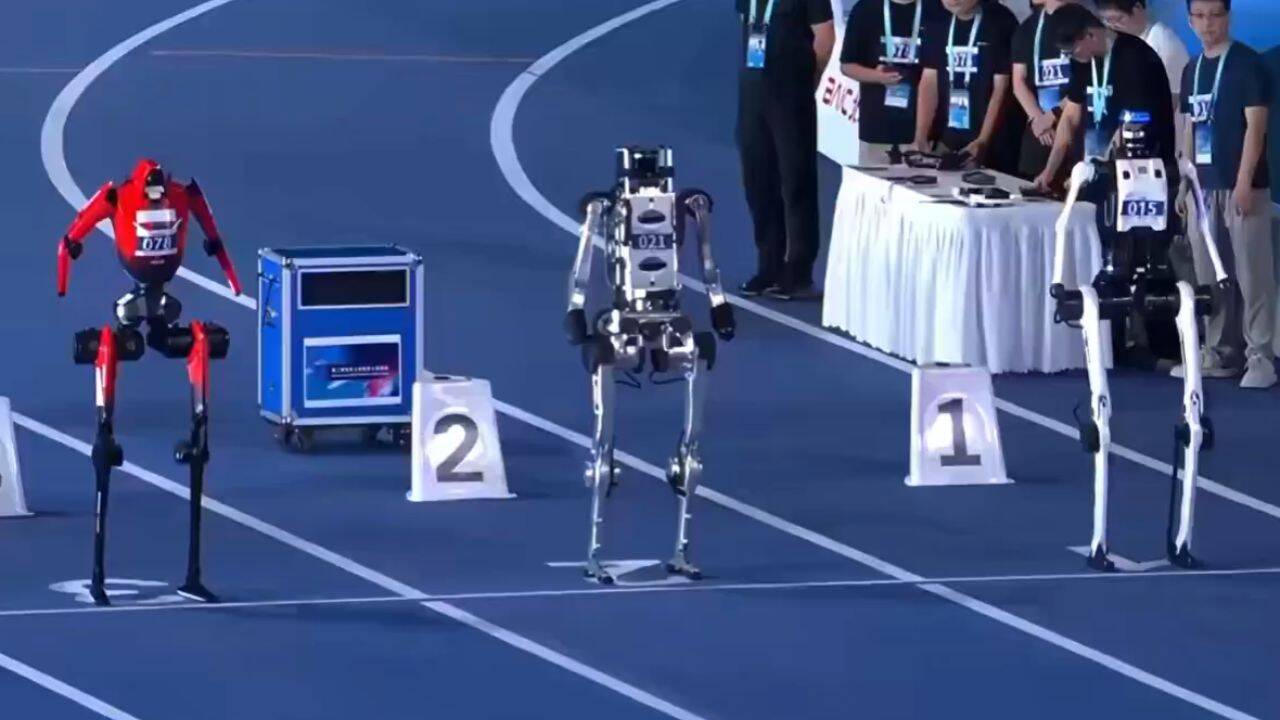
Humanoid robots displayed at the Beijing Robot Games have set new benchmarks that exceed human athletic records, completing a 100-meter sprint in 9.39 seconds and executing a standing high jump of 2.88 meters. The 100-meter performance surpasses the Olympic record of 9.58 seconds set by Jamaican sprinter Usain Bolt in 2009, while the high-jump achievement exceeds the human world record of 2.45 meters established by Cuban athlete Javier Sotomayor in 1993.
The feats underscore the rapid technological progress China has achieved in robotics and artificial intelligence, with engineers successfully translating computational power into mechanical performance that replicates and exceeds human physical capabilities. The robots demonstrated coordinated movement, balance, and precision in executing these athletic tasks, qualities that have long been considered hallmarks of biological advantage.
However, researchers and industry observers caution against interpreting these achievements as indicators of imminent displacement of human athletes or widespread robot deployment in competitive or commercial settings. The robots were purpose-built for these specific tasks under controlled conditions at the games, and translating laboratory demonstrations into reliable, scalable technology for everyday applications remains a significant challenge ahead. Experts note that widespread practical adoption of humanoid robots in industrial, service, or athletic contexts will likely require several more years of development and refinement.
The Beijing Robot Games results reflect intensifying global competition in robotics research, with China, the United States, and other technologically advanced nations investing heavily in the field. Such breakthroughs typically drive further innovation cycles and investment, though questions about the cost-effectiveness and real-world utility of such systems remain open.