Technology · India Bureau
Chinese humanoid robots move beyond speed trials to real-world task mastery
Beijing's World Humanoid Robot Games are shifting focus from record-breaking sprints to testing whether machines can autonomously manage practical challenges like cable connections and warehouse operations. The shift signals the robotics industry's push toward robots that can perform genuine workplace duties.
LSN India ·
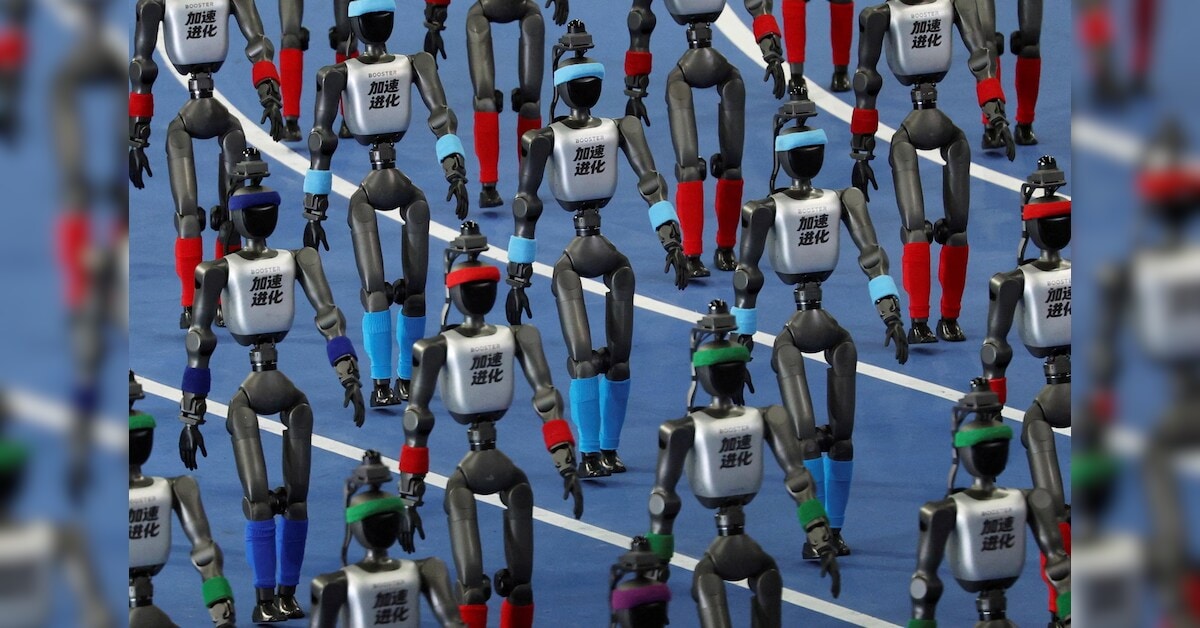
China's humanoid robot competition has evolved beyond impressive but largely symbolic feats of speed, with organisers now testing whether the machines can handle the unglamorous but essential tasks required in real industrial and commercial environments. The World Humanoid Robot Games in Beijing are incorporating challenges designed to assess autonomous capability—including cable management, warehouse logistics, and other hands-on operations that demand both dexterity and problem-solving ability.
The transition underscores a critical gap between robotics achievements that generate headlines and the practical competence needed for widespread deployment across industries. While humanoid robots have demonstrated their ability to sprint and perform athletic feats, their viability in factories, logistics centres, and other workplaces depends on mastering repetitive, technically demanding tasks that currently require human intervention.
Industry observers view the expanded competition framework as a more meaningful assessment of technological progress. Successfully completing cable connections and navigating warehouse environments requires robots to integrate visual processing, mechanical precision, and decision-making in ways that sprinting does not. These benchmarks may provide clearer indicators of how close the technology has come to genuine industrial application.
The shift also reflects the evolving expectations for robotics in Asia's manufacturing-driven economies, where automation continues reshaping labour markets. As Chinese robotics companies position themselves for commercialisation, demonstrations of real-world capability are increasingly valuable for attracting investment and regulatory approval. The updated competition format signals that the industry recognises impressive speeds matter less than proving robots can reliably perform the mundane work that currently sustains global supply chains.