World · India Bureau
Clarifying Hindu theology: 33 crore deities or 33 types of divine power?
A common misconception in Hindu religious discourse conflates the number 33 with 330 million deities. Vedic and Upanishadic texts suggest a more nuanced understanding of divine classification in Hinduism.
LSN India ·
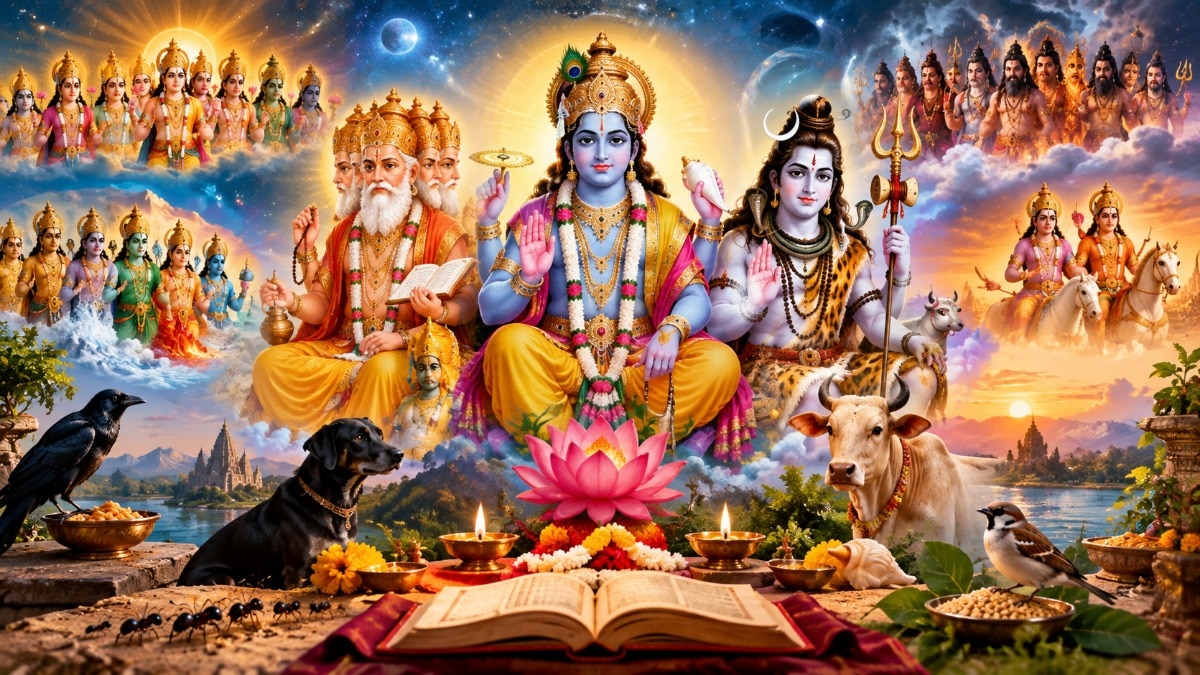
Hindu theology has long grappled with interpretations regarding the number of deities within its philosophical framework, with popular understanding often veering toward the figure of 33 crore—or 330 million gods. This widespread interpretation stems largely from a linguistic ambiguity in classical Sanskrit texts, where the word "koti" carries multiple meanings that have historically been confused in translation and transmission.
Scholars of Vedic literature point to the Vedas and Upanishads as foundational texts that address divine classification. Rather than enumerating individual deities numbering in the hundreds of millions, these ancient texts appear to describe 33 categories or classifications of divine manifestations and celestial beings. The figure 33 itself holds particular significance, traditionally associated with different groupings of devas across various celestial hierarchies outlined in Hindu cosmology.
The confusion surrounding "koti" versus "crore" represents a critical juncture in religious interpretation. While "crore" denotes the number ten million in contemporary Indian numerical systems, the Sanskrit term "koti" originally referred to "types" or "categories" rather than a quantitative measure. This semantic shift over centuries has contributed to the popular notion of 330 million distinct deities, a figure that diverges substantially from classical theological understanding.
Contemporary Hindu scholars and religious authorities emphasize that the tradition's conceptual framework accommodates multiple layers of interpretation. Whether understood as divine classifications, celestial categories, or manifestations of a singular ultimate reality, the theological significance remains rooted in the Vedic vision of cosmic order and divine plurality rather than literal numerical enumeration. This distinction underscores the philosophical sophistication of Hindu religious thought across different interpretive traditions.