World · India Bureau
Coastal Forest Decline Accelerates as Rising Seas Transform Woodlands
Research reveals that North Carolina's coastal forests have contracted significantly over the past three decades, with the pace of loss accelerating sharply since 2010. Rising sea levels and increased salinity are driving the transformation of once-verdant woodlands into salt marshes and barren ghost forests.
LSN India ·
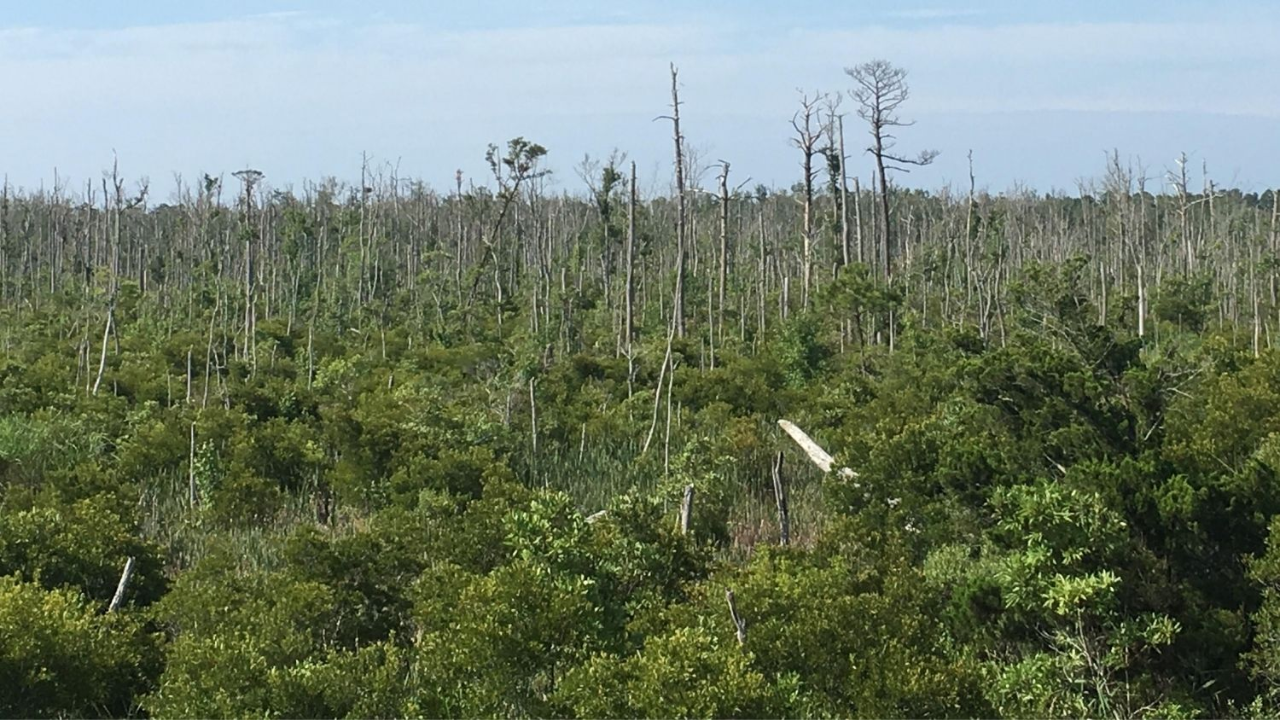
A comprehensive analysis of forest coverage in North Carolina's Albemarle Peninsula documents a 21 percent decline in tree cover over 36 years, with particularly rapid losses occurring in the past 14 years. The research underscores how environmental pressures in coastal regions worldwide—including parts of South Asia—threaten vital forest ecosystems that provide critical ecosystem services and protection against storms.
The accelerated degradation correlates directly with rising sea levels and higher salinity levels in coastal soils, rendering formerly productive forestland unsuitable for traditional tree species. The transformation has converted green forests into what scientists term "ghost forests"—landscapes dominated by dead trees standing amid expanding salt marshes and shrubland vegetation.
Extreme weather events have compounded these pressures, intensifying saltwater intrusion into previously protected inland areas. The phenomenon reflects broader climate change impacts affecting coastal zones globally, where the intersection of oceanic and terrestrial ecosystems faces mounting environmental stress.
The findings carry implications for coastal forest management strategies across Asia-Pacific regions experiencing similar sea-level rise and salinity challenges. Forest degradation in coastal zones reduces natural barriers against storm surge while diminishing habitat for wildlife and carbon sequestration capacity, prompting renewed focus on coastal ecosystem resilience and adaptation planning.