World · India Bureau
Coastal Protection Seawall Erodes Beach in US State
A massive seawall constructed in New Jersey to protect infrastructure and properties from coastal erosion has inadvertently eliminated the sandy beach, raising questions about the long-term effectiveness of hard engineering solutions in coastal management.
LSN India ·
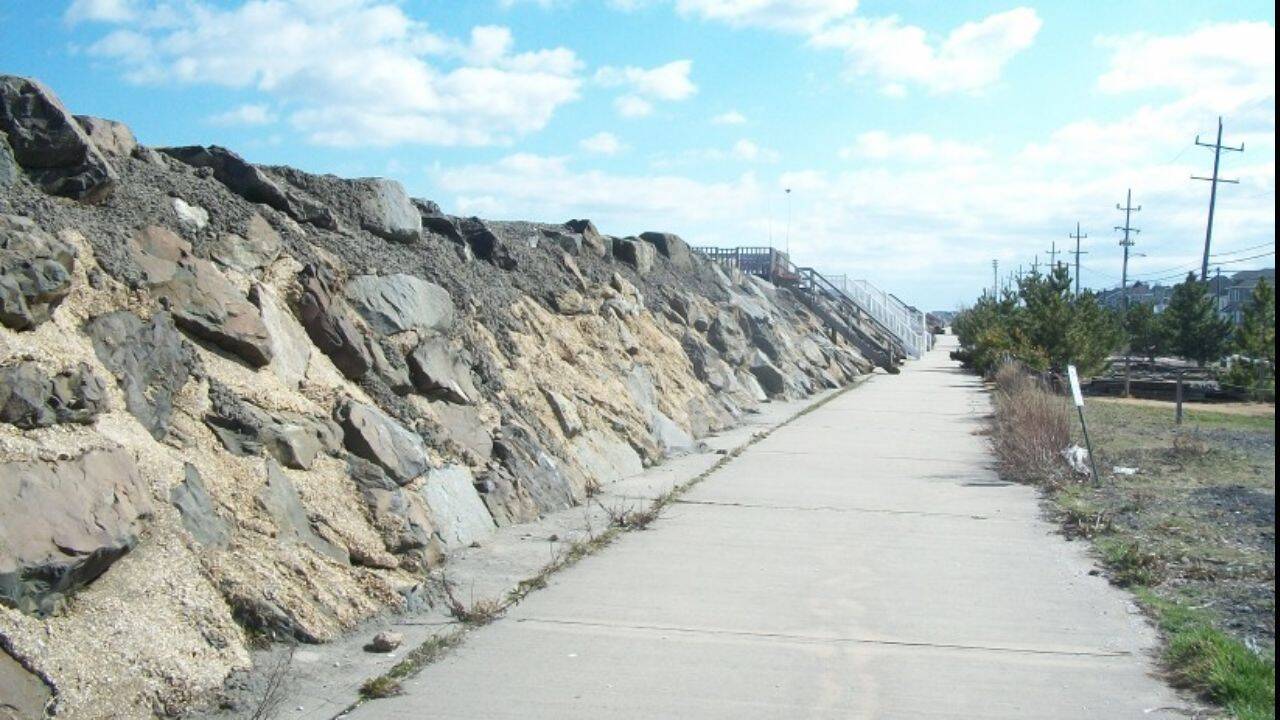
Authorities in New Jersey built an extensive seawall structure to shield a highway and residential properties from erosion and storm surge. While the engineering project has successfully protected the built infrastructure, it has created an unintended consequence: the complete disappearance of the sandy shoreline in the affected area.
The mechanism behind this unexpected outcome lies in wave dynamics. Rather than dissipating wave energy gradually across a natural beach, the hard barrier redirects the force of incoming waves downward into the seafloor. This concentrated energy strips away sand at an accelerated rate, leaving no visible beach even at low tide when sandy areas typically become accessible.
This approach to coastal protection represents what engineers term "hard engineering," which contrasts with softer, more natural methods of coastal management. While effective at defending immediate properties, experts note that such structures interfere with natural sediment transport patterns. Sand migration, which is essential for maintaining barrier islands and coastal ecosystems, is disrupted by the physical barrier.
The New Jersey case illustrates a growing debate among coastal scientists and planners regarding the sustainability of conventional seawalls and similar structures. Many are increasingly considering alternative approaches that work with natural processes rather than against them, to balance protection needs with ecosystem preservation.