Politics · Sri Lanka Bureau
Colombo's Flood Crisis Exposes Gap Between Tourism Image and Urban Reality
While Colombo promotes itself as a premier destination for international business events, recurring flooding has highlighted the need for proactive urban governance and infrastructure planning. Experts argue the city cannot afford to treat such crises as temporary incidents.
LSN Sri Lanka ·
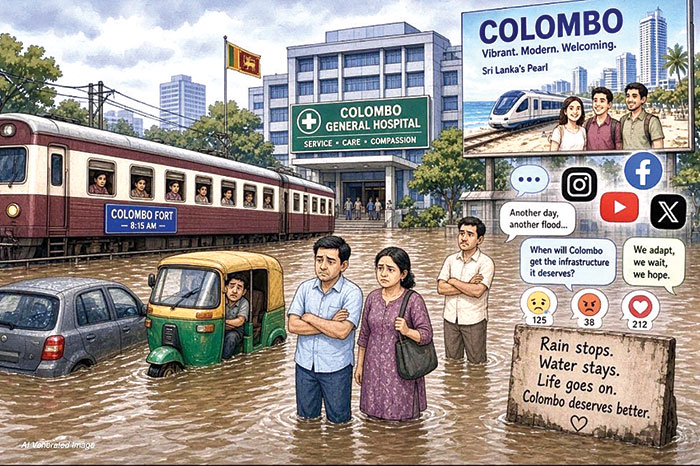
Colombo's efforts to position itself as a hub for international tourism and business have intensified in recent weeks, with events such as the Sri Lanka MICE Expo showcasing the capital's hotels, convention facilities, and hospitality offerings to overseas buyers and operators. However, this carefully curated image of urban capability has been undermined by the recurring problem of severe flooding that continues to affect the city's streets and commercial areas.
The contrast between promotional campaigns highlighting Colombo as a world-class destination and the reality of flooded neighborhoods raises questions about the adequacy of the city's infrastructure planning and disaster preparedness. Flooding events that were once dismissed as temporary disruptions now demand sustained policy attention, according to observers familiar with urban governance challenges.
Authorities face mounting pressure to move beyond reactive responses to flooding and implement comprehensive, long-term solutions. This includes improving drainage systems, updating urban planning standards, and coordinating between multiple government agencies responsible for infrastructure and disaster management.
The issue reflects a broader tension in Colombo's development trajectory: the city cannot simultaneously market itself as a modern, reliable business destination while leaving fundamental infrastructure vulnerabilities unaddressed. Stakeholders argue that genuine credibility in the international arena requires demonstrable commitment to resolving chronic urban challenges, not merely managing their visibility during high-profile events.