Technology · India Bureau
Controlled blasts reveal magma chambers beneath Mount St Helens
Scientists used controlled explosions and seismic monitoring to map hidden magma reservoirs beneath the Washington volcano. The research provides crucial insights into volcanic systems that could improve eruption forecasting.
LSN India ·
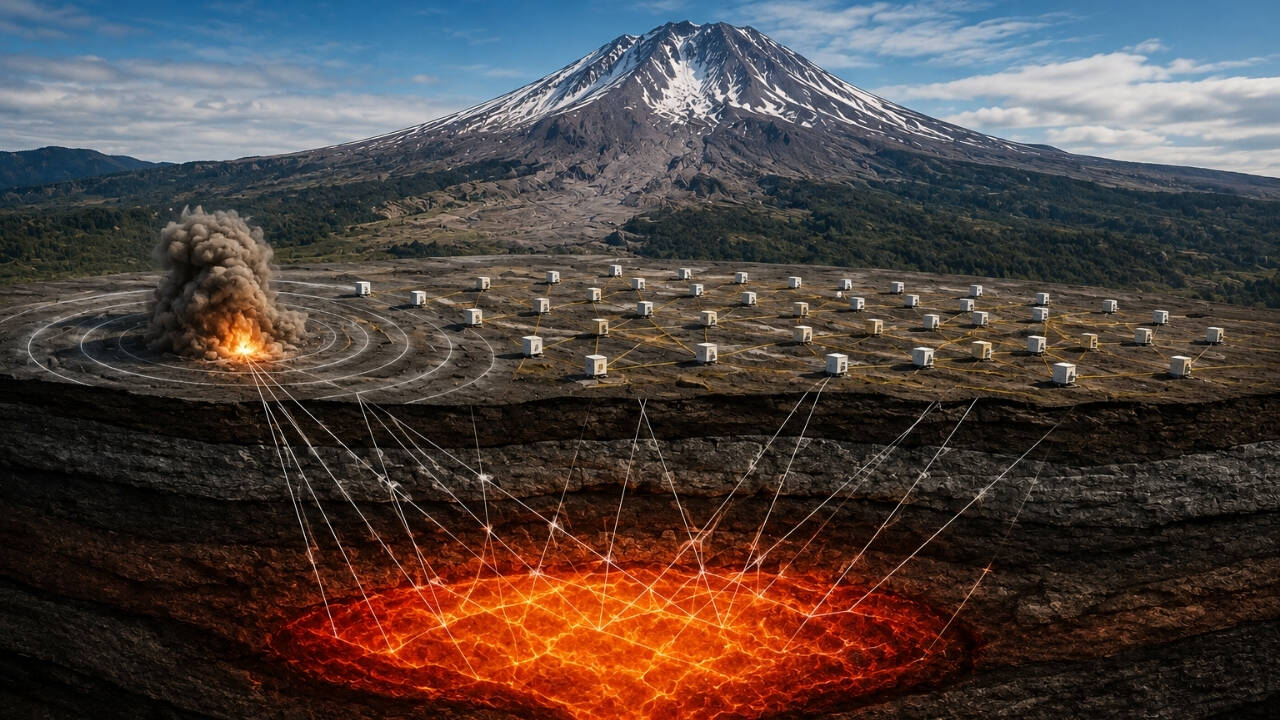
Researchers conducted a landmark study in 2014 using 23 strategically-placed controlled explosions to probe the subsurface geology of Mount St Helens in Washington state. By detonating charges across the volcano's slopes and analysing the resulting seismic waves, scientists were able to create detailed maps of the magma systems lying beneath the active peak.
The investigation revealed the presence of substantial magma reservoirs located between four and fifteen kilometres underground. This vertical range encompasses multiple potential storage zones where molten rock accumulates before potentially rising toward the surface. The findings represent a significant advancement in understanding the plumbing systems that feed volcanic activity.
The research team deployed numerous seismic instruments across the study area to capture and record the wave patterns generated by the controlled explosions. By measuring how these waves travelled through different rock layers and magma chambers, scientists could determine the composition, location, and characteristics of subsurface features with unprecedented precision.
The data gathered from this investigation provides volcanologists with enhanced tools for monitoring volcanic activity and predicting potential eruptions. Understanding the architecture of magma reservoirs and how molten material moves through volcanic systems remains critical for assessing hazards and protecting populations living near active volcanoes. The methodology employed at Mount St Helens demonstrates advances in seismic imaging technology applicable to volcanic regions worldwide.