Politics · India Bureau
Cosmic hum may reveal secrets of universe's first supermassive black holes
Astronomers have detected a faint gravitational-wave hum using pulsars that could provide insights into supermassive black holes formed in the early universe over 13 billion years ago. The discovery suggests a novel method for investigating mysterious dark stars powered partly by dark matter.
LSN India ·
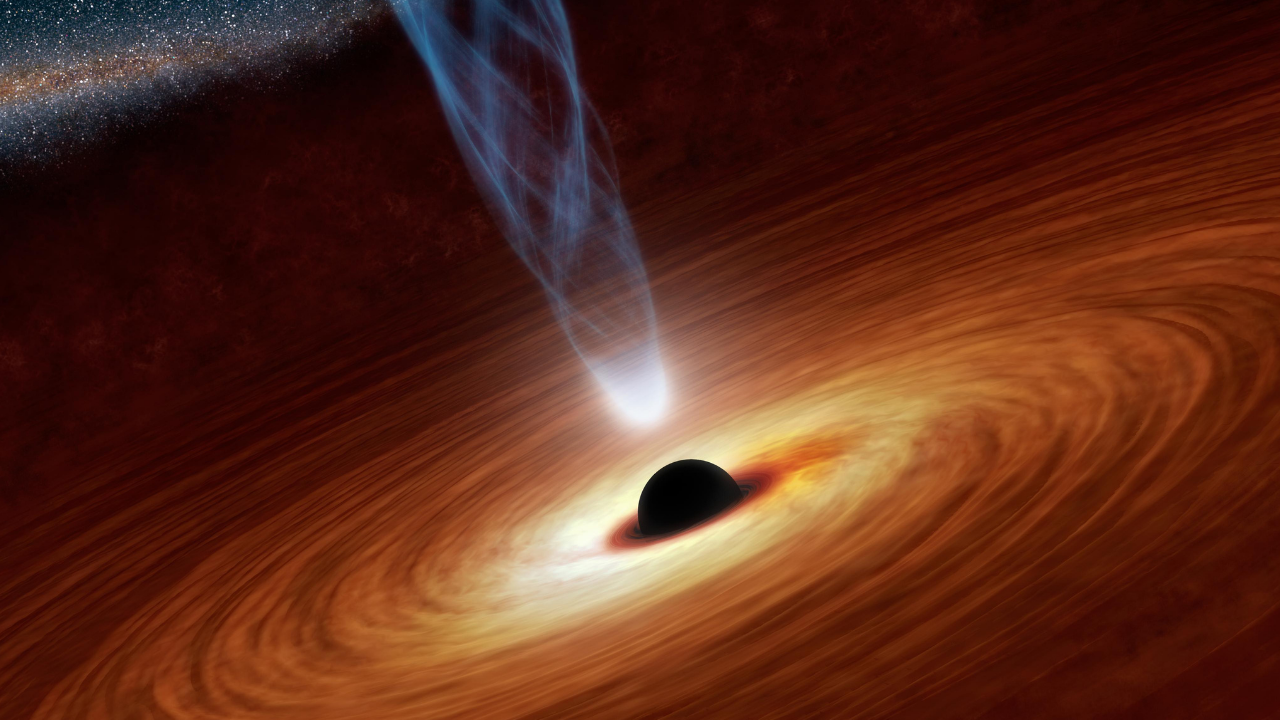
A persistent gravitational-wave hum detected through observations of pulsars may offer astronomers a new window into the universe's most ancient supermassive black holes, researchers have found. The faint signal could contain crucial clues about the formation and evolution of these cosmic giants that emerged during the universe's infancy.
The gravitational waves appear linked to hypothetical dark stars—exotic objects theorised to be powered partly by dark matter—that existed approximately 13 billion years ago. If confirmed, these dark stars could represent primordial seeds that eventually evolved into the supermassive black holes observed at the centres of galaxies today.
Under this model, ancient black holes spawned from dark stars would have merged and accreted material over billions of years, contributing to the background gravitational-wave hum now detectable through pulsar timing arrays. This gravitational-wave background provides an indirect but persistent signature of merger events stretching back to the universe's earliest epochs.
The discovery opens a potentially transformative avenue for studying supermassive black hole formation—a long-standing puzzle in cosmology. Traditional observational methods struggle to detect these ancient objects directly, making gravitational-wave signatures an invaluable tool for unlocking the mysteries of the early universe's most massive structures.