Politics · India Bureau
CPI(M) challenges Karnataka govt over Kalaburagi drought exclusion
The Communist Party of India (Marxist) has raised objections to the state government's decision to exclude Kalaburagi district from the official list of drought-affected regions, citing severe agricultural distress in the area.
LSN India ·
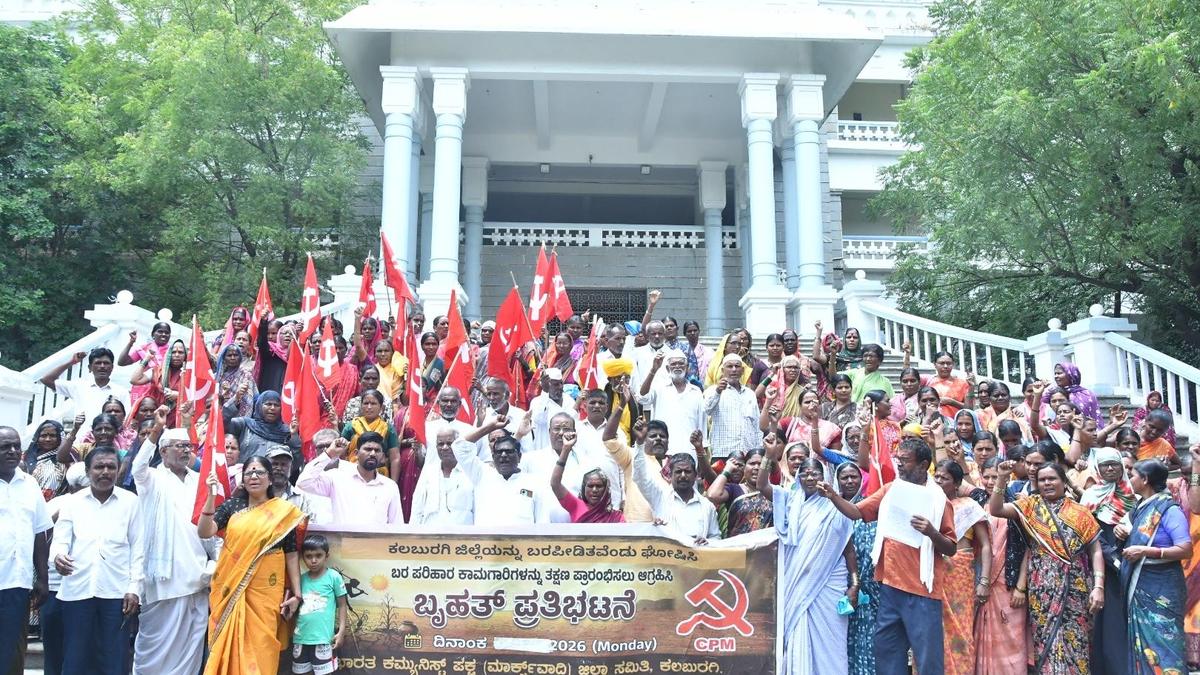
The CPI(M) has launched a protest against what it describes as an arbitrary exclusion of Kalaburagi district from Karnataka's drought-hit designation, contending that the omission fails to reflect ground realities in the region. Party leaders have questioned the criteria used by the state administration to determine drought-affected areas, arguing that Kalaburagi faces significant agricultural challenges warranting inclusion in the official assessment.
The party's objection centers on claims that farmers in Kalaburagi have experienced substantial crop failures and water scarcity typical of drought conditions, yet the district was not considered for government relief and support measures extended to other drought-declared regions. The exclusion has drawn criticism from agricultural unions and opposition parties who argue it disadvantages farmers seeking compensation and assistance programs.
The CPI(M) has called for a comprehensive reassessment of the drought situation across Karnataka, emphasizing that administrative boundaries should not prevent districts facing genuine agricultural stress from accessing necessary relief measures. The party has urged the state government to undertake fresh surveys and engage with local farmers' organizations before finalizing the drought-affected district list.
This dispute underscores ongoing tensions between the state administration and opposition parties over drought relief distribution criteria. Officials maintain that drought determinations follow prescribed meteorological and agricultural parameters, though critics maintain the process lacks transparency and adequate ground-level consultation.