Technology · India Bureau
Deep-sea robots reveal massive lava fields at underwater volcano
Scientists have discovered enormous lava flow fields on an underwater volcano using advanced deep-sea mapping technology. The newly identified flows far exceed the scale of any previously recorded eruptions, offering fresh insights into volcanic processes and ocean floor dynamics.
LSN India ·
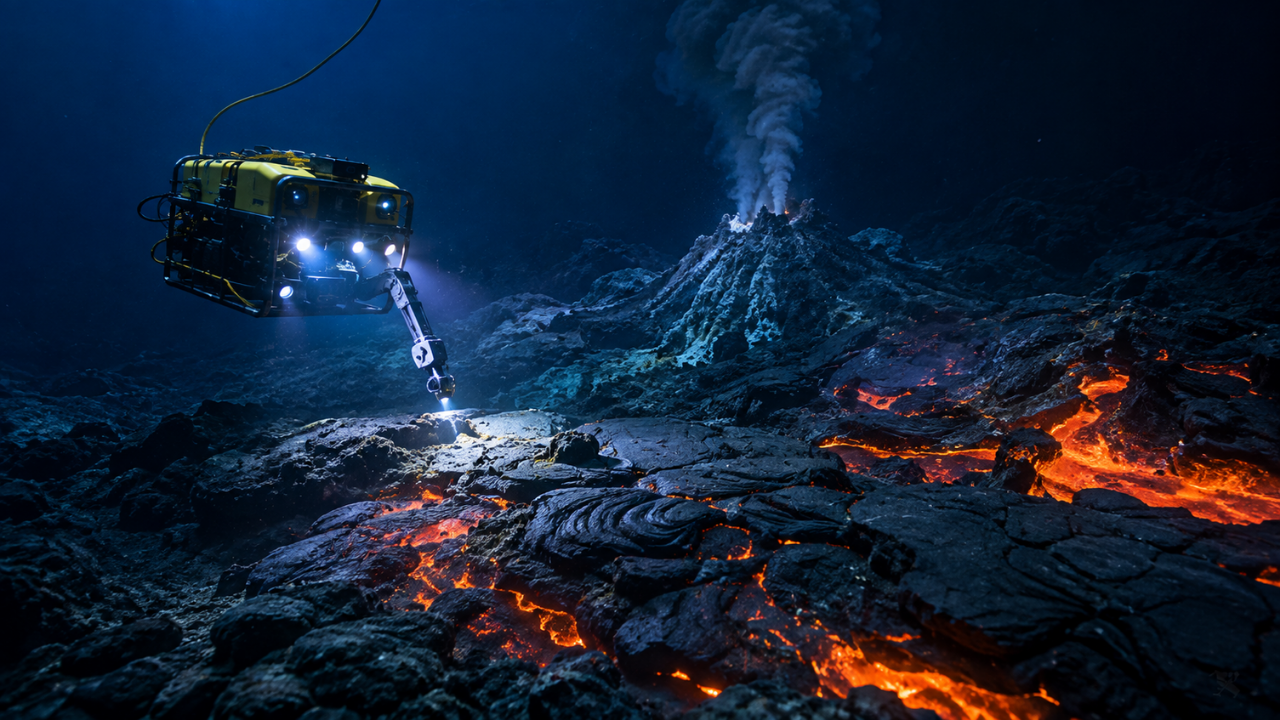
A research team has used unmanned deep-sea robots to map vast lava fields surrounding an active submarine volcano, revealing geological formations of unprecedented scale. The discovery has challenged existing understanding of how large underwater eruptions reshape the ocean floor, with the mapped lava deposits substantially exceeding dimensions observed in historical volcanic events.
The research indicates that molten rock accumulated beneath a hardened crust layer, creating unusually thick deposits as it expanded beneath the sealed surface. This accumulation process fundamentally altered the surrounding ocean floor topography, with implications for understanding submarine volcanic mechanics and broader seafloor geology.
According to researchers, the findings provide valuable data on caldera collapse mechanisms—the dramatic sinking of volcanic calderas that occurs during major eruptions. The study of these ancient lava fields offers a window into catastrophic volcanic processes that shape our planet's geological structure.
Based on current analysis, scientists estimate that a major caldera-forming eruption at this volcano may not occur for several thousand years. The deep-sea mapping technology employed in this study continues to reveal previously unknown features of underwater volcanic systems, with potential applications for monitoring active submarine volcanoes in the region and beyond.