World · India Bureau
Devotees honour Goddess Chandraghanta on third day of Navratri
The third day of the nine-day Navratri festival is dedicated to the worship of Maa Chandraghanta, the divine form characterised by a crescent moon adorning her forehead. Devotees believe that invoking the goddess cultivates courage, self-confidence, and fearlessness.
LSN India ·
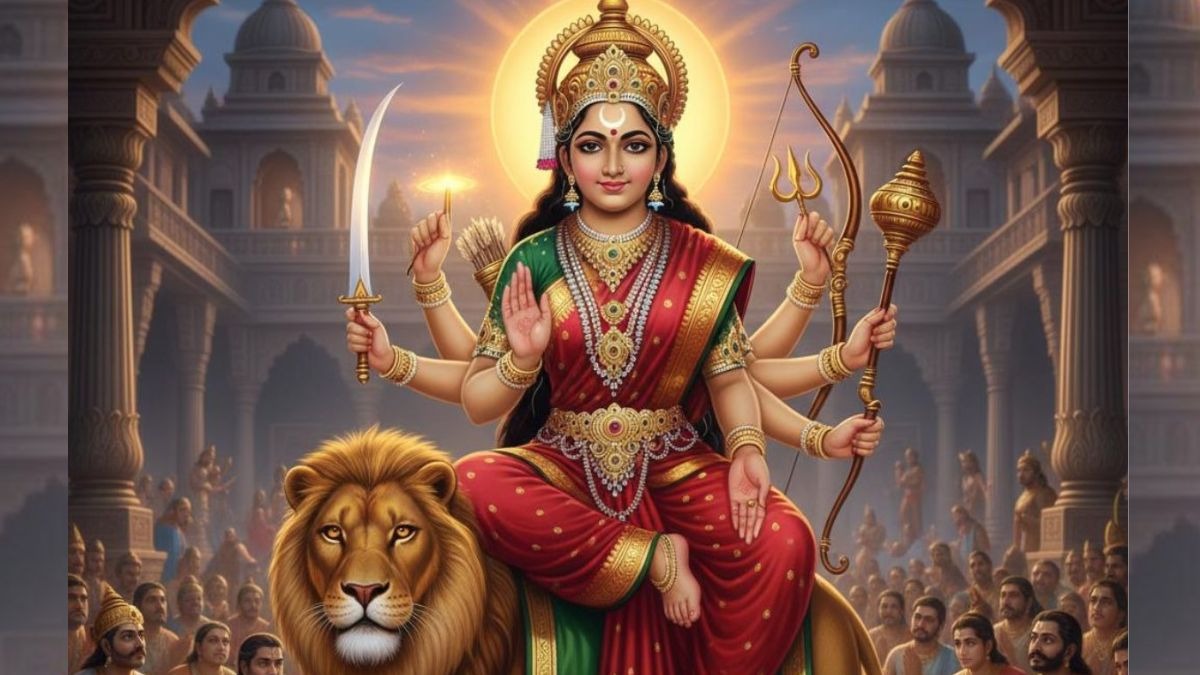
Across India, worshippers observe the third day of Navratri by performing rituals honouring Maa Chandraghanta, one of the nine manifestations of the divine feminine energy. The goddess derives her name from the crescent moon (chandra) that graces her forehead, distinguishing her celestial form.
Iconographic depictions of Maa Chandraghanta show her with ten arms, each wielding various weapons and divine implements. This martial aspect of the goddess symbolises her power and readiness to vanquish negative forces. Her appearance combines both gentle and fierce qualities, representing the balance between compassion and strength.
Followers traditionally conduct puja ceremonies on this day, believing that sincere devotion to Maa Chandraghanta bestows spiritual and psychological benefits. Worshippers seek her blessings to cultivate inner fortitude, overcome apprehension, and strengthen their resolve during challenging times.
The ritual observance typically involves offering flowers, incense, and traditional sweets at the deity's altar. Many devotees also recite sacred mantras and recount mythological narratives associated with the goddess as part of their daily Navratri practices. Religious scholars emphasise that meditating on her form during this period enhances one's capacity for brave and virtuous action.