Doubling allowances created a new anomaly for development officers, Minister Lal Kantha tells Parliament
In a wide-ranging 2027 budget debate speech, the Agriculture Minister praised points made by Sajith Premadasa and Harsha de Silva, admitted pay has not kept pace with the cost of living, and urged unions to take their grievances to the pay commission before December 31.
LSN Sri Lanka ·
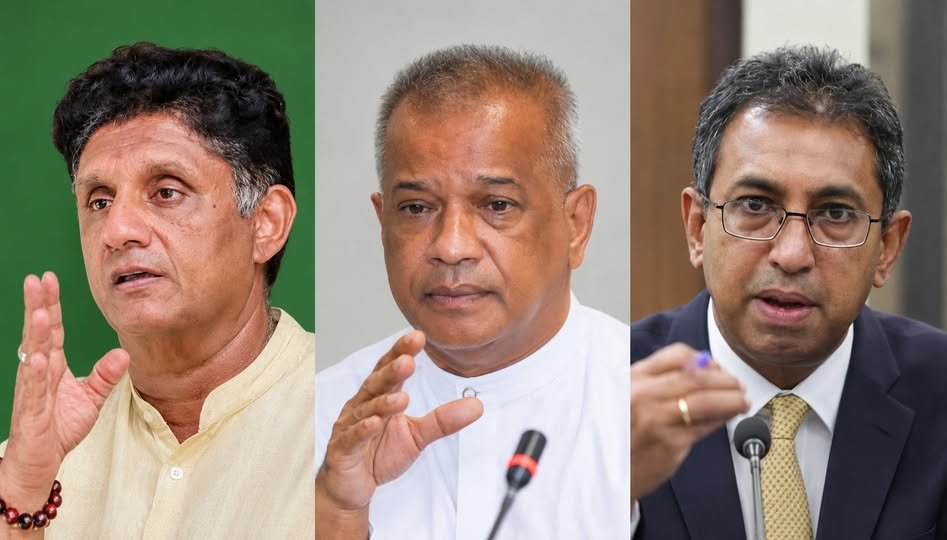
<p>Agriculture, Livestock, Lands and Irrigation Minister K.D. Lal Kantha made a long and analytical speech in Parliament today (19) during the 2027 budget debate, covering salary anomalies in the public service, the increase in allowances, the trade union movement and the organising of social forces.</p>
<p>He opened with a philosophical point (all quotes translated from Sinhala): "Karl Marx has said that in history, problems have not come before people without answers; but when you look for answers, they raise further side issues and other problems. If different problems do not arise, society does not move forward. Society stops and stagnates in one place. So social development comes precisely from finding answers to problems and new problems arising. Otherwise it stops. So it does not stop. Even if we find answers to all the problems and settle the ones we have now, more problems will come. That is the philosophical basis."</p>
<p>The minister said all the points raised by the Opposition Leader about the problems in the public service were correct. He said he could feel the effects of the trade union action now being taken by engineers and veterinary surgeons, and accepted that their demands were fair. But he said salary anomalies in the public service could be solved only through a commission, and that such a commission had already been appointed.</p>
<p>The unions' two main slogans and the results of three budgets</p>
<p>The minister recalled that the trade union movement had pressed two main slogans in the public service for many years. Although teachers, doctors, nurses, veterinary surgeons and others each had their own separate problems, the first slogan shared nationally was "add all the allowances hung on to the salary to the basic salary", he stressed.</p>
<p>"They don't increase the basic salary. When the cost of living goes up, when the trade union movement shouts, fights, marches and strikes, they hang something on to the salary. It kept being hung on like this. That is not fair to the public servant. That is why public servants kept saying, increase our basic salary. We were in that struggle too. We distributed leaflets, put up posters, held protests, took tear gas and baton charges. The public service made a big sacrifice to bring this government in; you can see it in the postal votes. That basic demand, to add all the hung-on allowances to the basic salary, has been completed through these three budgets. So there is no longer a debate about the basic salary in the public service."</p>
<p>Pay in line with the cost of living, and the pay commission's role</p>
<p>However, the minister honestly admitted that the unions' second slogan, "raise salaries in line with the rising cost of living", has still not been met.</p>
<p>"We accept that. It must be done; it is essential. But we will have to resolve that too through the pay commission that has now been appointed. This is not one set up to drag on, with reports stretching out and time being wasted; it was set up to solve this quickly. The chairman of this 15-member commission is Ashoka Peiris, a retired officer of the Special Grade of the Sri Lanka Administrative Service. In addition it has a group that even the Opposition can accept, including a Court of Appeal judge, a pensions expert, a director of education, an accountant, a specialist doctor and a doctorate holder from the nursing service. So far about 69 trade unions have submitted their case. All unions should submit their problems and proposals before December 31."</p>
<p>A new anomaly created by doubling allowances</p>
<p>The minister said a new problem had arisen because this budget raised allowances by 100% (doubled them), and explained the anomaly using the example of four officers working in the same Grama Niladhari division.</p>
<p>"Sometimes I feel it would have been better not to increase the allowances. Our plan was to raise basic salaries in this budget and to move to allowances in the next budget after removing the allowance anomalies. Now, within a village division, four officers work: the Grama Niladhari, the Agricultural Research and Production Assistant (KUPANISA), the Samurdhi officer and the Development Officer (DO).</p>
<p>"Here, the regional office allowance of Grama Niladharis and KUPANISA officers was raised by 100%, from Rs 2,000 to Rs 4,000, and the urban office allowance from Rs 3,000 to Rs 6,000. The Samurdhi officers' regional allowance went from Rs 2,000 to Rs 4,000 and their urban allowance from Rs 2,500 to Rs 5,000. But Development Officers previously had only Rs 750 for a regional office and Rs 1,000 for an urban office. That too was raised by 100%, and it is now Rs 1,500 and Rs 2,000."</p>
<p>The dignity of development officers and the nature of the anomalies</p>
<p>The minister pointed out that because development officers are graduates, receiving a smaller allowance than other officers working in the same village has become a question of their social standing and dignity.</p>
<p>"Grama Niladharis work 24 hours a day and do a large share of the work in the village; that side was probably considered. But graduate development officers also have a question of dignity: 'They got it and we didn't, how do we face society?' We accept that truth. When you give an equal 100% increase to an unequal base, what comes out again is inequality itself. But if a government goes about removing anomalies wherever it feels like, the whole public service will be stirred up. So we ask them to accept the doubling given for now and to step in before December 31 so the anomalies can be resolved through the pay commission."</p>
<p>Organising forces and the complexity of trade unions</p>
<p>Offering the Opposition a political lesson, the minister stressed that power cannot be won simply by holding meetings shouting "votes, votes", and that real political power lies in organising the forces of workers, students, women and youth.</p>
<p>"We came to power by organising forces. If they can, the Opposition can do that too. Among these forces, the most complex terrain in politics is the trade union movement. There is no kind of person who is not there. As well as progressives, there are those who appear under an independent name but work underneath, night after night, with different political movements. And trade unions also need to fight for their survival. So we have no resentment at all if they hold talks or protests; that is their right."</p>
<p>Nutrition, egg prices and economic stability</p>
<p>During the debate, the minister also turned to MP Dr Harsha de Silva, praising a speech the MP had made in Parliament and commenting on carbohydrate and protein consumption. He said Harsha de Silva had made a very important and dignified speech.</p>
<p>"Reducing carbohydrate use is important for controlling non-communicable diseases. Then Harsha asks, 'Where is the protein?' One of our MPs says we reduced the price of sprats. True... as Harsha said, if reducing the price of sprats is the only answer to that, it is not enough. But there has been no big increase in the price of eggs. It would be good if we could reduce it a little more. Although it is said that egg yolks become paler when animal feed is made with rice instead of maize, that does not reduce nutritional value; only the colour changes, and producers have found answers to that too. We have now stabilised, to some extent, a country that had collapsed. It is on that stability that we are solving all these problems and taking the country forward in development."</p>
<p>The minister again stressed that the government honestly accepts the reality of salary and allowance anomalies in the public service, and that it is already stepping in to resolve the problems in every field, including those of development officers (DOs). Asking that the 100% increase in all allowances in this budget first be accepted, he said the government accepts that "when you give equally to an unequal base, what comes out is inequality itself".</p>
<p>Accordingly, the minister said once more that all trade unions should take the initiative to go before the pay commission, appointed to resolve all these anomalies scientifically and permanently, and submit their proposals before December 31. He ended his speech in Parliament by proposing that everyone work together to resolve all the problems in the public service based on the commission's recommendations.</p>
<p>Translated from the LSN Sinhala edition.</p>