World · India Bureau
DPC in Construction: The Moisture Barrier Homeowners Should Know About
While most Indian homeowners are familiar with reinforced cement concrete (RCC) during construction, fewer understand the importance of damp-proof course (DPC) treatment. This critical protective layer can eliminate persistent wall dampness and seepage issues.
LSN India ·
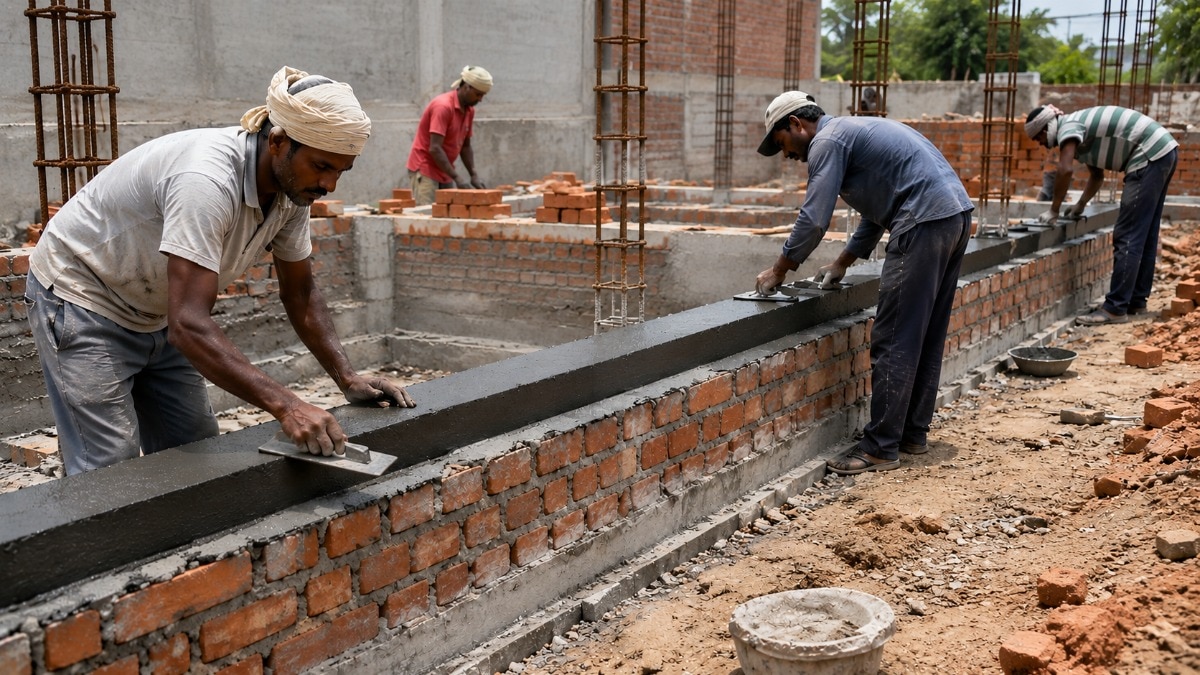
During the construction of residential properties across India, homeowners typically focus on reinforced cement concrete (RCC) work as a fundamental structural requirement. However, an equally important but often overlooked component is the damp-proof course (DPC), a protective treatment that prevents moisture penetration through walls and foundations.
Damp-proof course is a barrier layer applied during construction to block water and moisture from rising through building materials. This treatment is typically installed between the foundation and the superstructure, as well as in other critical areas prone to moisture accumulation. The layer acts as a physical shield against capillary action, which draws groundwater and seepage upward through porous building materials like brick, concrete, and stone.
By incorporating DPC during the construction phase, homeowners can significantly reduce the risk of wall dampness, efflorescence, and structural deterioration. The treatment proves particularly valuable in regions with high humidity, near water bodies, or in areas with poor drainage conditions. Without adequate damp-proof protection, walls become susceptible to moisture-related problems that compromise both the aesthetic appeal and structural integrity of the building.
Construction experts recommend that DPC be applied using materials such as bituminous membranes, polyethylene sheets, or specialized waterproof coatings during the initial building stages. This preventive approach proves more cost-effective than remedying dampness issues after construction is complete, making it an essential investment for long-term property maintenance and durability.