World · India Bureau
Drained peatlands in US emit vast CO2; restoration efforts underway
North Carolina's damaged peatlands are releasing approximately 130,000 tonnes of carbon dioxide annually following extensive drainage for agricultural purposes. Restoration initiatives aim to block ditches and restore water levels to curb emissions from these carbon-rich ecosystems.
LSN India ·
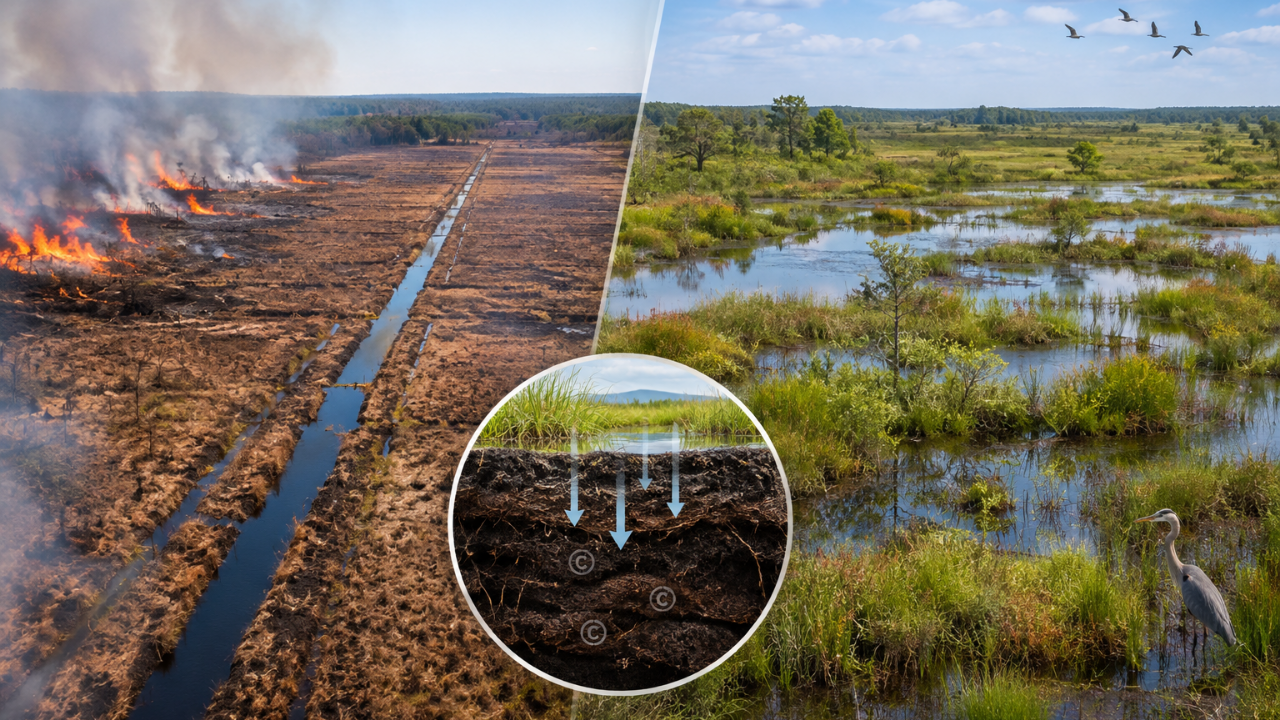
Peatlands in North Carolina have become a significant source of greenhouse gas emissions after decades of agricultural drainage stripped them of their natural water retention capabilities. The degradation stems from approximately 50 miles of ditches cut through the ancient wetlands, which lowered water tables and exposed peat to atmospheric oxygen. This exposure triggers decomposition of the organic matter, releasing stored carbon at an estimated 130,000 tonnes of CO₂ annually.
Peatlands represent critical carbon sinks due to their ability to store vast quantities of organic material in waterlogged conditions. When drained for farming, the exposed peat undergoes rapid oxidation, converting centuries of accumulated plant matter into atmospheric greenhouse gases. The North Carolina peatlands exemplify how land-use practices can inadvertently transform carbon reservoirs into emission sources.
Restoration efforts now focus on blocking and filling the drainage ditches to raise water tables and restore the peatlands' natural hydrological conditions. By rehydrating the landscape, ecological managers aim to halt decomposition processes and allow the wetlands to resume their function as carbon storage systems. The initiative reflects growing recognition that ecosystem restoration can serve dual purposes: both environmental recovery and climate mitigation.
Peatland conservation has gained prominence globally as scientists emphasize the role these ecosystems play in climate regulation. Peatlands cover approximately 3 percent of the world's land surface but store nearly twice as much carbon as all forests combined, making their protection and restoration critical to climate strategies.