World · India Bureau
Eight formidable warriors of Ravana's army commanded mythical powers, Hindu texts reveal
Classical Hindu literature, particularly Tulsidas's Ramcharitmanas, documents the extraordinary martial prowess and supernatural abilities of eight key commanders in Ravana's legendary forces. These warriors were said to possess such formidable powers that even celestial beings trembled at their strength.
LSN India ·
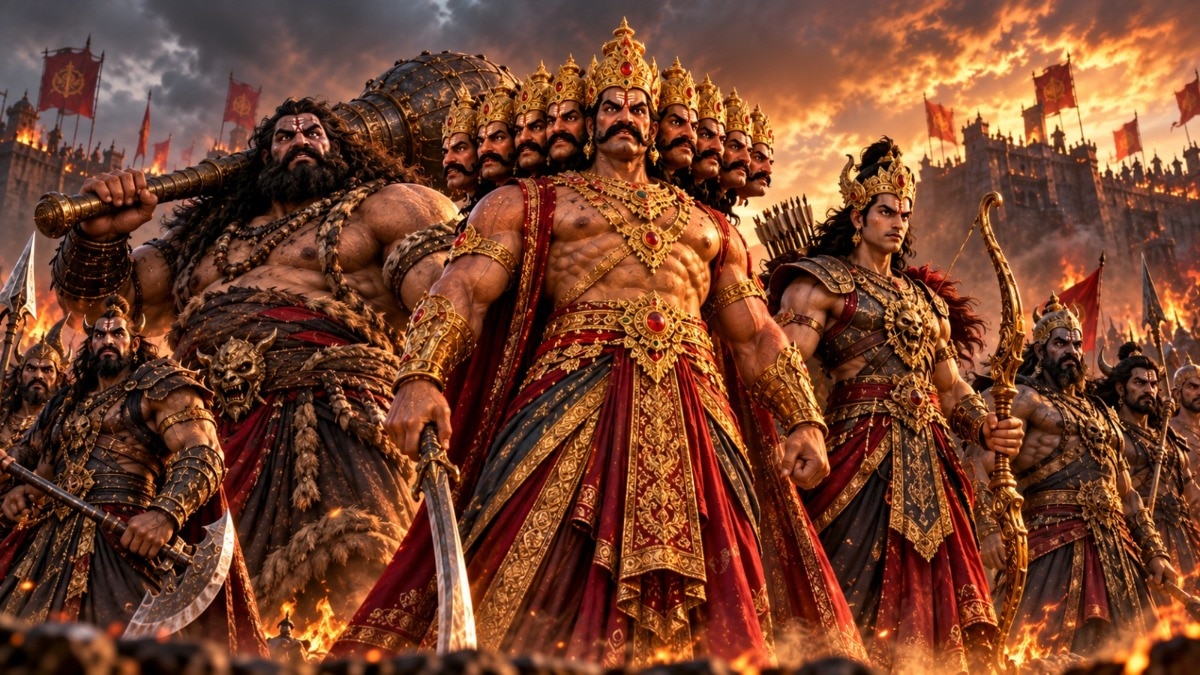
Hindu classical texts, notably the Ramcharitmanas composed by 16th-century poet Tulsidas, provide detailed accounts of the most powerful warriors in Ravana's demonic army during the ancient conflict between good and evil. Among these eight distinguished commanders were figures of extraordinary ability, each wielding unique supernatural powers that commanded respect and fear across the celestial and earthly realms.
The texts identify several prominently placed warriors whose names have endured through centuries of Hindu tradition. Kumbhakarna, Ravana's brother, and Meghnath, his son, are among the most celebrated figures documented in these accounts. These warriors were depicted as possessing abilities that challenged even the mightiest gods, their magical prowess and combat skills creating formidable obstacles during the epic conflict.
Beyond the well-known names, the Ramcharitmanas catalogues additional warriors whose illusory powers and martial expertise made them significant threats on the battlefield. Each warrior brought distinct supernatural abilities—from shape-shifting to invulnerability to command over mystical forces—that contributed to Ravana's military strength and dominance.
Scholar interpretations of these classical texts suggest the warrior descriptions served symbolic functions within Hindu philosophy, representing various forms of malevolent force and spiritual darkness that required transcendent virtue to overcome. The depiction of their formidable powers emphasized the magnitude of the eventual victory achieved against such overwhelming odds, reinforcing central moral themes in Hindu religious narratives that continue to resonate with audiences across India today.