Politics · India Bureau
Eroded cliff formation may hold key to Earth's missing geological period
Scientists believe a now-vanished giant cliff could explain a mysterious gap in Earth's geological record spanning approximately one billion years. The discovery offers fresh insights into how planetary erosion has shaped the planet's history.
LSN India ·
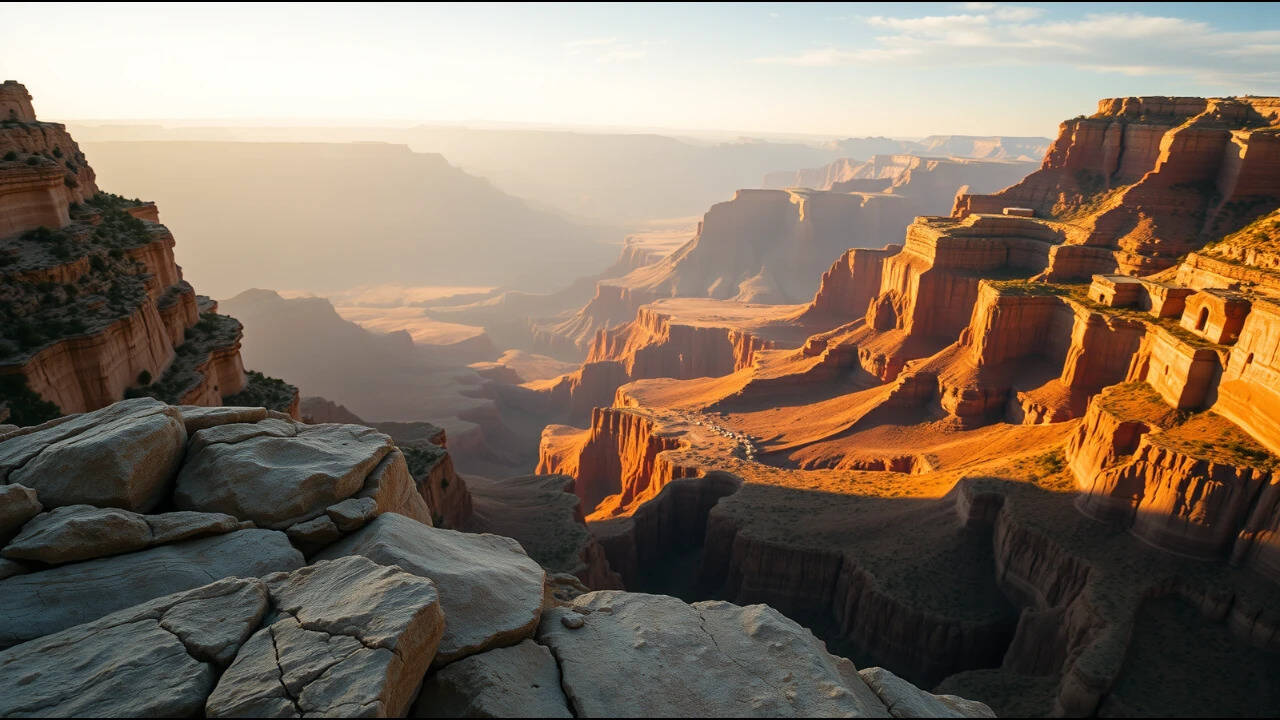
Geologists have long puzzled over a significant gap in Earth's stratigraphic record—a period of roughly one billion years where geological evidence appears to be missing. New research suggests that a colossal cliff formation that has since eroded away may account for this enigmatic absence.
The theory proposes that an enormous escarpment once towered above the planetary surface, created through tectonic upheaval or other massive geological forces. Over vast timescales, weathering, erosion, and surface processes gradually wore away this structure, potentially destroying or obscuring the sedimentary and rock records that would have documented this interval.
This phenomenon, known as an unconformity in geological terms, occurs when erosion removes layers of rock, creating a gap in the chronological record. The proposed vanished cliff would represent one of the most dramatic examples of such a gap ever identified, fundamentally altering scientists' understanding of how Earth's surface evolves over deep time.
Researchers arrived at this conclusion by studying global geological patterns and examining locations where similar erosional features are known to occur. The implications extend beyond mere historical curiosity, potentially reshaping models of planetary evolution, continental drift, and the processes that have continuously reshaped Earth's landscape throughout its 4.5-billion-year history.
Further investigation of erosion patterns and remaining geological signatures continues as scientists work to refine this hypothesis and uncover additional evidence supporting the existence of this ancient, now-vanished giant formation.